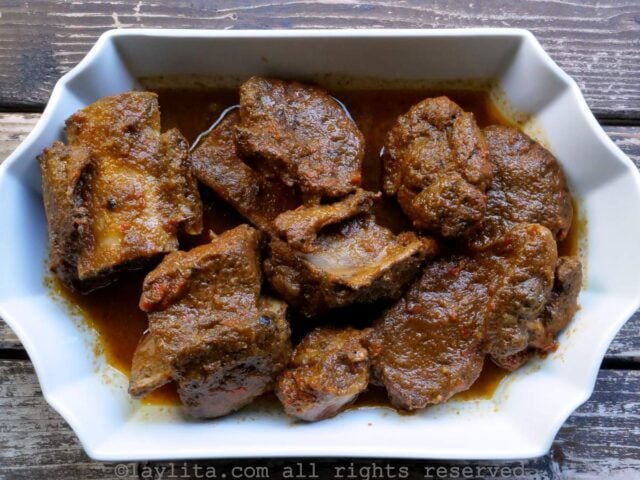
Ecuadorian Beef Short Rib Stew (Seco de Costilla de Res)


Ecuador is famous for its secos, and for very good reason! Each one is rich, comforting, and packed with flavor. This Seco de Costilla de Res is especially good, with tender beef ribs simmered in a fragrant, slightly tangy sauce until they practically fall apart.

What is seco de costilla de res?
Seco de costilla de res is a traditional Ecuadorian beef rib stew made by slowly cooking short ribs in a sauce of onions, peppers, tomatoes, herbs, fruit juice, and beer. Like other Ecuadorian secos, it’s known for its deep flavor, tender meat, and slightly thick, savory sauce.
While variations exist across regions and families, the heart of the dish is always slow-cooked meat and a bold, aromatic cooking liquid.
Ingredient Notes
- Beef short ribs: Bone-in ribs add richness and flavor to the stew and become incredibly tender with slow cooking.
- Achiote (annatto): Gives the dish its signature color and a mild, earthy flavor.
- Garlic powder: Adds savory depth and evenly seasons the meat.
- Ground cumin: A key spice in Ecuadorian cooking that brings warmth and aroma.
- Sweet paprika: Adds color and mild sweetness! Cayenne or chili powder can be used for heat.
- Oil: Used to brown the ribs and build flavor at the start.
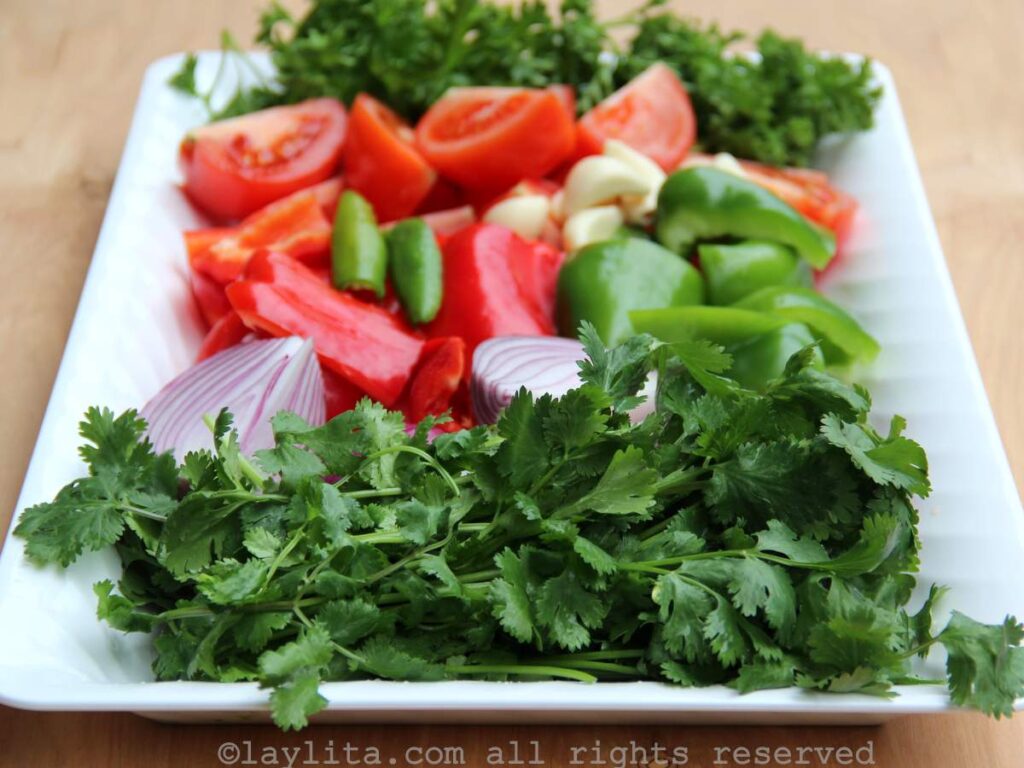
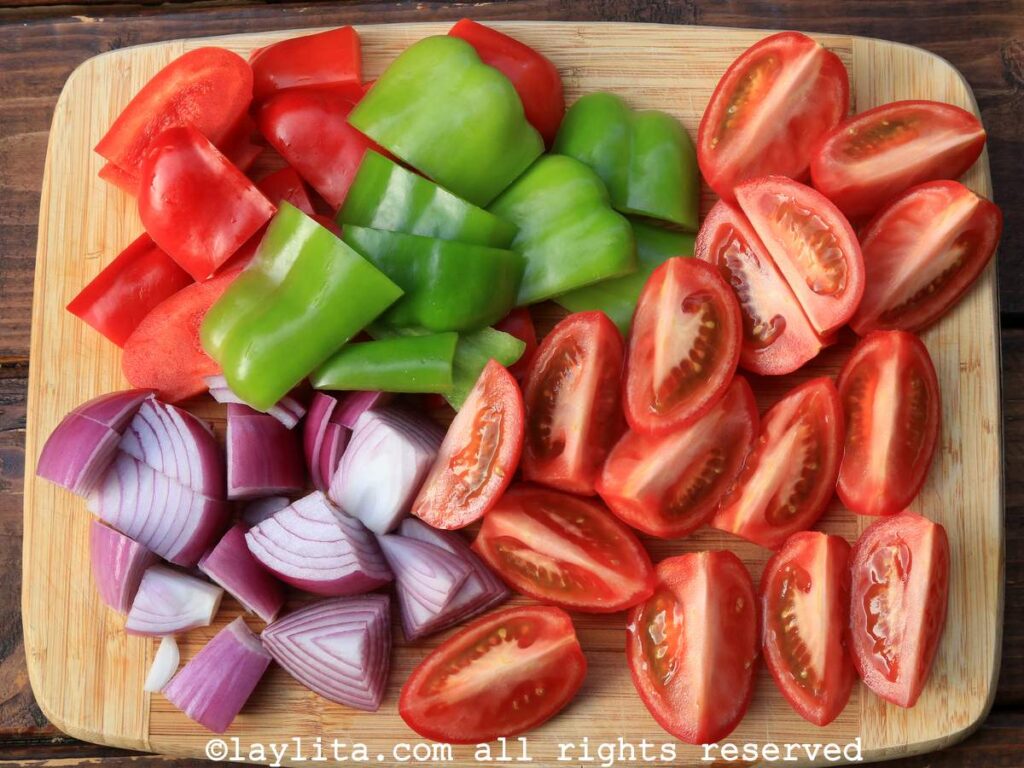
- Red onion: Forms the flavorful base of the cooking sauce.
- Bell peppers: Add sweetness and balance. A mix of red and green works well.
- Roma tomatoes: Help thicken the sauce and add natural acidity.
- Garlic cloves: Essential for bold, savory flavor.
- Cilantro: Used both in the sauce and fresh at the end for brightness.
- Naranjilla juice: Traditional and tangy! Passion fruit, tamarind, or orange juice also work well if you don’t have access to naranjilla.
- Beer: Adds depth and helps tenderize the meat. Chicha de jora or apple cider are great alternatives.
- Panela (piloncillo) or brown sugar: Balances acidity with subtle sweetness.
- Salt and pepper: Adjust to taste as the sauce reduces.
Variations & Substitutions
- Meat: You can use any meat you want, really. If you prefer something else, you can follow my seco de pollo recipe, seco de chivo recipe or even my sudado de pescado recipe if you prefer fish!
- Juice: Swap naranjilla juice for passion fruit, tamarind, or orange juice. You just need something with a bit of tang!
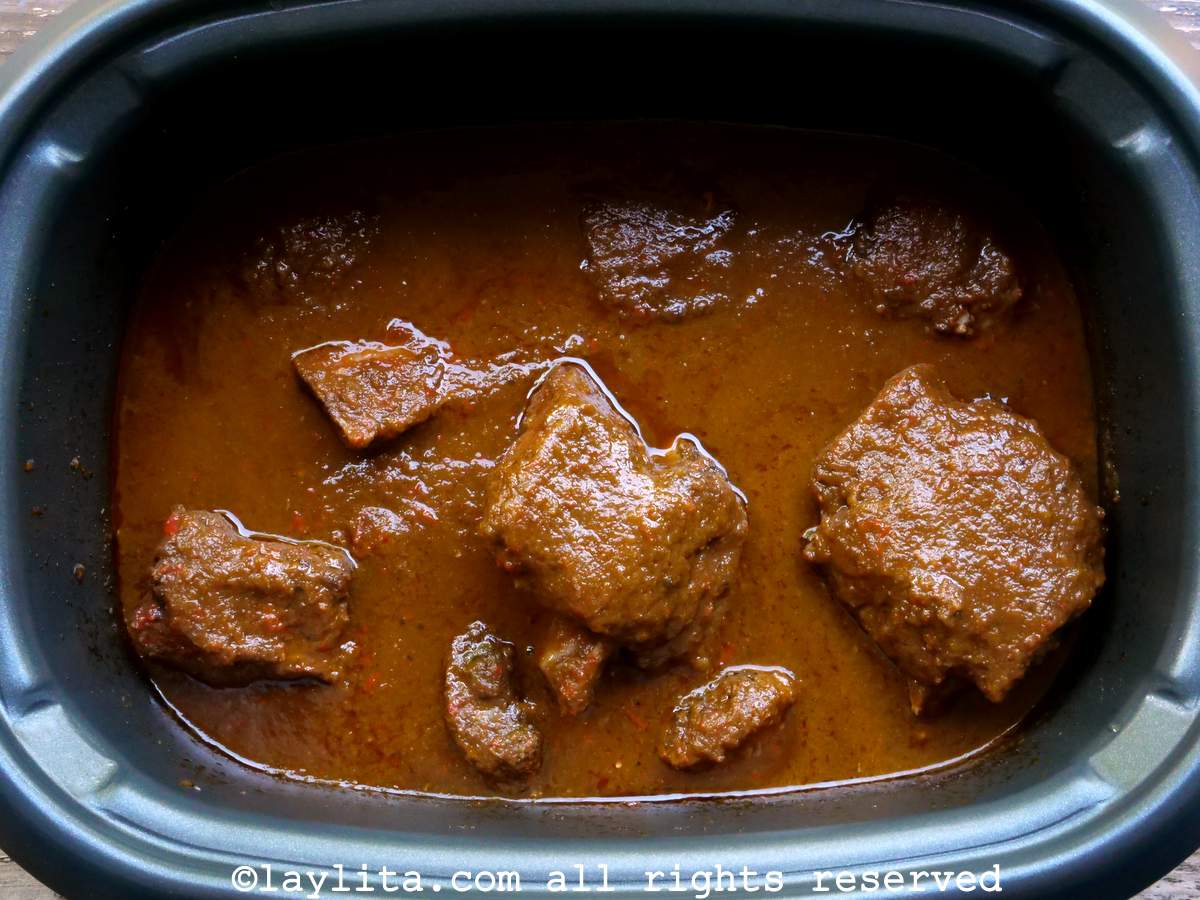
- Cooking Method: Since these do well cooking low and slow, feel free to cook seco de costilla de res in the slow cooker on low for about 8 hours. Just be sure to sear the ribs first, then transfer to the slow cooker.
Tips for the Best Beef Rib Stew
- Brown the ribs well before adding the sauce to build deep, savory flavor. Taking the time to sear them properly makes a big difference in the final dish.
- Blend the sauce until completely smooth for the best texture! A well-blended sauce coats the ribs evenly as it cooks.
- Simmer low and slow so the ribs become tender without drying out. The meat should easily pull away from the bone when ready. If the meat doesn’t pull away from the bone yet, keep cooking!
- If cooking in a slow cooker, expect the sauce to be thinner at the end. Reduce it on the stovetop for a few minutes to thicken and concentrate the flavor.
- Taste and adjust seasoning near the end of cooking. As the sauce reduces, flavors intensify and may need balancing.
Serving Suggestions
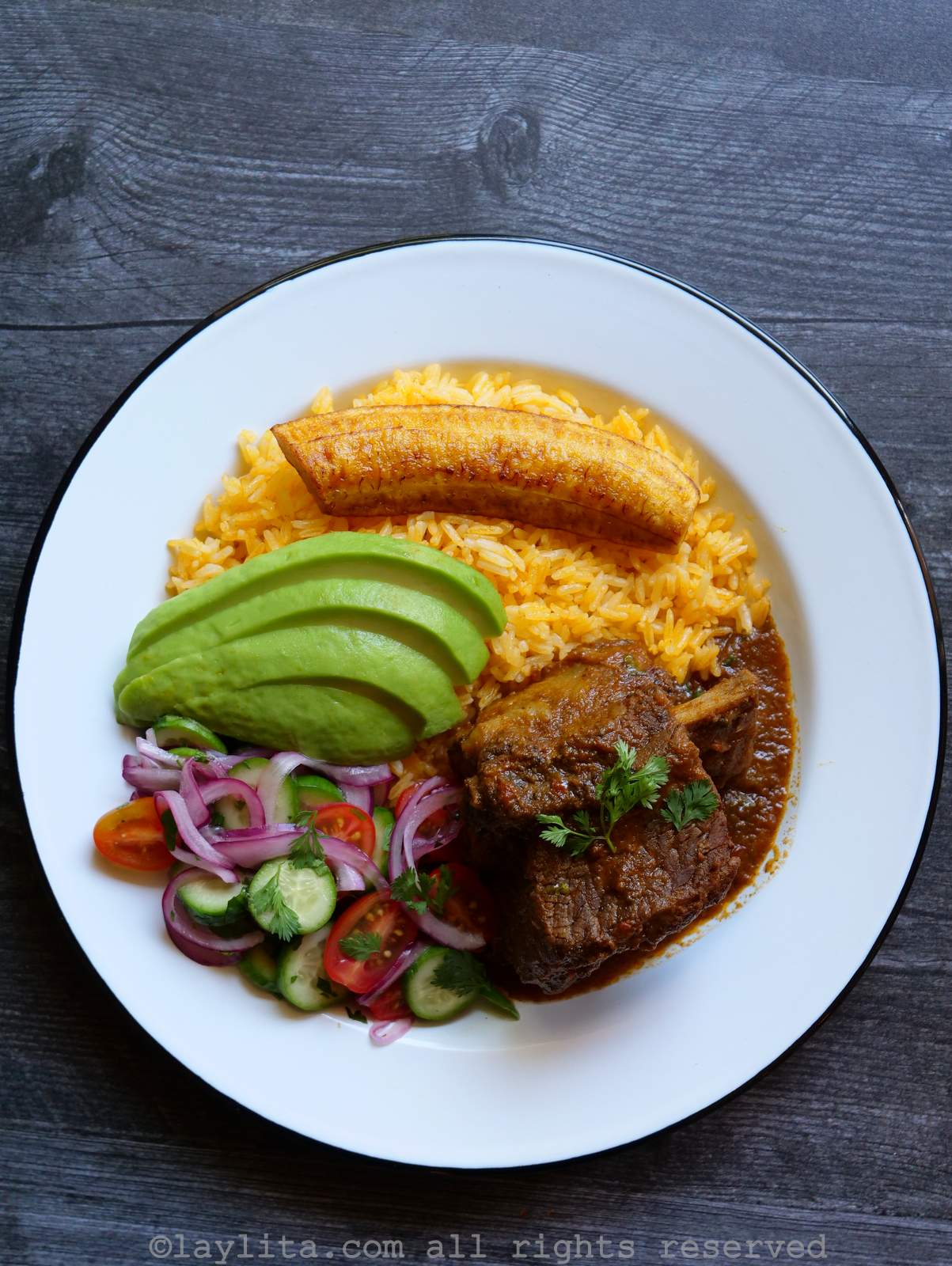
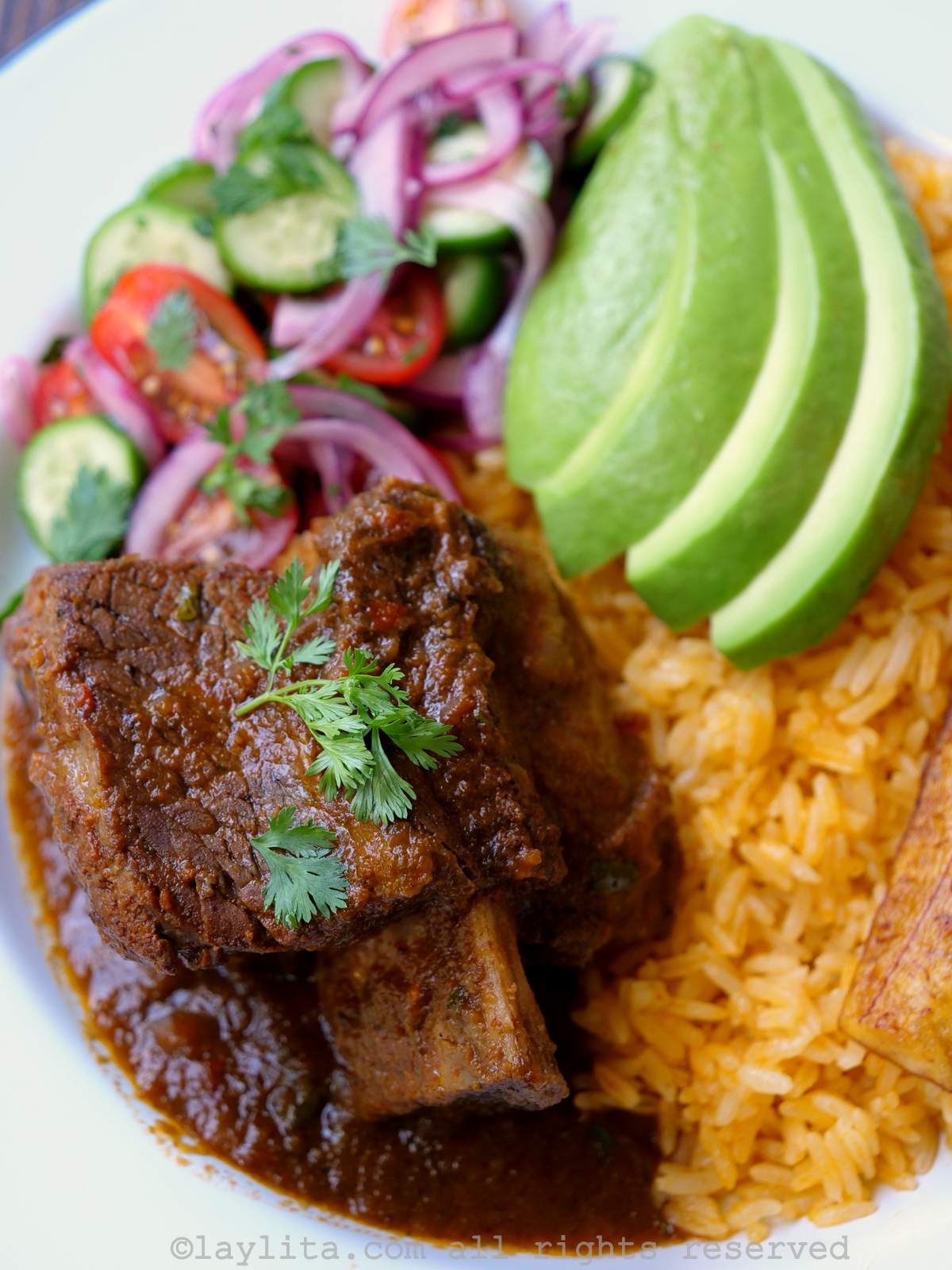
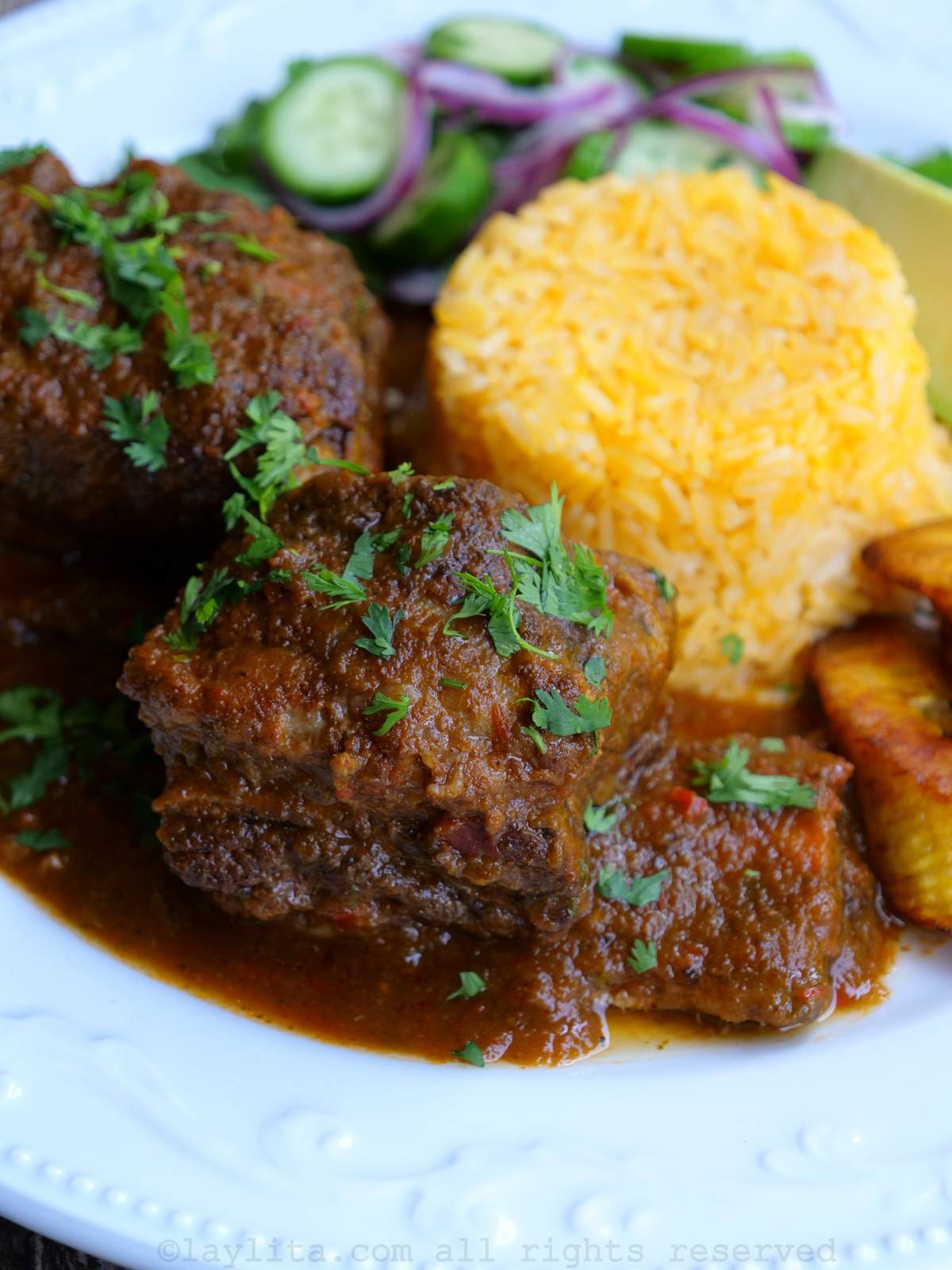
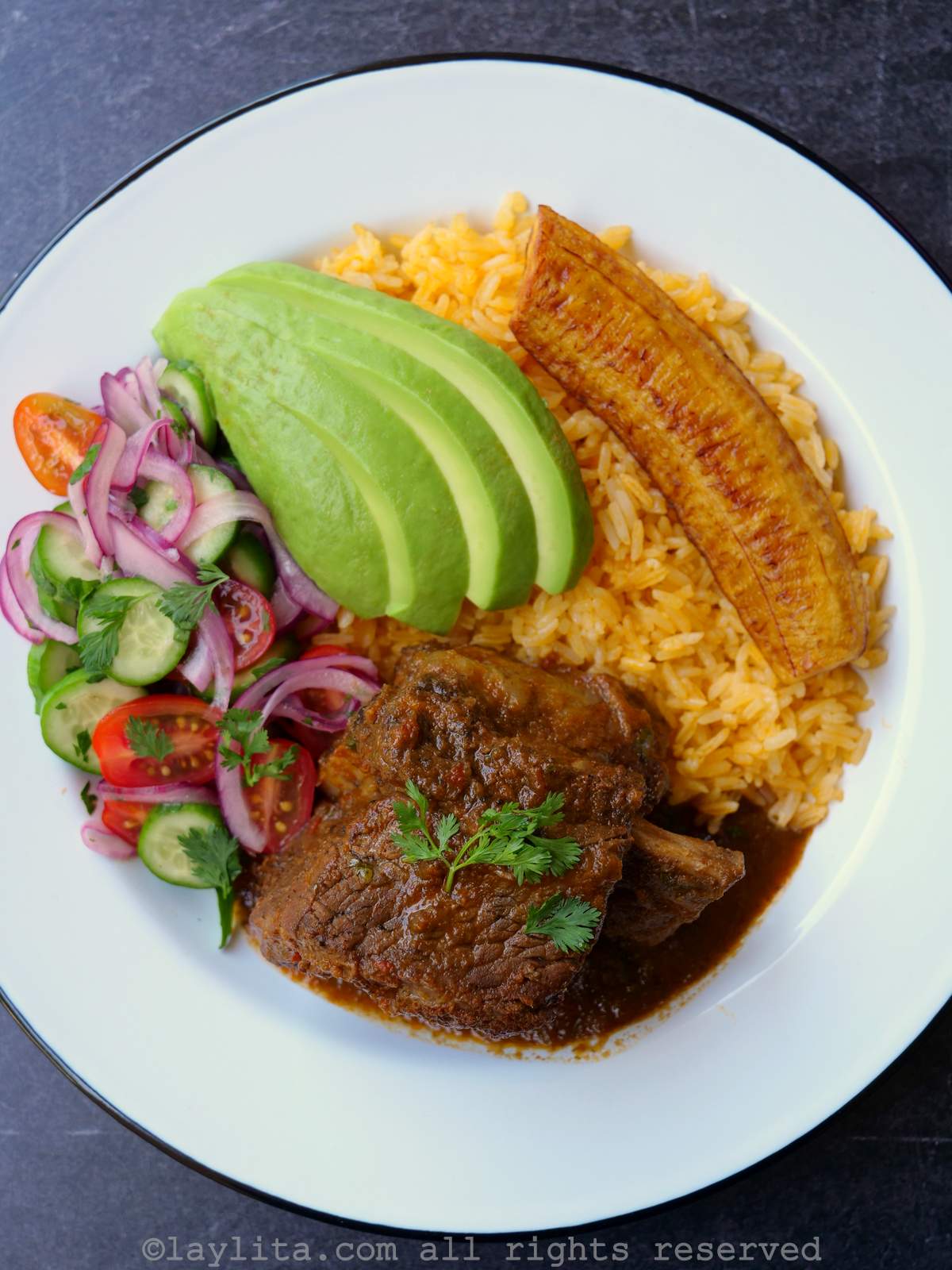
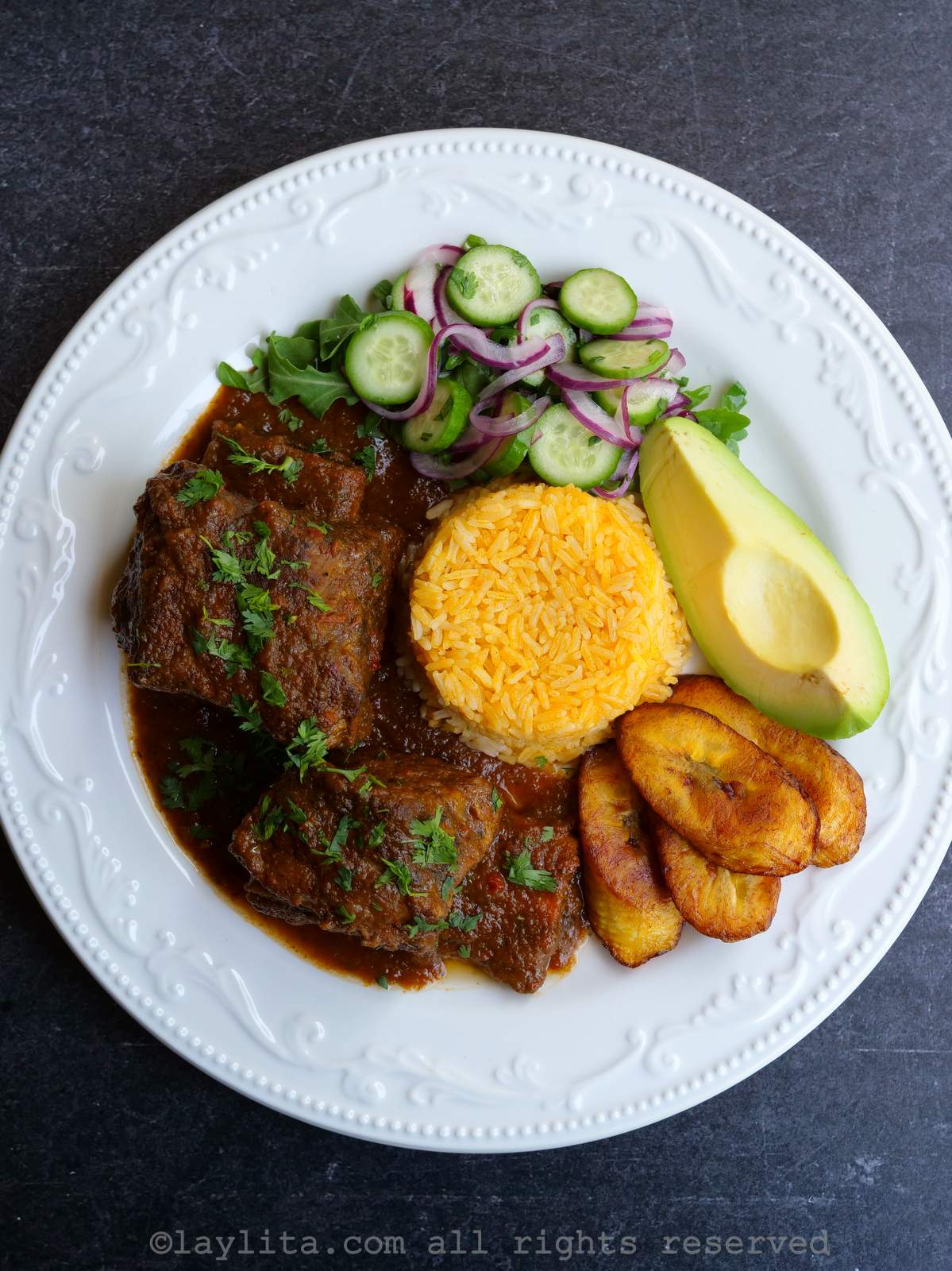
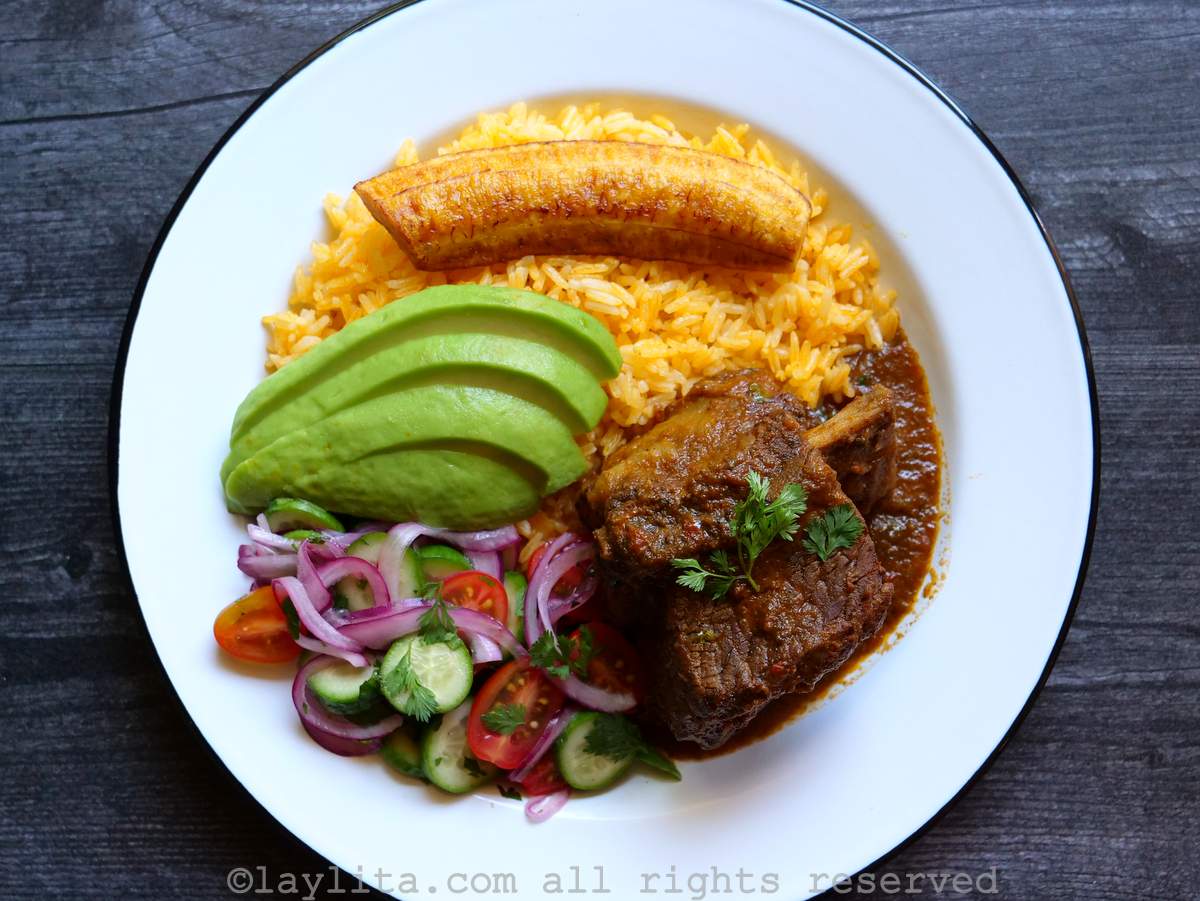
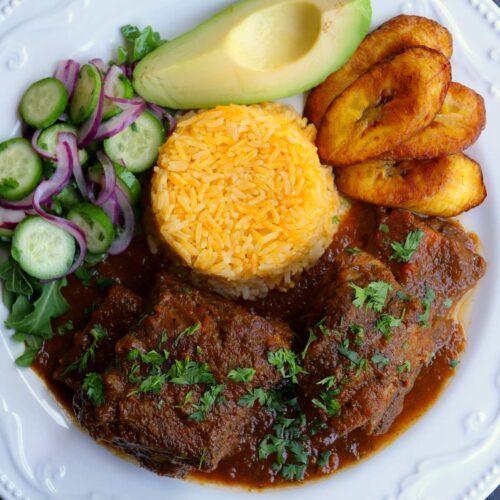
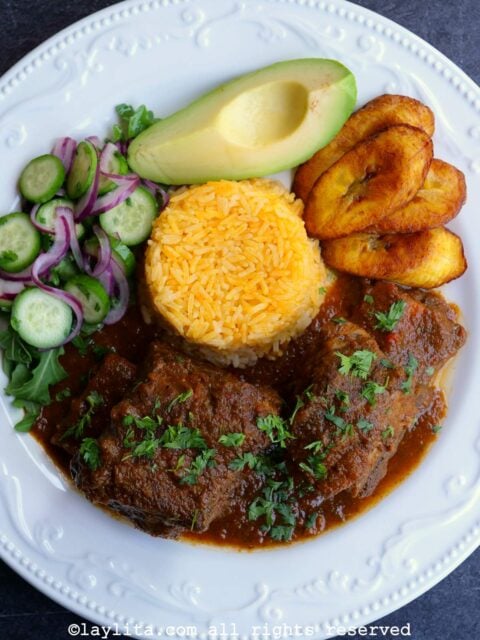
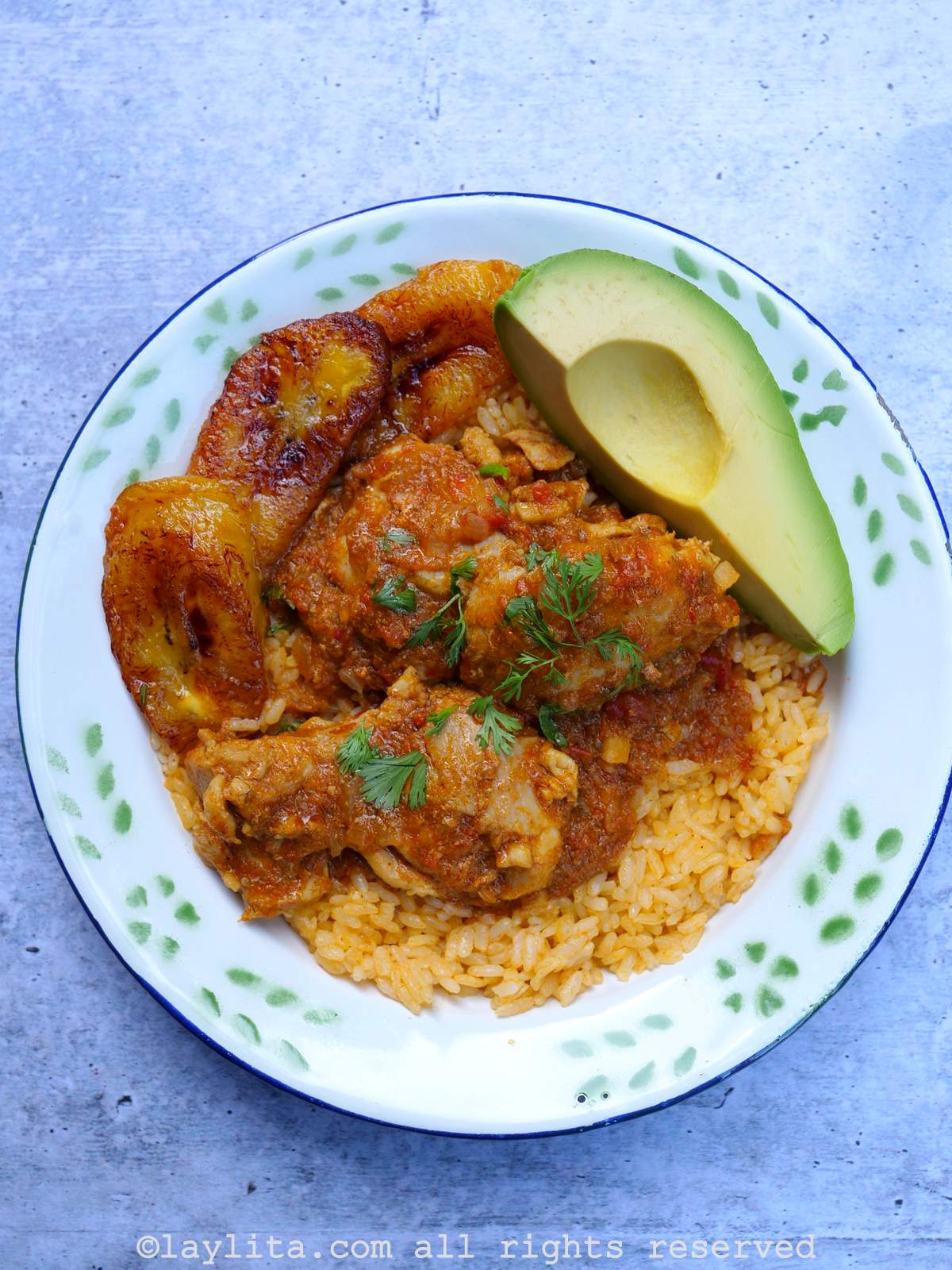
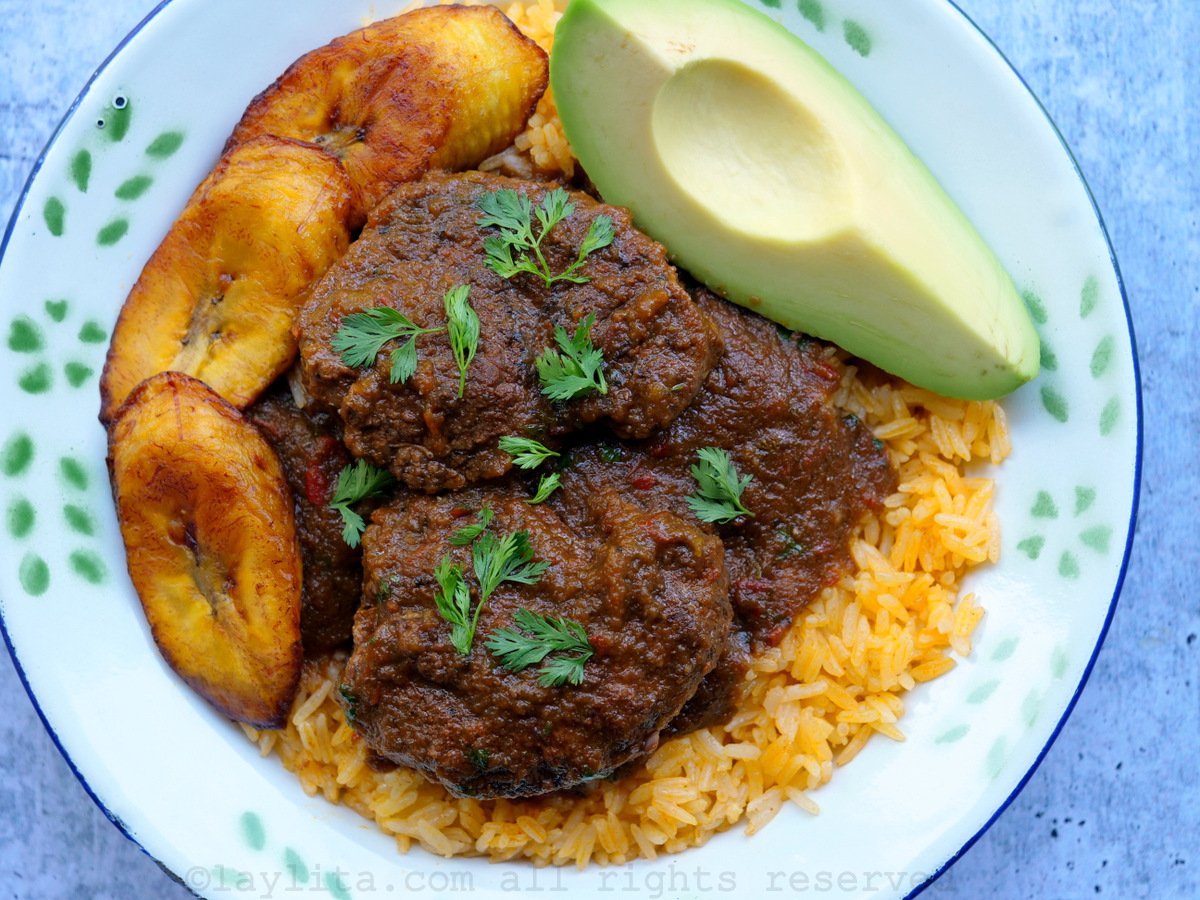
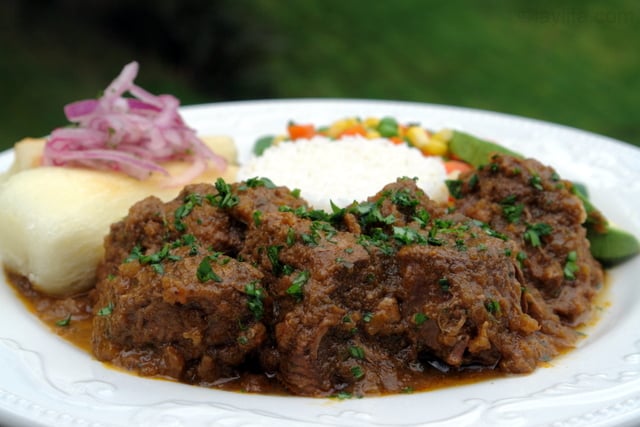
Serve Ecuadorian seco de costilla de res the traditional way with Latin-style white rice, fried ripe sweet plantains, and an avocado tomato salad on the side. Don’t forget to spoon plenty of sauce over everything, it’s one of the best parts of the dish!
Frequently Asked Questions
Can I make seco de costilla ahead of time?
Yes. Like many stews, it tastes even better the next day after the flavors have had time to develop.
Is seco supposed to be thick or soupy?
Seco should have a thick, rich sauce that coats the meat, not a thin broth. If you have too much liquid, let it cook down a little more!
What makes Ecuadorian seco different from other stews?
Ecuadorian secos are known for their unique balance of savory, fresh, and slightly tangy flavors. Unlike many beef stews that rely only on stock or wine, Ecuadorian secos use fruit juice (like naranjilla or passion fruit), fresh herbs such as cilantro, and often beer or chicha in the cooking liquid.
Ecuadorian Beef Short Rib Stew (Seco de Costilla de Res)
Ingredients
- 4 lbs of beef short ribs 4 lbs = ~2 kg
- 2 tsp ground achiote or annatto
- 2 tsp of garlic powder
- 1 tbs ground cumin
- 2 tsp of sweet paprika can also use chili pepper/cayenne for a spicy version
- 2 tbs oil
For the stew cooking sauce:
- 1 medium red onion cut in large chunks
- 3 bell peppers use a mix of red & green, cut in large chunks – you could also add a spicy pepper if you want to make this a spicy stew
- 4 roma tomatoes cut into chunks
- 6 garlic cloves
- 1 bunch of cilantro use most of it for the cooking sauce, but save a bit to add freshly chopped at the end to serve
- 1.5 cups of unsweetened naranjilla juice – can also use passion fruit juice, tamarind, or even orange juice 1.5 cups = 360 ml
- 1 cup light beer (can also use chicha de jora or apple cider) 1 cup =240 ml
- 2 tbs grated panela piloncillo or brown sugar
- Salt and pepper to taste
Side dishes:
- Ecuadorian style rice achiote rice
- Fried ripe plantains
- Avocado slices
- Small side salad
Instructions
- Season the short ribs with the cumin, garlic powder, achiote, paprika, salt, pepper.

- In a regular cooking pot or in the slow cooker, heat the oil and cook the short ribs until browned on each side. Turn off the heat and prepare the liquid cooking sauce.

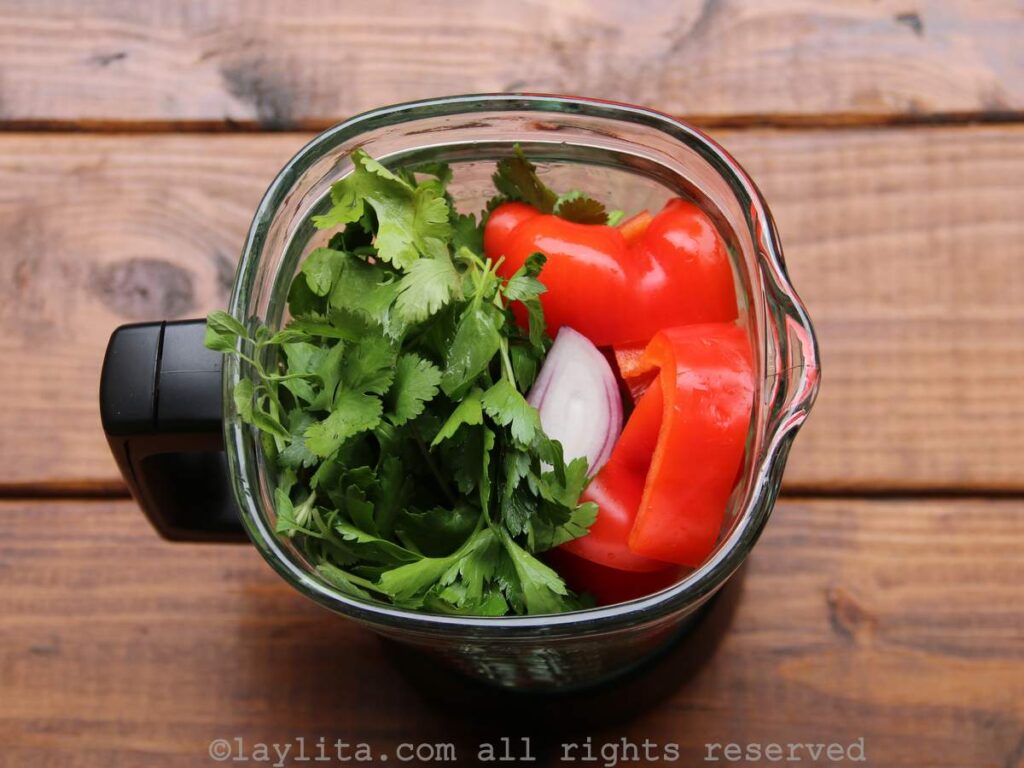
- Place the chunks of onions, bell peppers, tomatoes, garlic and most of the cilantro with the fruit juice in a blender
- Blend until you have a smooth mix.

- Pour the blended mix over the seared short ribs and turn the heat back on. Add the grated panela or piloncillo (or brown sugar), the beer, salt and pepper to taste. Mix well and bring to a boil.
- Reduce the heat, cover, and simmer until the meat is very tender and the sauce has thickened, about 2-2.5 hours on the stovetop. If using a slow cooker, set the heat to low and cook for 7-8 hours.
- If the sauce is still very liquid (this is common if using a slow cooker), remove the cooked short ribs from the slow cooker, leaving only the liquid in the pan.
- Increase the heat, bring the liquid to a boil and let it reduce and thicken for 5-10 minutes. Taste the sauce and adjust the salt/pepper and any other spices if needed.
- Add the short ribs back into the pan with the thickened sauce and sprinkle freshly chopped cilantro on top.
- Serve the seco de costilla short ribs with rice, fried ripe plantains, avocado slices, and a small side salad.

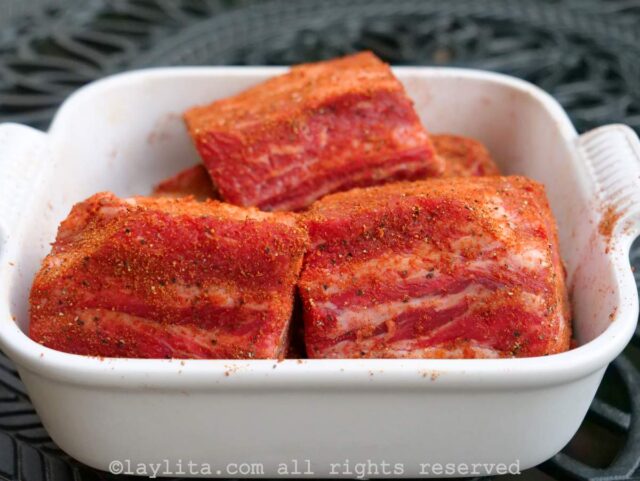
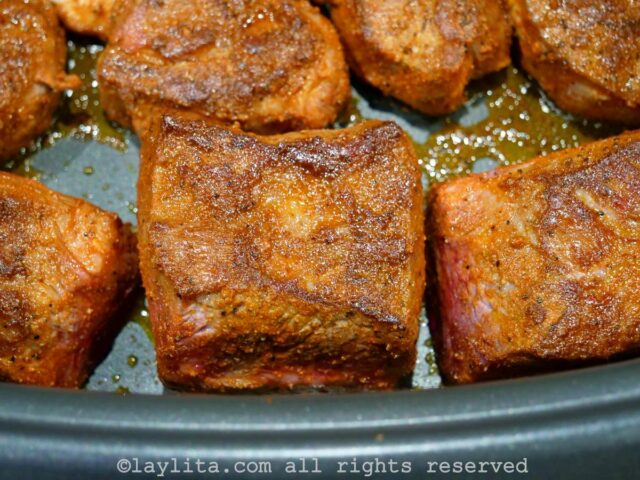
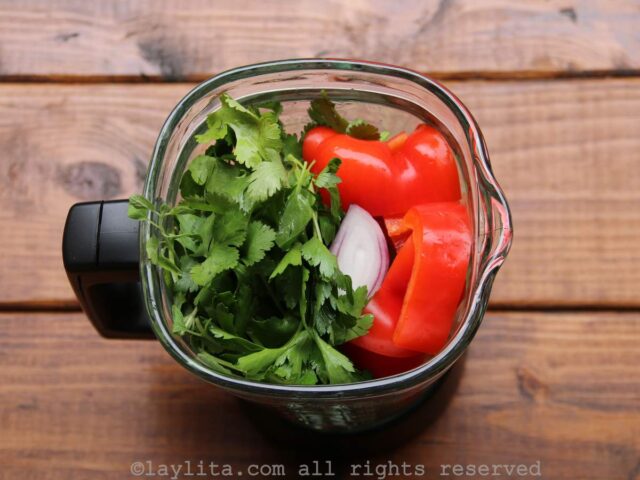
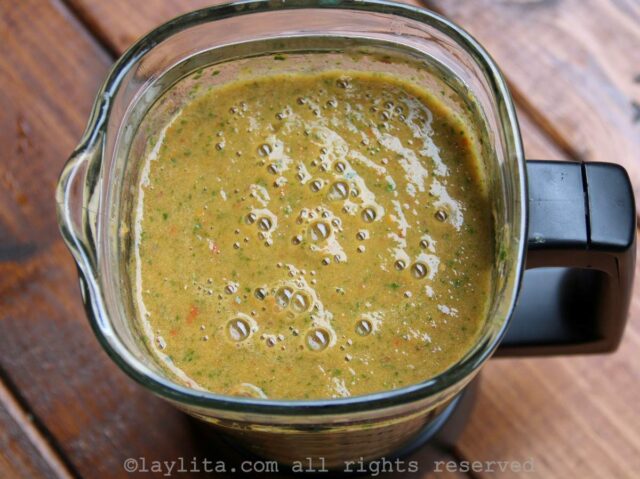
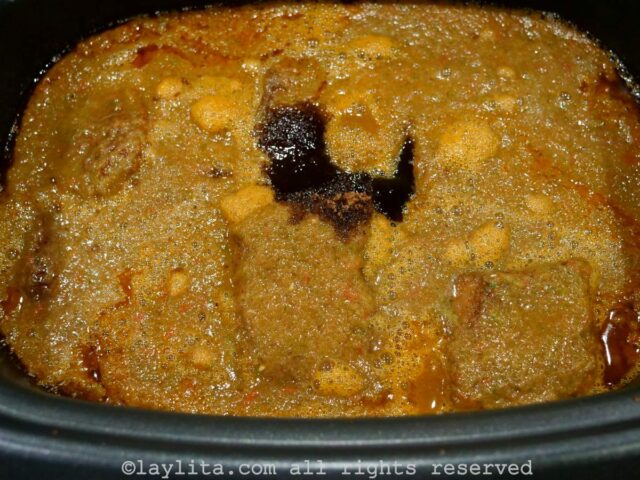
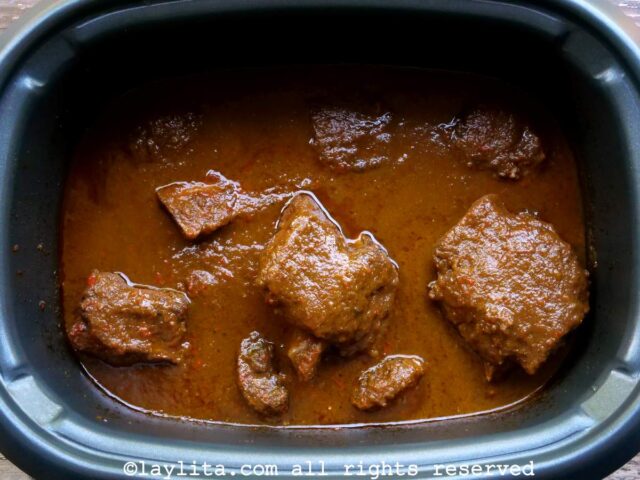
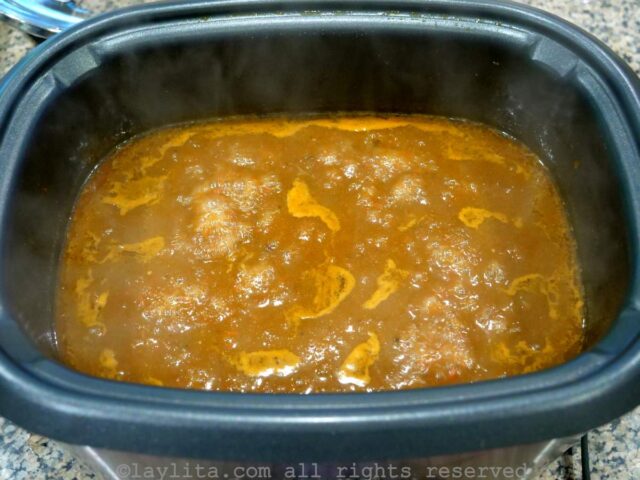
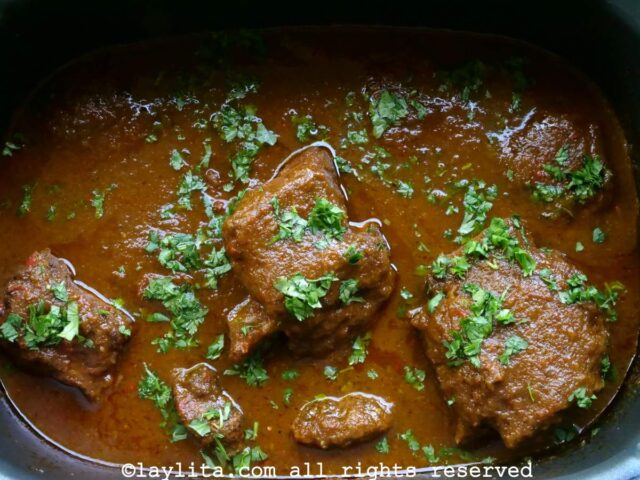
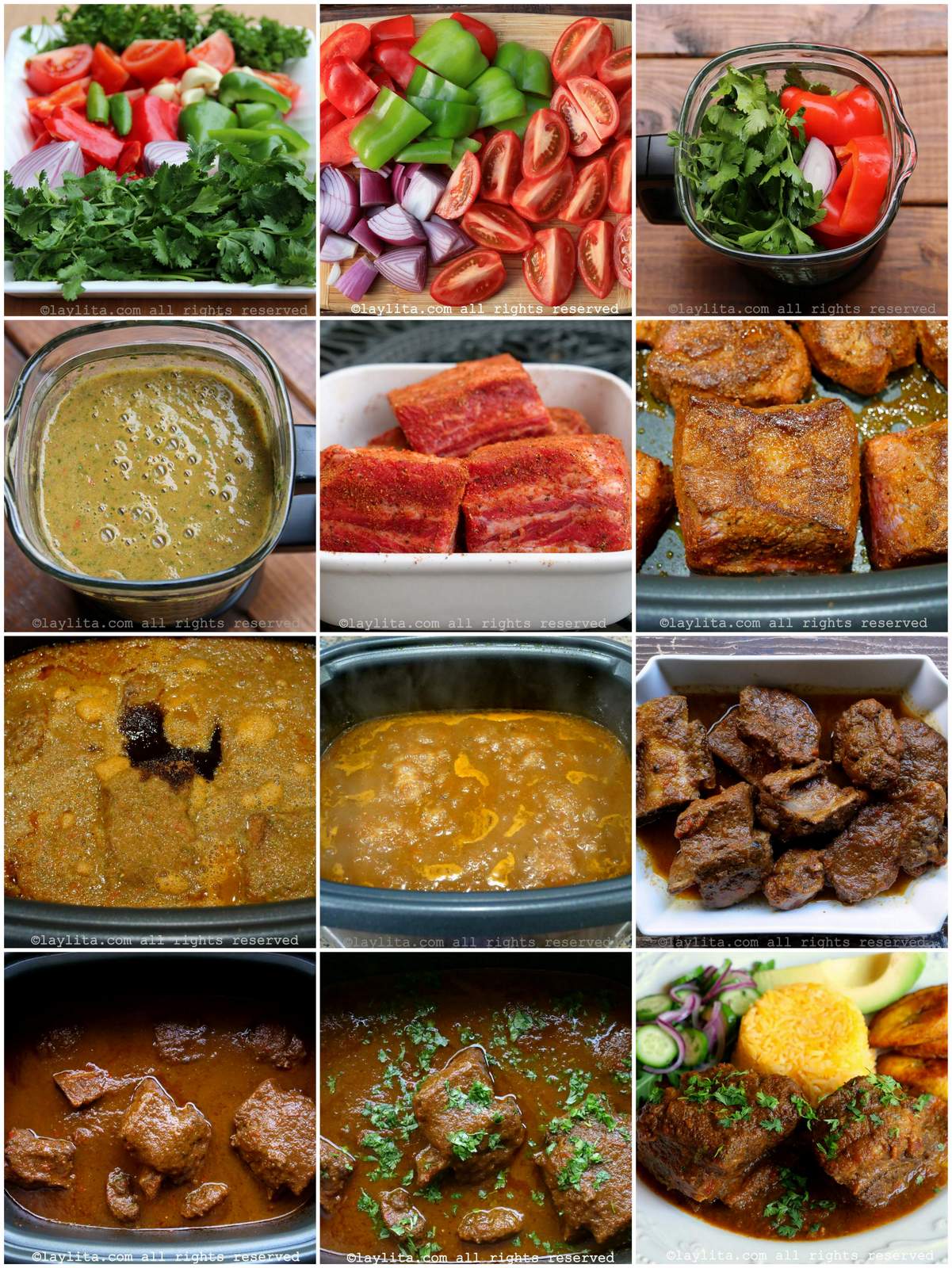
Photos of the step by step preparation process for making Ecuadorian beef short rib stew or seco de costilla de res in the slow cooker:
More Recipes to Try



Discover more from Laylita's Recipes
Subscribe to get the latest posts sent to your email.