Peruvian Beef Stew (Seco de Carne)

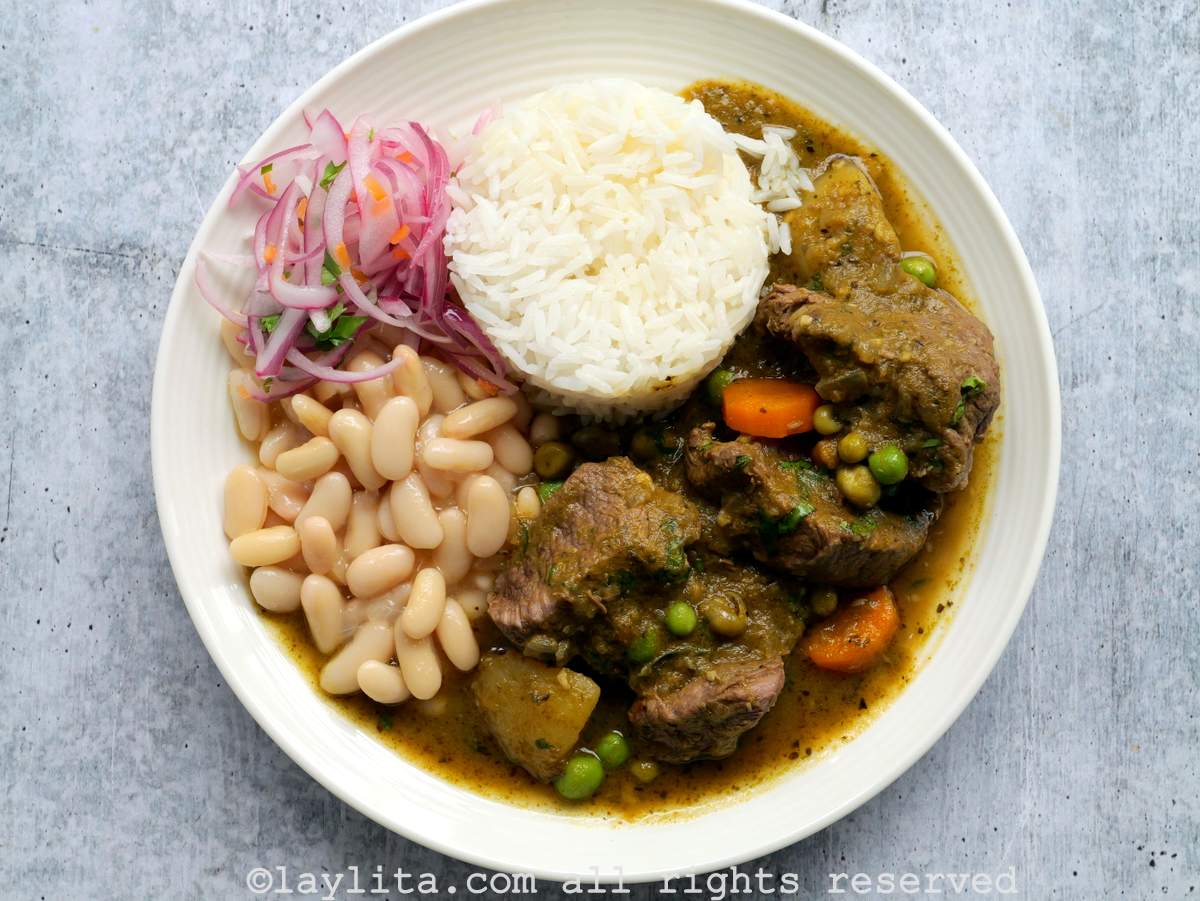
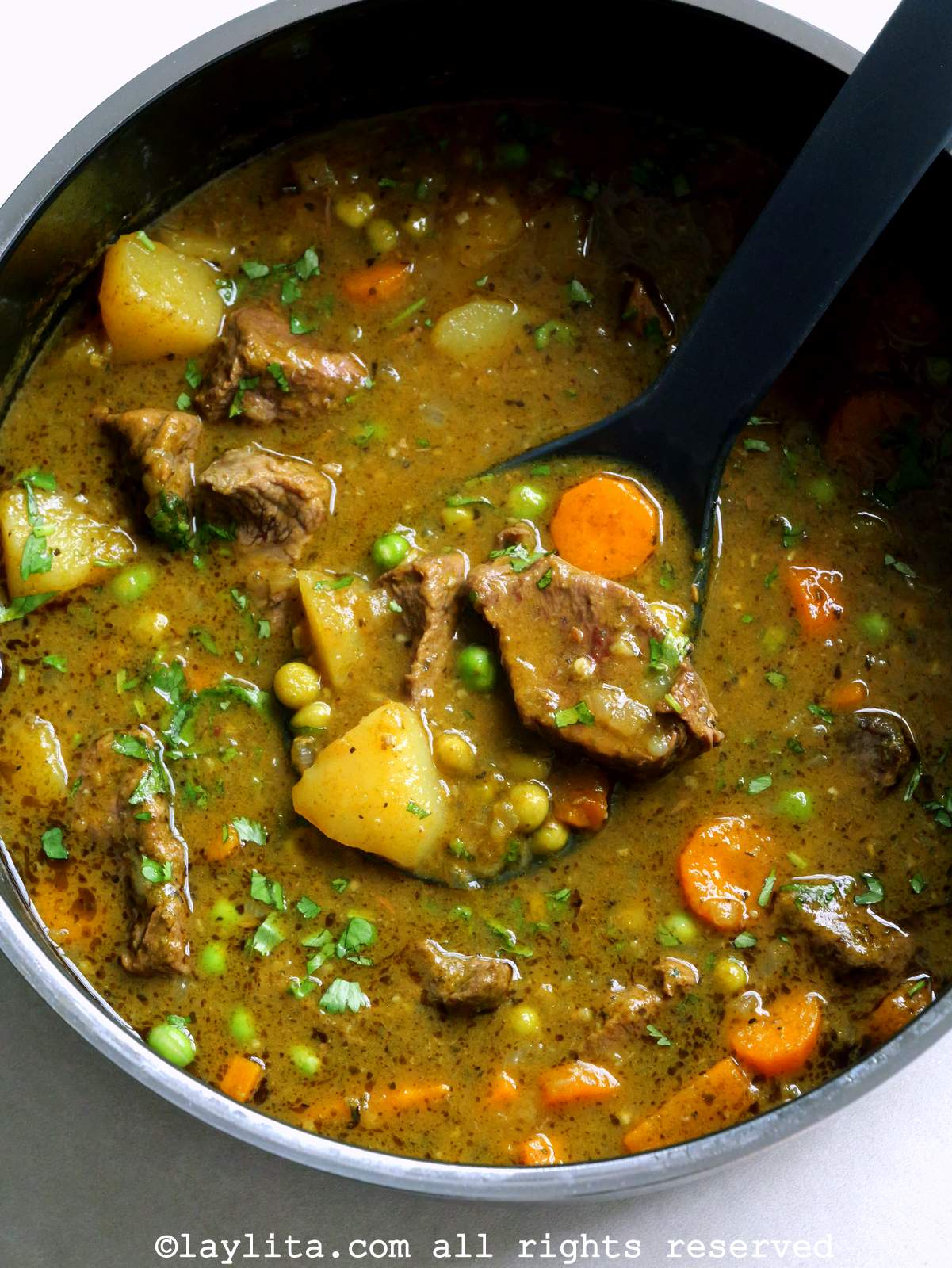
If you love hearty, slow-cooked meals that are full of flavor, this Peruvian Beef Stew is going to be your new favorite. It’s cozy, aromatic, and built on layers of bright, herby flavor thanks to cilantro and ají amarillo. This is one of those traditional dishes that feels comforting and exciting all at once, and it’s surprisingly simple to prepare at home!
What is Peruvian beef stew?
Peruvian beef cilantro stew, known as seco de carne, is a traditional dish made with beef simmered slowly in a vibrant sauce of cilantro, ají amarillo, chicha de jora, onions, garlic, and hearty vegetables like potatoes, carrots, and peas. Despite its name, “seco” doesn’t mean dry, quite the opposite! This cilantro beef stew recipe is juicy, saucy, and deeply flavorful.
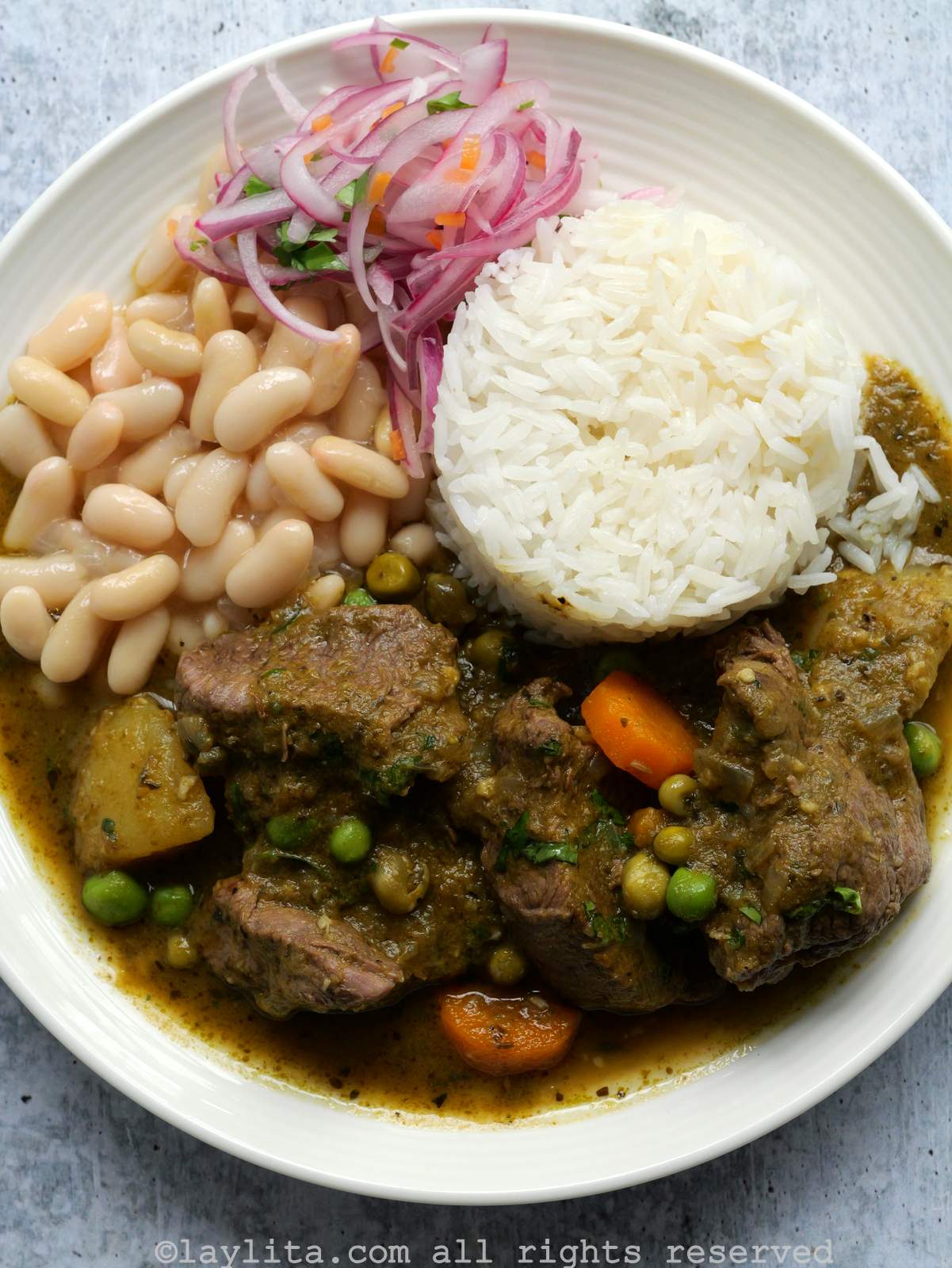
Peruvian seco de carne stands out for its uniquely Peruvian ingredients like aji amarillo, cilantro, and chicha de jora which give the stew its bright flavor, slight heat, and signature greenish hue.

Ingredient Notes
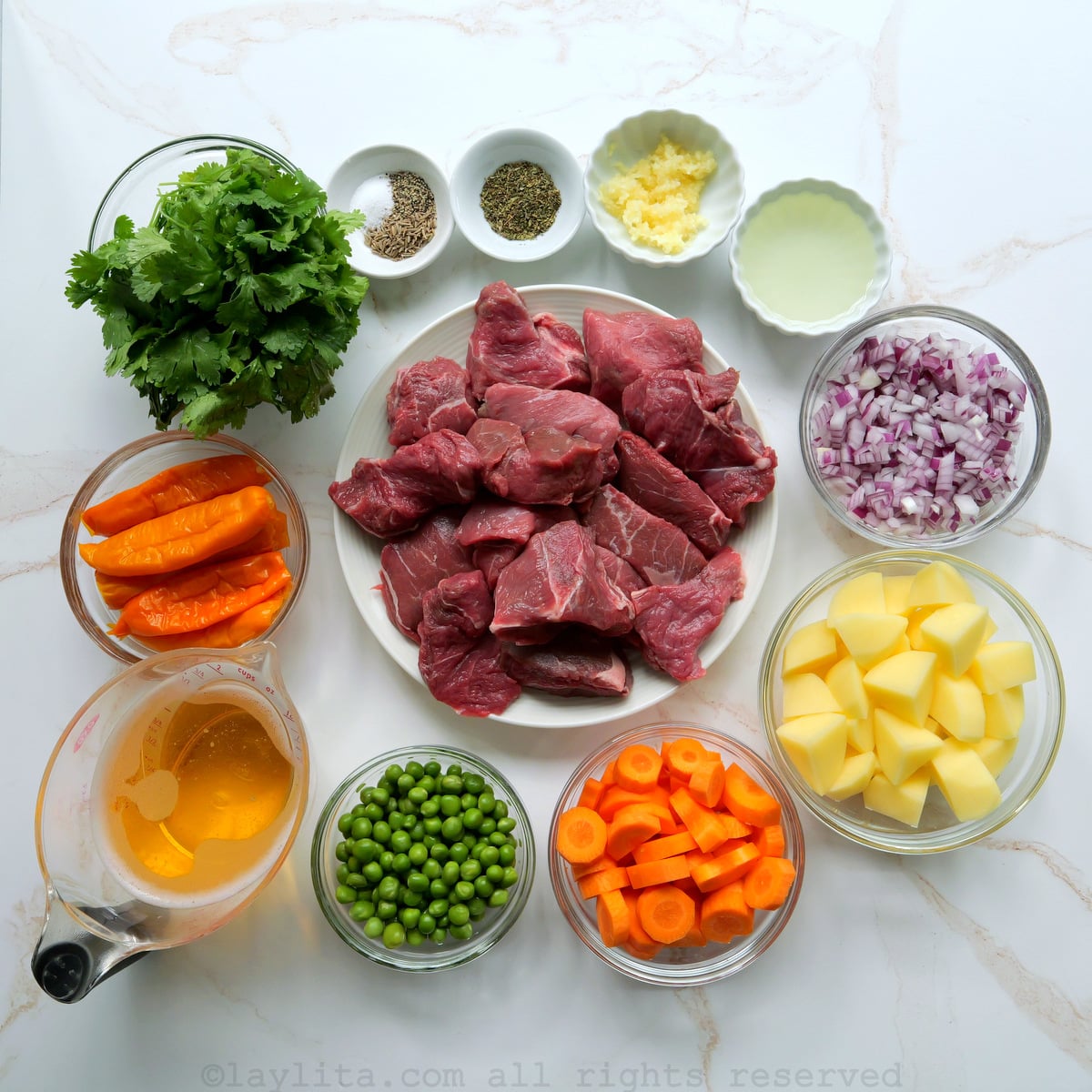
- Beef: Use boneless beef like brisket, oxtail, chuck roast, or short ribs. Cuts with more connective tissue become incredibly tender after slow cooking.
- Cumin seeds: A classic seasoning for Peruvian stews! If you just have dried cumin powder, that will work too.
- Ají amarillo (Peruvian yellow chili): Essential for authentic flavor. Use fresh, frozen, jarred, or even aji amarillo paste if needed.
- Cilantro: A whole bunch gets blended into the sauce for the stew’s signature color and aroma.
- Chicha de jora: A fermented corn beverage that gives a subtle tang. Substitute with light beer or apple cider.
- Oil: For searing the meat and sautéing the aromatics.
- Red onion: Finely chopped to build flavor in the base.
- Garlic: Adds depth and warmth when sautéed with the onion.
- Carrots: Sliced for sweetness and texture.
- Potatoes: Help thicken the stew naturally and make it extra hearty.
- Dried oregano: Adds an herby note that complements the cilantro.
- Peas: Stirred in at the end for freshness and color!
- Salt & black pepper: Essential for seasoning throughout.
- Extra cilantro: For a fresh sprinkle before serving.
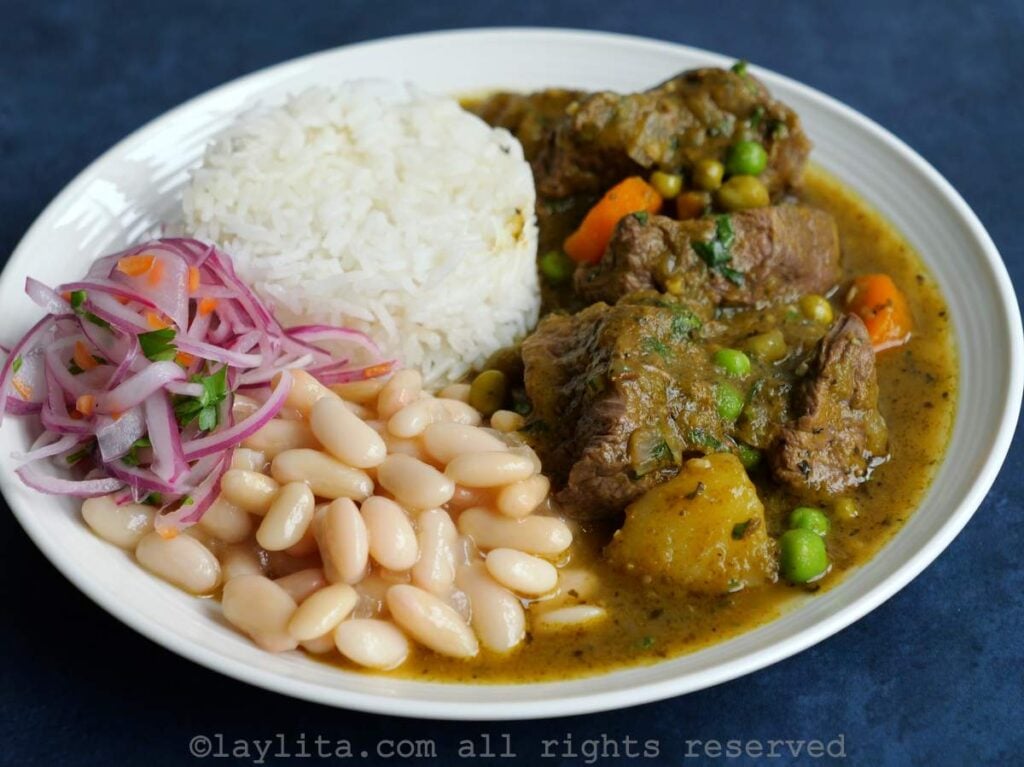
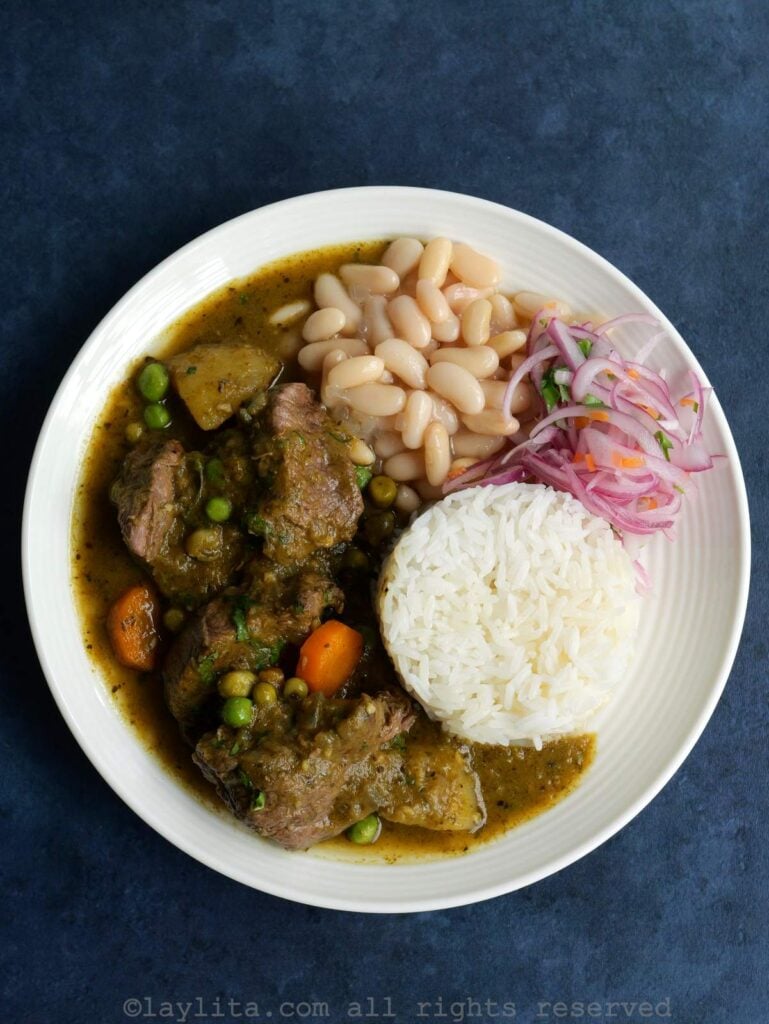
- White rice, white beans & salsa criolla: The classic Peruvian trio for serving.
Variations & Substitutions
- Swap the beef for chicken, lamb, pork, goat, or even fish! Secos come in many forms across Peru and Ecuador. Just keep in mind that chicken and fish will cook a lot quicker!
- For a vegetarian version, use mushrooms, eggplant, or even jackfruit.
- Chicha de jora can be replaced with light beer or apple cider if you’re outside Latin America.
- If you can’t find ají amarillo, look for it frozen or in paste form at Latin markets, or substitute with another mild-to-medium chili like Hungarian wax peppers or even a mix of bell pepper plus a little jalapeño.
- For an Ecuadorian-inspired version, omit the potatoes, carrots, and peas, and add naranjilla juice for a fruity, tangy twist.
Tips for the Best Seco de Carne
- Sear the meat well. Browning the beef on high heat builds complex flavor and gives the stew a richer base!
- Blend the sauce thoroughly. A smooth mix of cilantro, ají amarillo, and chicha helps the stew cook evenly and infuse the meat with flavor.
- Use low, slow heat. Simmering for 1 to 2 hours breaks down the beef until it’s spoon-tender.
- Season as you go. Taste the broth after simmering and adjust salt or pepper to keep the flavors balanced.
- Add the peas at the end. This keeps them bright and prevents them from getting mushy.
Serving Suggestions
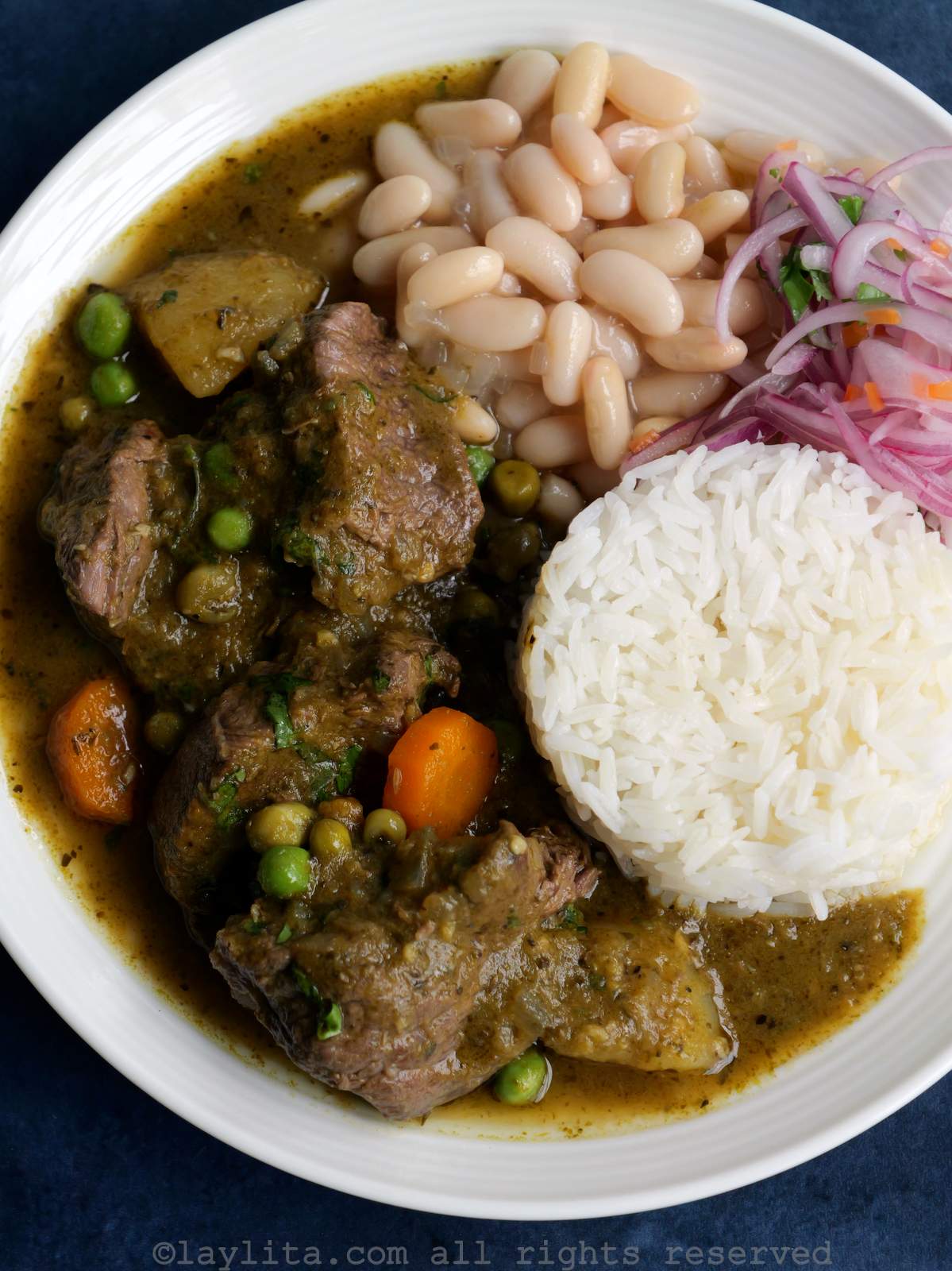
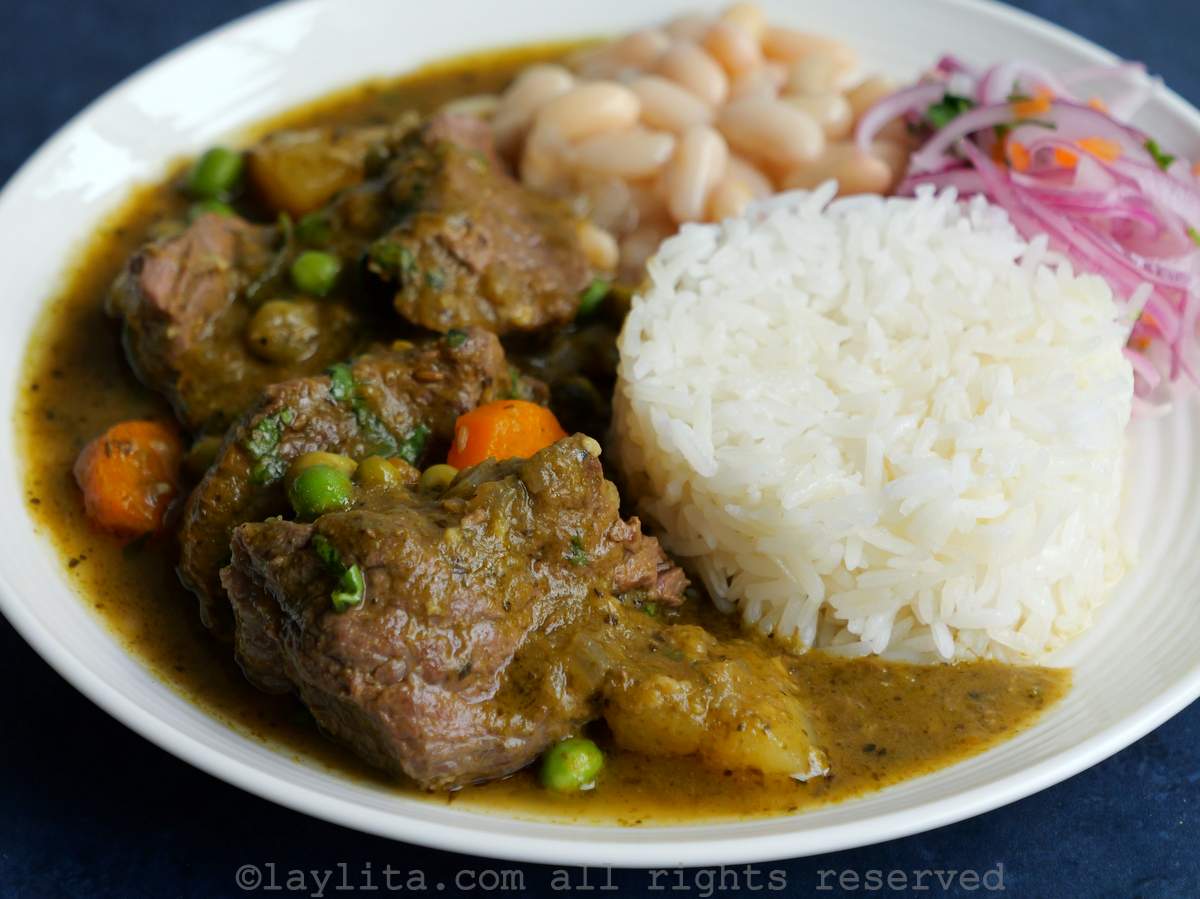
Peruvian beef stew is traditionally served with white rice, white beans, and a bright onion salsa criolla. The combination perfectly balances the richness of the stew. You can also enjoy it with crusty bread, fried ripe plantains, or a simple garden salad.
Frequently Asked Questions
Why is it called “seco” if it’s not dry?
The name comes from the English word “second,” referring to the second course served to oil workers in early 19th-century camps. Locals misinterpreted the term as the name of the stew, which eventually evolved into seco. Despite the name, the dish is juicy and saucy.
What cut of beef is best for Peruvian seco?
Tougher cuts like brisket, flank, chuck roast, short ribs, or even osso buco work beautifully. They become tender and flavorful when simmered low and slow.
What’s the difference between Peruvian seco and Ecuadorian seco?
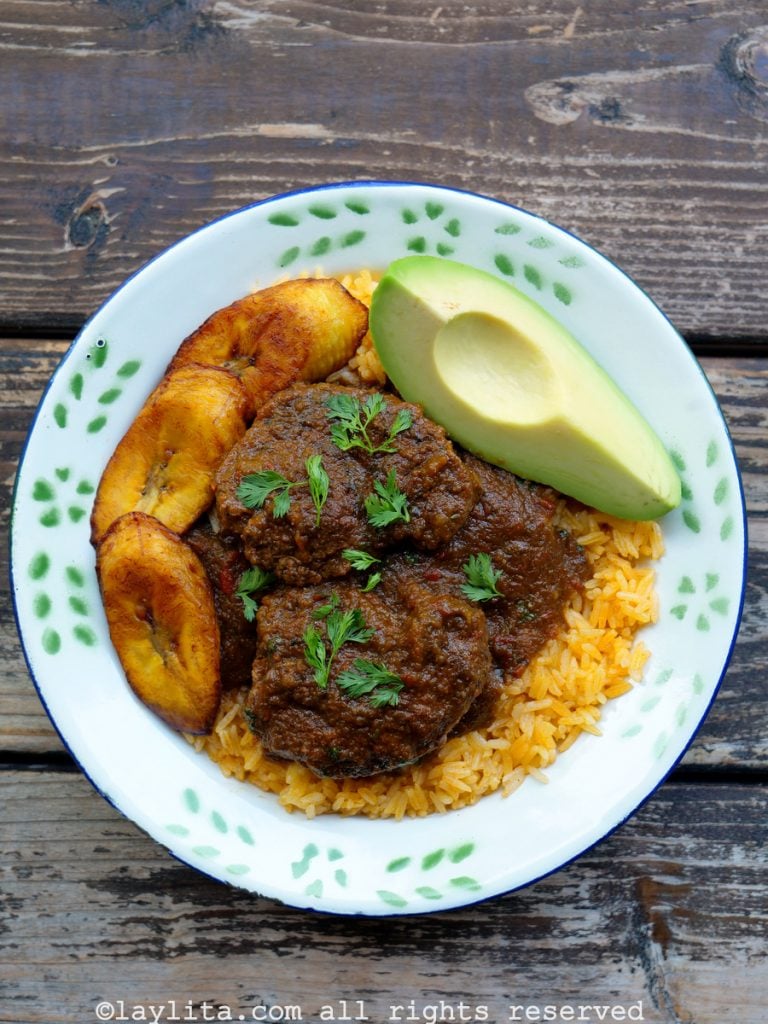
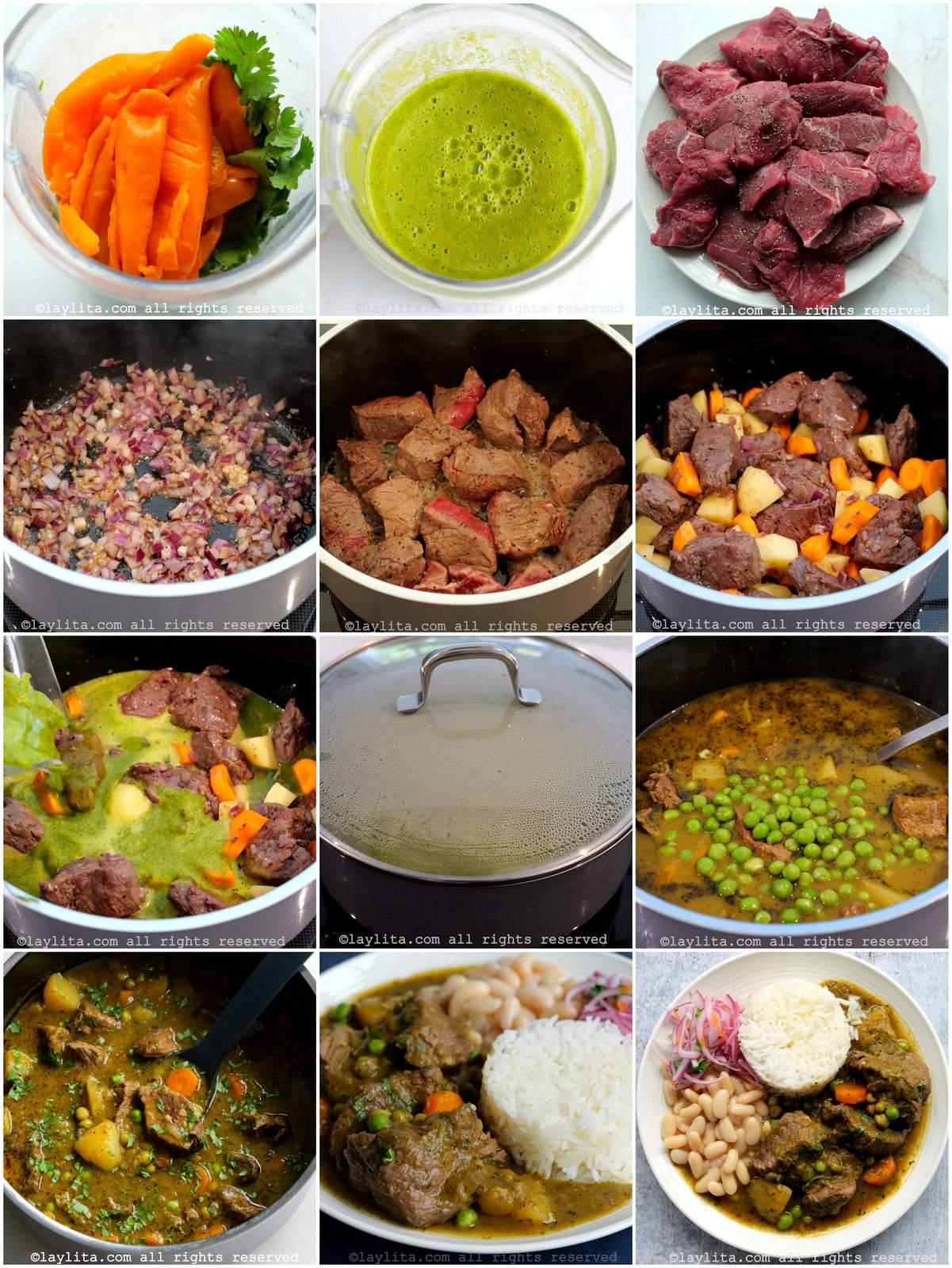
Traditional Peruvian seco includes ají amarillo and often potatoes, carrots, and peas. Ecuadorian seco is usually just meat in a sauce made with bell peppers, onions, tomatoes, herbs (no starchy vegetables) and sometimes includes naranjilla juice for a fruity note. If you want to, you can try my Ecuadorian seco de carne recipe next time for a different take.
How do I store leftovers?
Store the Peruvian beef stew in an airtight container in the refrigerator for up to 4 days. It tastes even better the next day as the flavors develop! You can also freeze it for up to 3 months, just thaw overnight and reheat gently on the stovetop.

Peruvian Beef Stew (Seco de Carne)
Ingredients
- 1 kg boneless beef use 1.5 kg if using meat with bones, cubed or cut into large chunks – you can use brisket, oxtail, chuck roast, or short ribs
- ½ teaspoon cumin seeds
- 6 Peruvian yellow chili peppers (ajíes amarillos), deveined and seeded
- 1 large bunch of cilantro
- 1 ½ cups chicha de jora fermented corn drinks, can be replaced with light beer, or apple cider (330 ml)
- 2-3 tablespoons oil
- 1 finely chopped red onion
- 4 cloves garlic crushed or minced
- 2 small carrots 200 grams, peeled and sliced
- 3-4 medium potatoes 300 grams, peeled and cubed
- 1 teaspoon dried oregano
- 1 cup raw peas 100 grams
- Salt and black pepper to taste
- A little extra chopped cilantro for serving
To serve:
- White rice
- White beans Fréjoles
- Peruvian onion salsa criolla
Instructions
- Season the meat with cumin, salt, and pepper.

- Cut the Peruvian yellow chili peppers in half, and with a spoon, scrape out the seeds and veins.

- Place the chicha de jora, the chili peppers, and the cilantro in a blender.
- Blend until smooth.

- Turn the stove to high heat; add the oil to a large, heavy-bottomed pot. When very hot, add the pieces of meat and sear them on both sides until they begin to brown (about 2-3 minutes per side).
- Remove the seared pieces of meat from the pot and set them aside.
- In the same pot, add the chopped onion and crushed garlic. Cook the onion and garlic for about 3-5 minutes.
- Then add the reserved pieces of meat back in.
- Add the potatoes and carrots.
- Add the blended chili cilantro liquid to the pot. Add dried oregano and a little salt and pepper.
- Bring everything to a boil, then reduce the heat. Cover and simmer until the meat is very tender and can be cut with a spoon. The exact cooking time will vary depending on the cut of meat, but it can take between 1 and 2 hours.
- Add the raw peas during the last 5 minutes of cooking.
- Serve the Peruvian beef stew with white rice, white beans, and onion salsa.


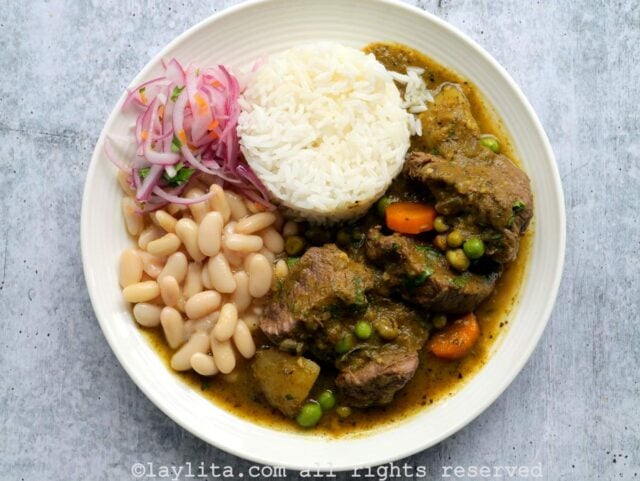
Step by step preparation process photos for Peruvian Beef Stew or Seco de Carne de Res:
Additional Recipes to Try






Discover more from Laylita's Recipes
Subscribe to get the latest posts sent to your email.