Cascos de Guayaba (Candied Guava Shells in Syrup)


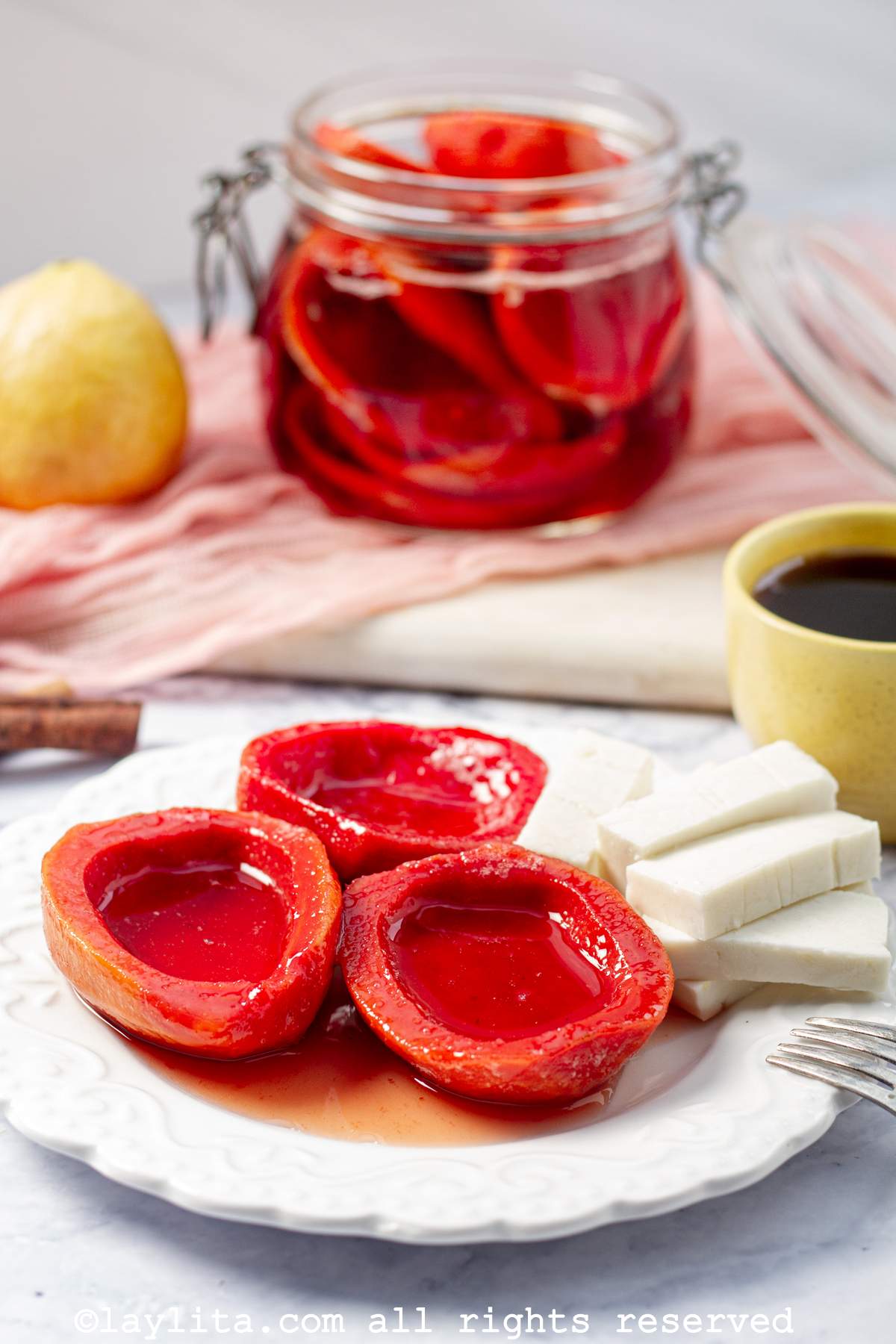
There’s something special about traditional Latin desserts that instantly brings you back home. Cascos de Guayaba (Candied Guava Shells in Syrup) is one of those timeless sweets! It’s simple to make, full of flavor, and loved by generations.
What are cascos de guayaba?
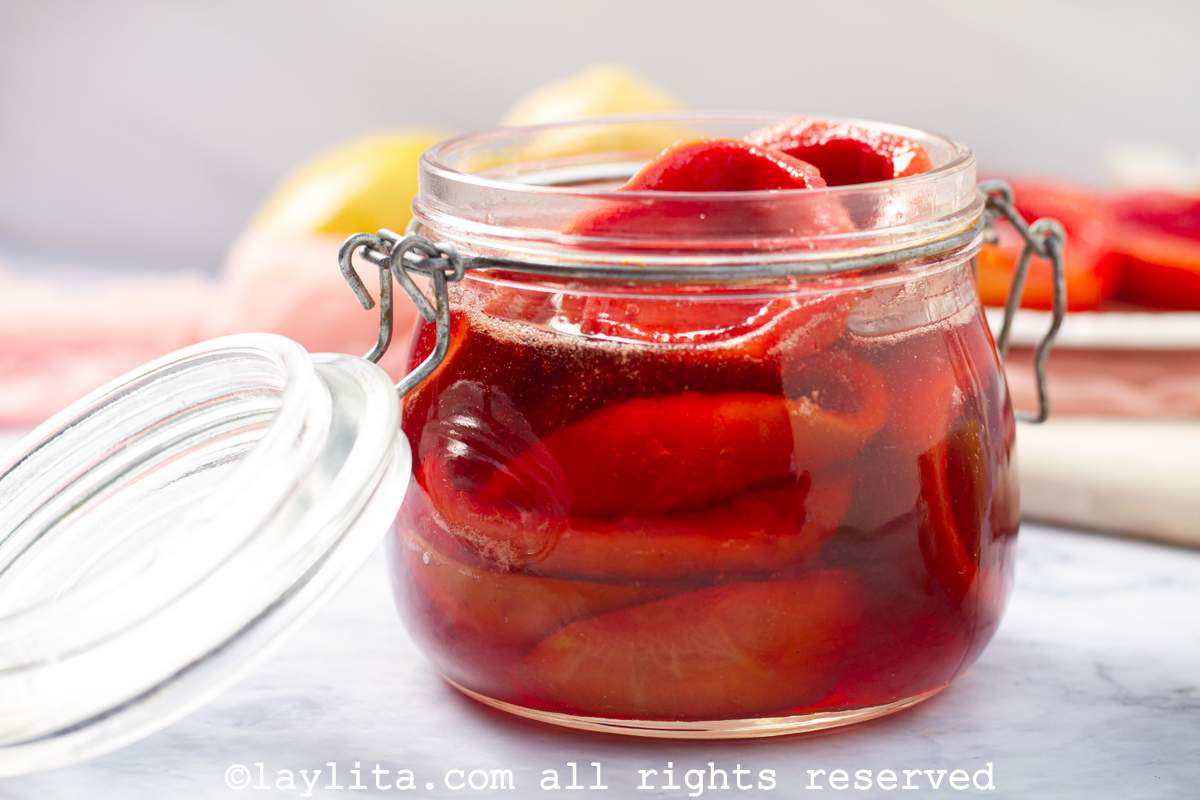
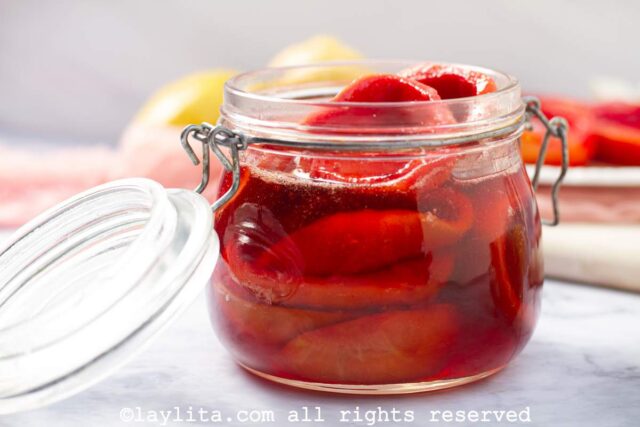
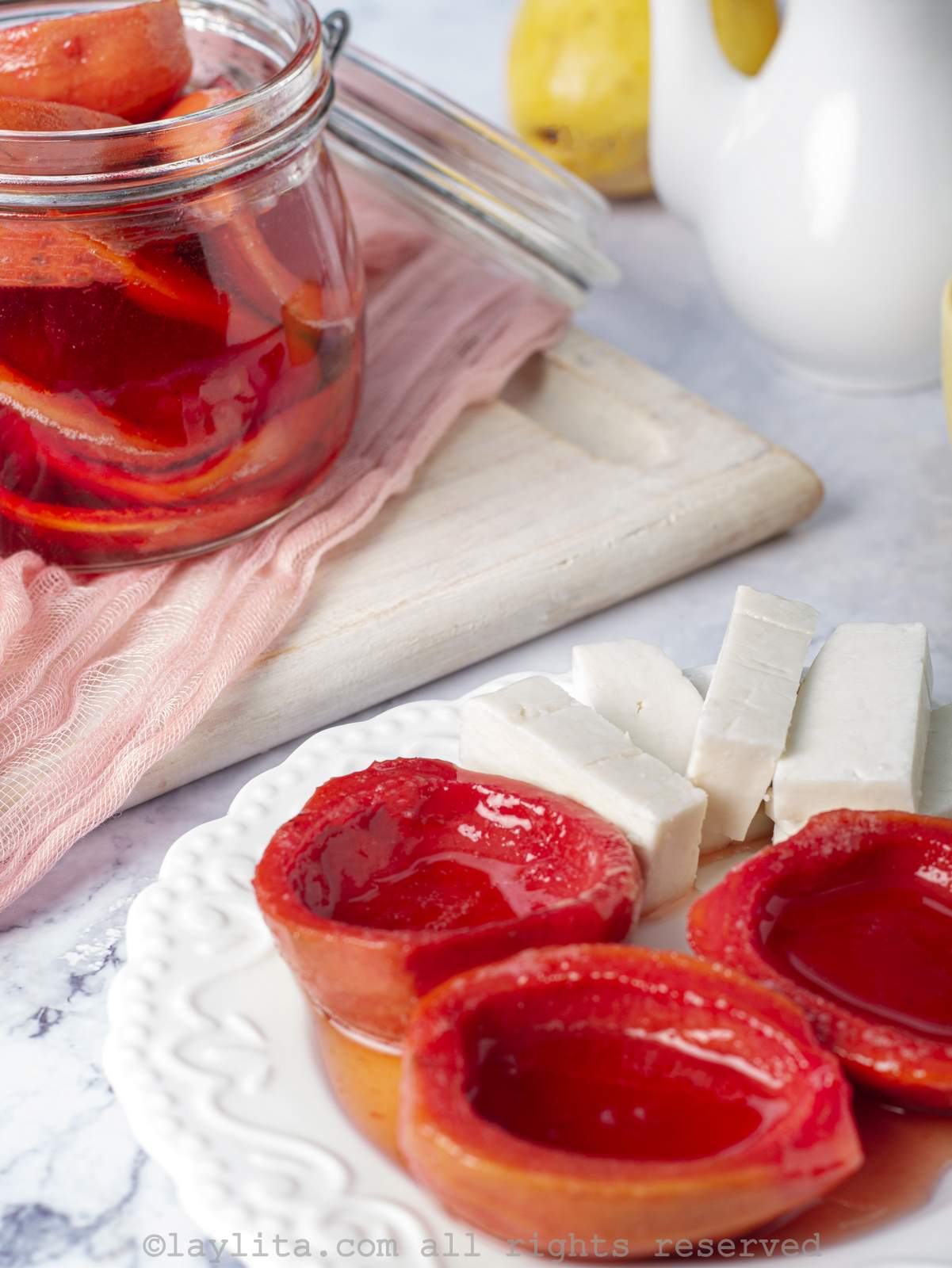
Cascos or casquitos de guayaba are a classic Latin American dessert made from guavas simmered slowly in a spiced sugar syrup until tender and beautifully glossy. The name literally means “guava shells,” referring to how the fruit is halved and gently hollowed out before cooking.
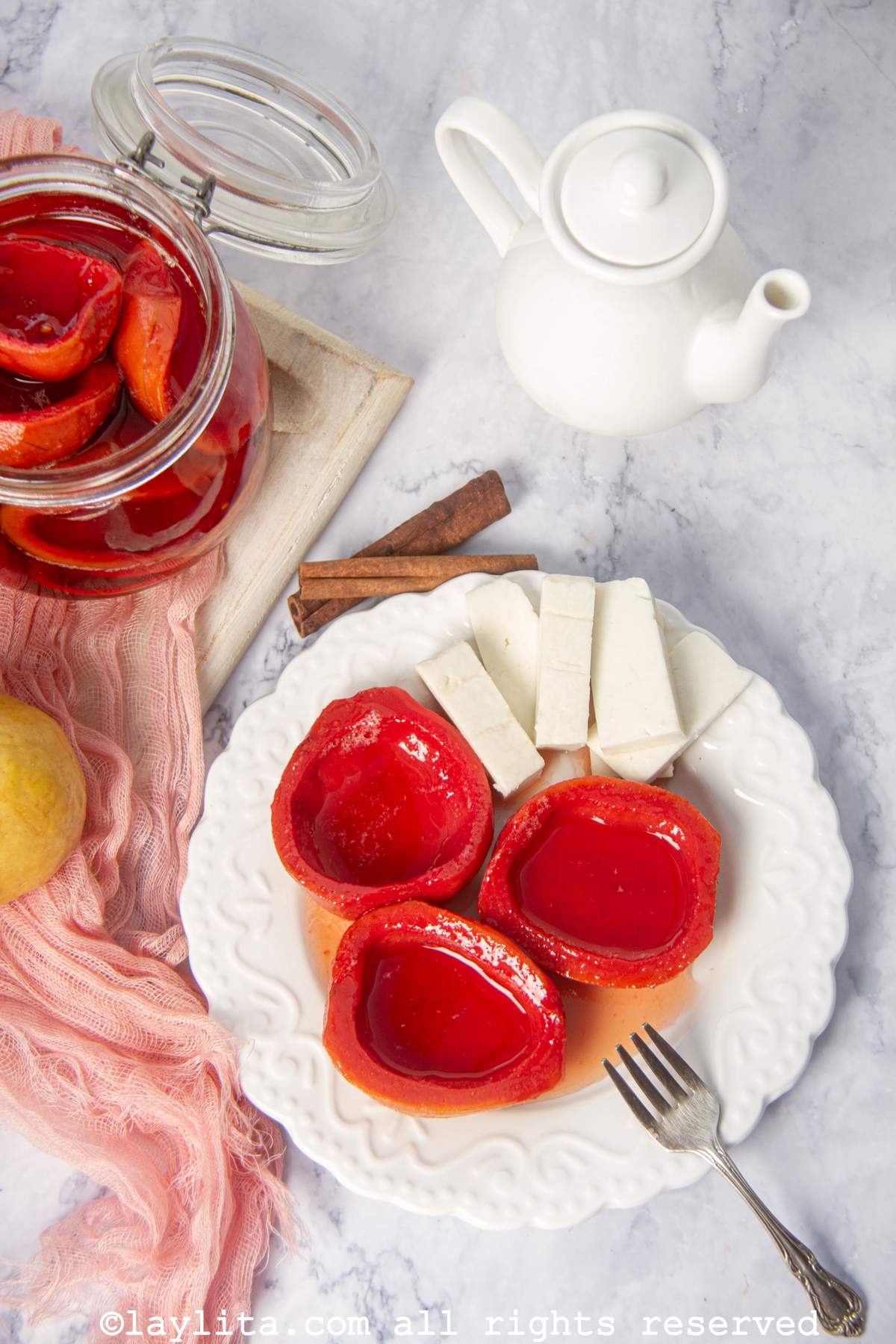
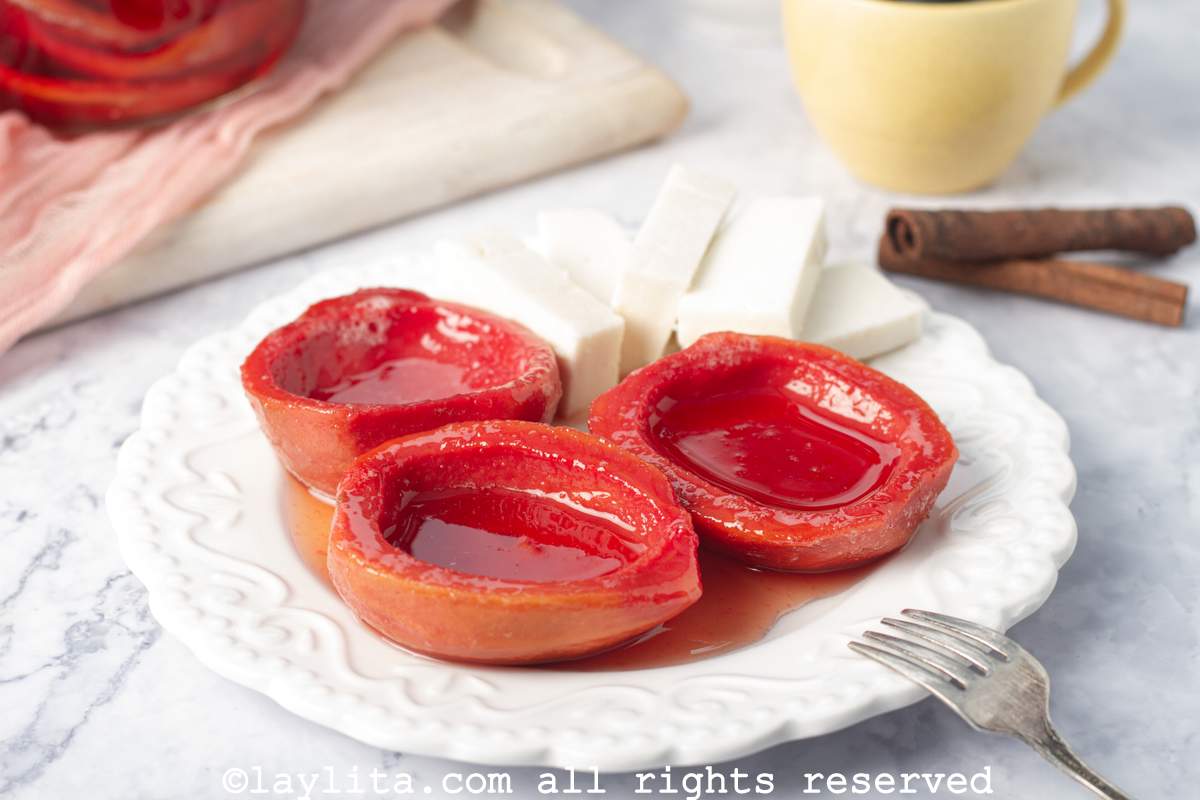
This beloved dulce criollo (traditional sweet) has colonial roots and remains popular across Latin America, especially in Venezuela, Colombia, Cuba, Panama, and Puerto Rico. Once considered a special-occasion treat, it’s now a year-round favorite often served with a slice of cheese or a spoonful of cream cheese for that perfect sweet and salty balance.
Ingredient Notes
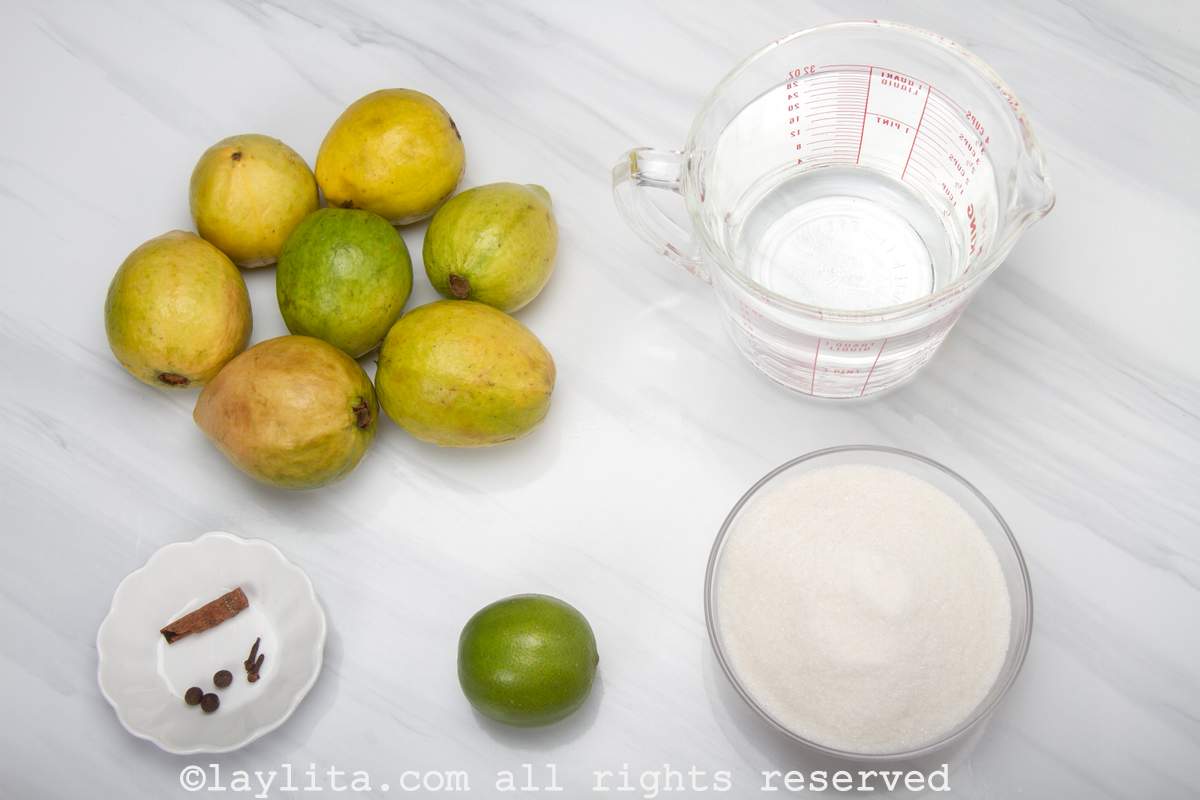
- Guavas: Choose firm, slightly underripe guavas, what many in Latin America call “pintonas”. They should be light green with a hint of yellow and feel firm to the touch. Using guavas that are all about the same size ensures even cooking.
- Water: Forms the base of the syrup. Make sure to use enough to cover the guavas in the pot.
- Sugar: Sweetens the syrup and helps create that thick, glossy finish as it reduces.
- Lemon or lime juice: Adds a touch of acidity to balance the sweetness.
- Cinnamon stick, cloves, and allspice peppers: Traditional warm spices that give the syrup its beautiful aroma and depth!
- Queso fresco or cream cheese (for serving): The salty, creamy contrast that makes this dessert so special.
Tips for Success
- Avoid stirring! Guava shells are delicate and can easily break apart. Instead of stirring, gently tilt or swirl the pot if you need to move them around.
- Use similar-sized guavas, if possible. This ensures they cook evenly and maintain their shape. If some of them are smaller than others, they will finish first.
- Don’t rush the syrup! Slow cooking is key. Give the syrup time to thicken naturally for the best flavor and texture.
- Mind your spices: A little goes a long way, you want the warm spice notes to complement the guava, not overpower it.
How to Serve Casquitos de Guava or Candied Guava Shells
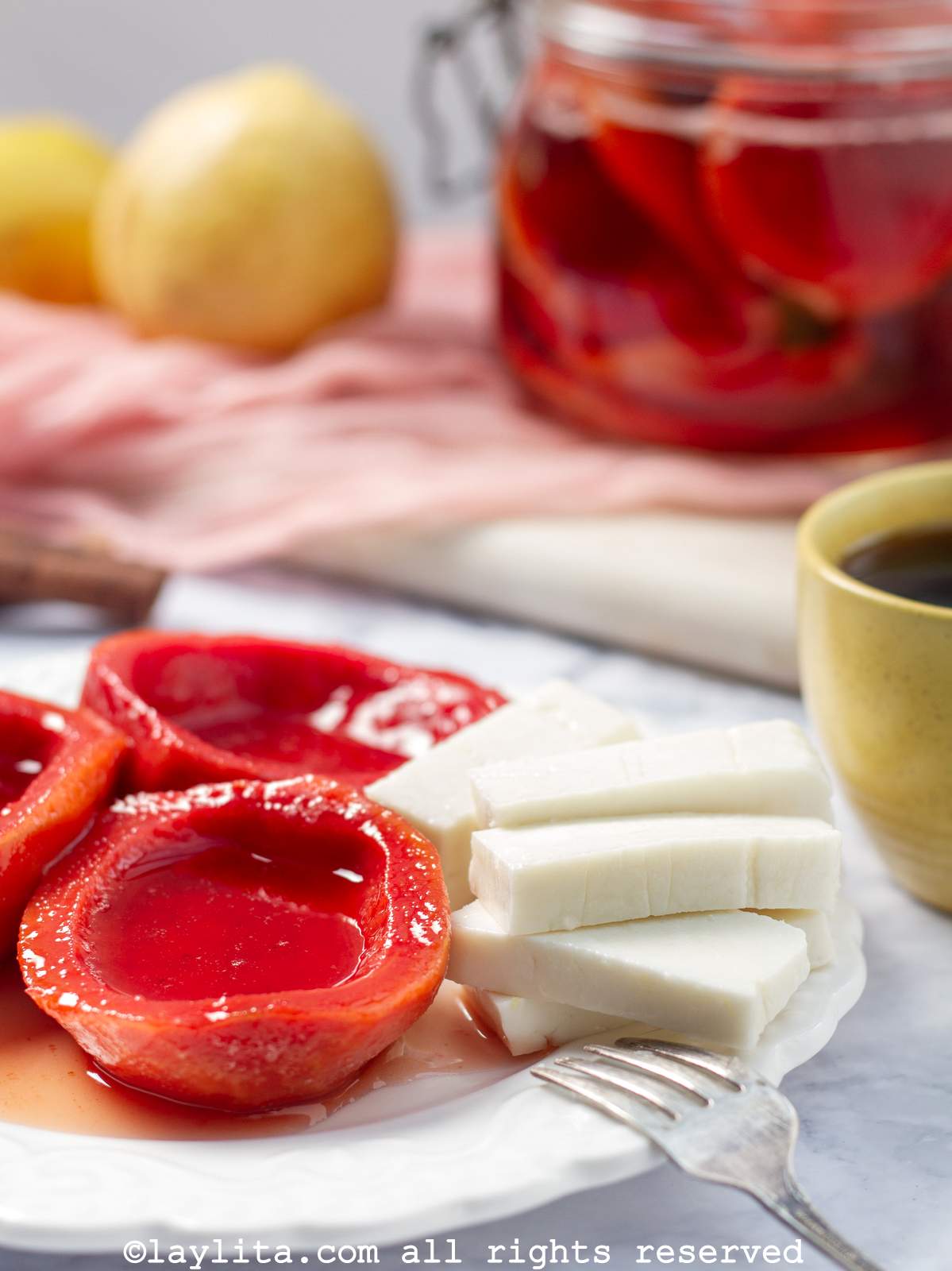
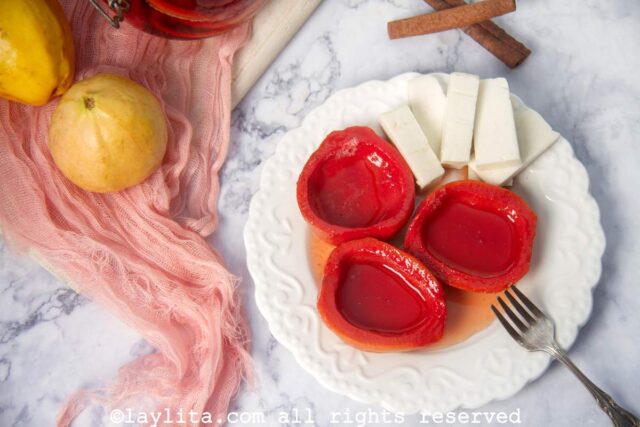
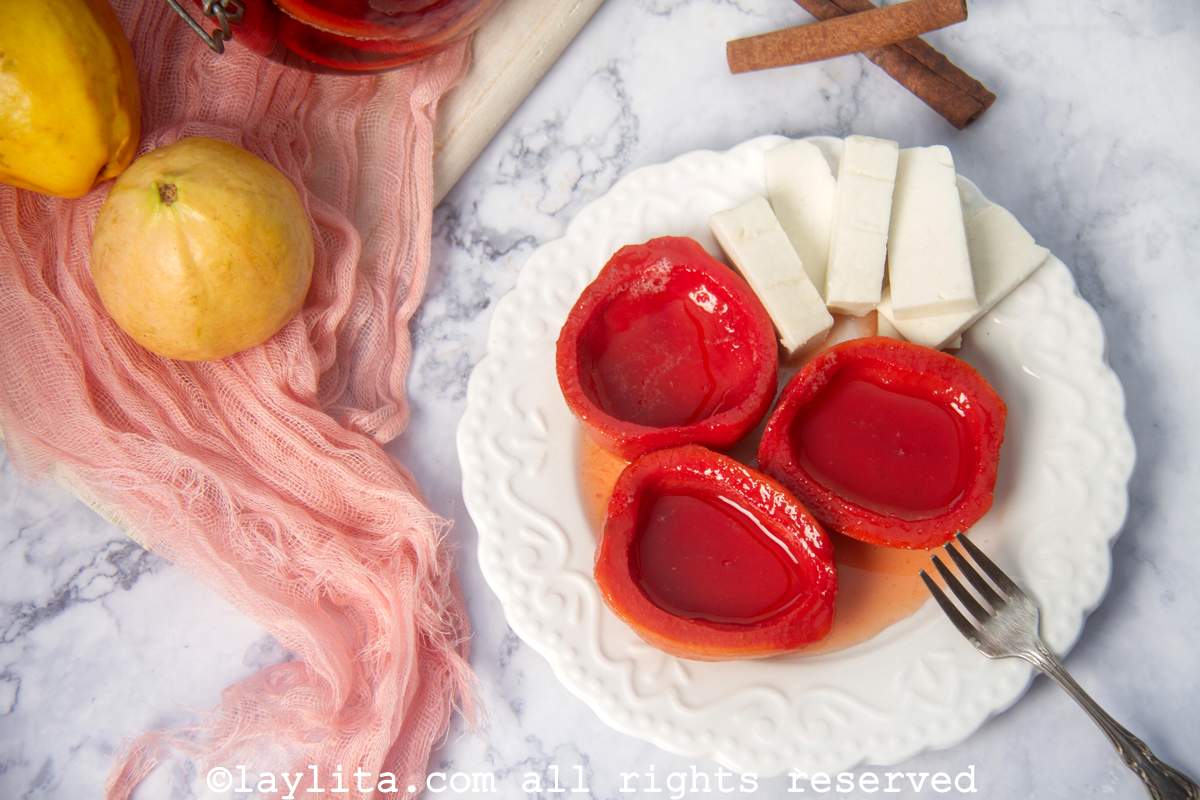
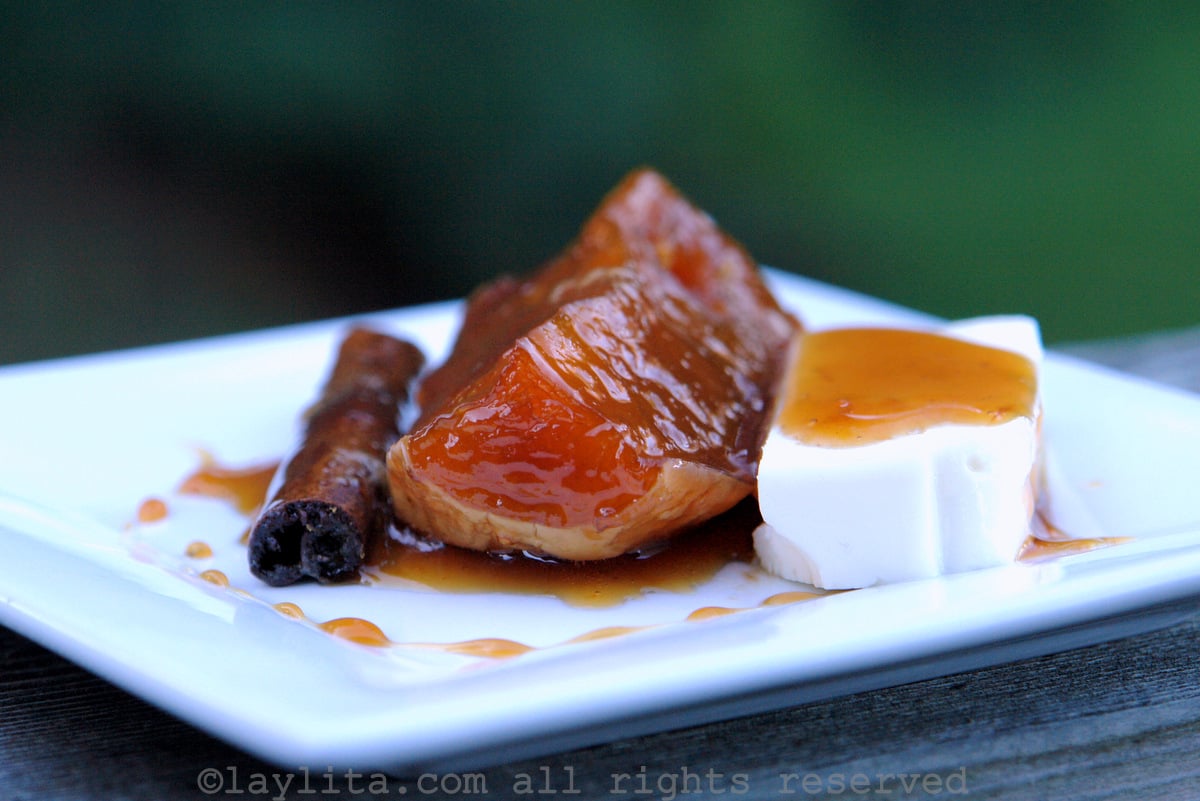
Traditionally,cascos de guayaba are served with a slice of salty white cheese or a generous spoonful of cream cheese. The contrast is so good! You can also serve them with ricotta, brie, or even a scoop of vanilla ice cream for sweeter treat.
They’re just as lovely on their own, or paired with crackers for a sweet-and-savory snack. In many Latin American homes, they make the perfect ending to a big meal.
Frequently Asked Questions
What kind of guava should I use?
Look for guavas that are firm and just starting to ripen. Their skin should be light green or slightly yellow, not soft or fully yellow. These hold their shape best during cooking.
Can I use white-fleshed guavas?
Yes! While pink guavas give the dessert a more vibrant color, white or yellow-fleshed guavas taste just as delicious.
How long do cascos de guayaba last?
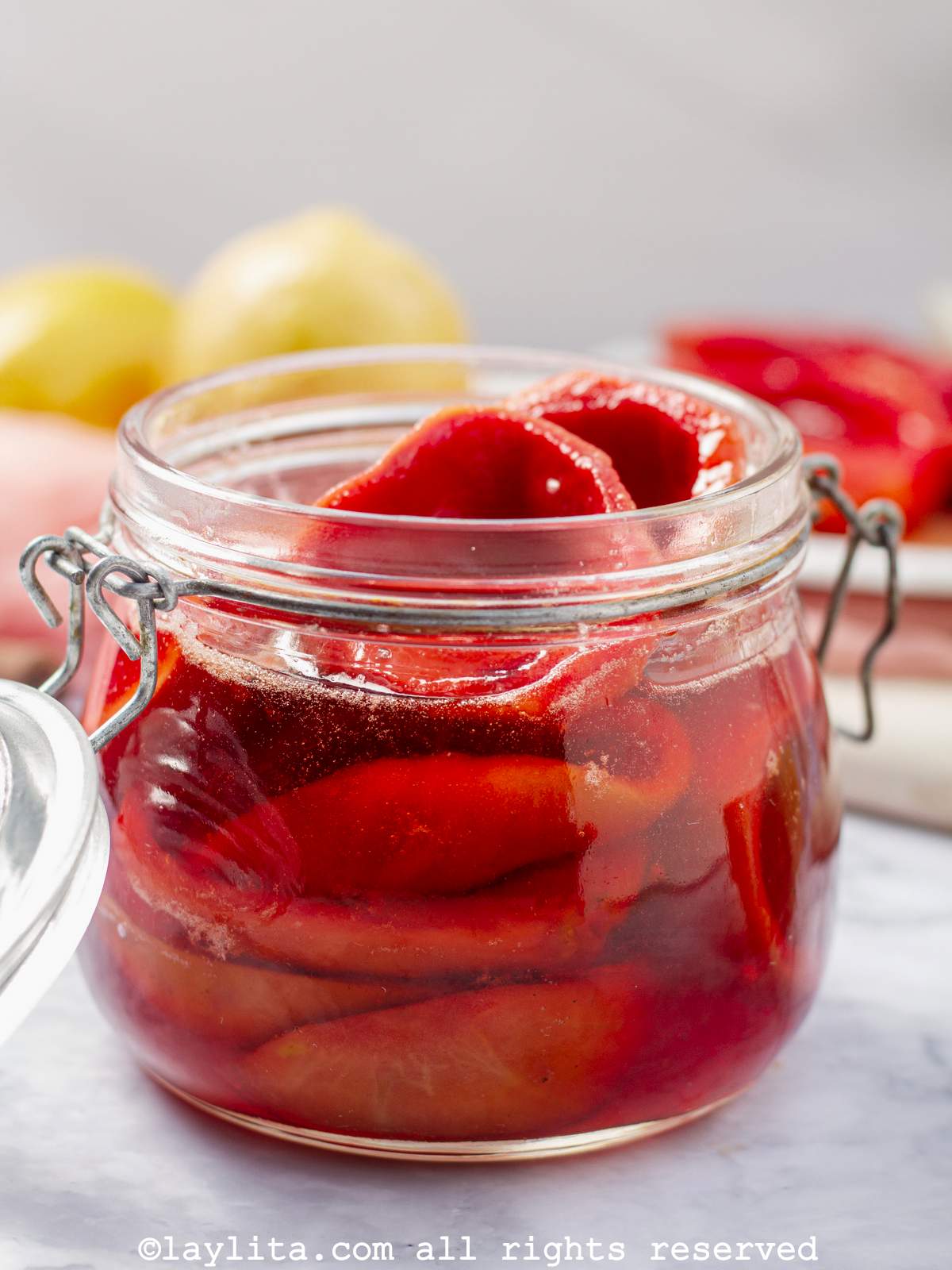
Stored in an airtight container in the refrigerator, they’ll keep for up to a week. You can also freeze them with some syrup for up to two months. Just thaw gently in the fridge before serving.
Why is my syrup bitter?
If using lemon peel instead of juice, it can sometimes add a slight bitterness, especially if the peel isn’t from a sweet lemon. It’s best to stick with lemon or lime juice and avoid adding zest unless you know it’s mild.

Cascos de Guayaba (Candied Guava Shells in Syrup)
Ingredients
- 7 firm but ripe guavas, with light yellow green skin
- 5 cups water
- 2 cups sugar
- 2 tablespoons lemon or lime juice
- 2 cloves
- 1 cinnamon stick
- 3 allspice peppers
To serve:
- Queso fresco or cream cheese
Instructions
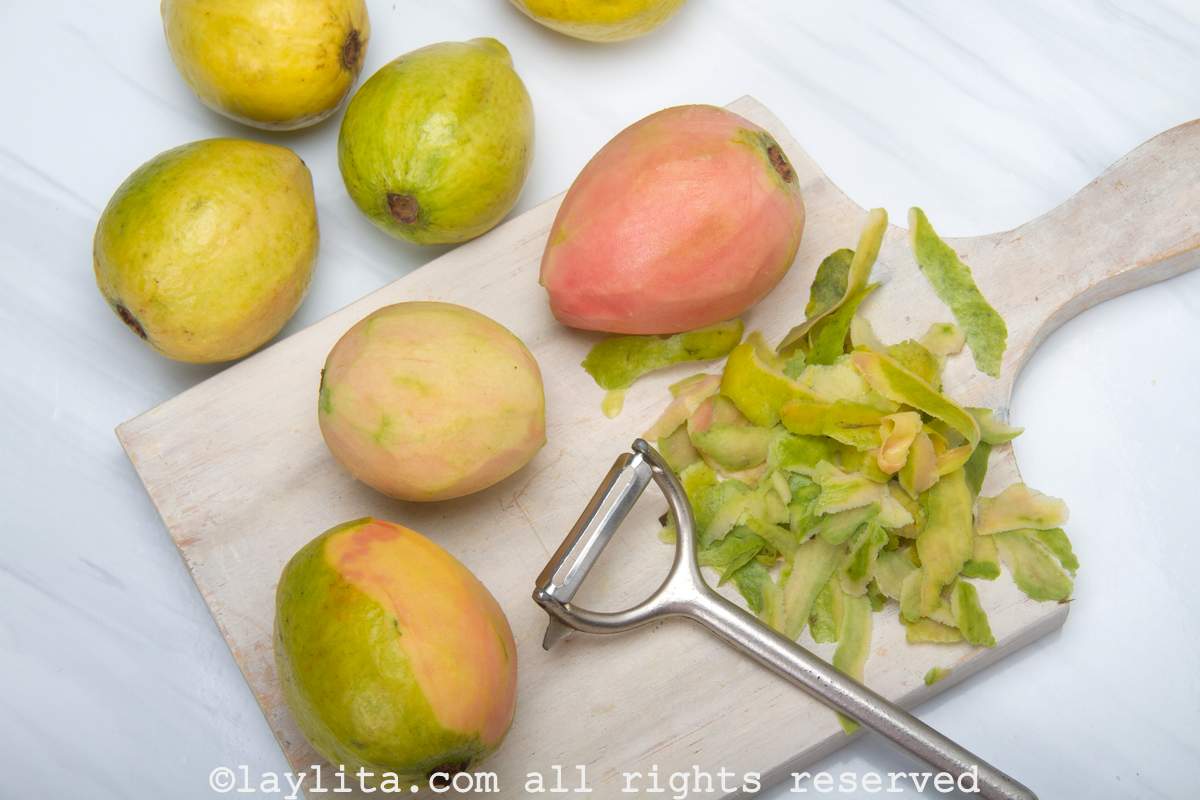
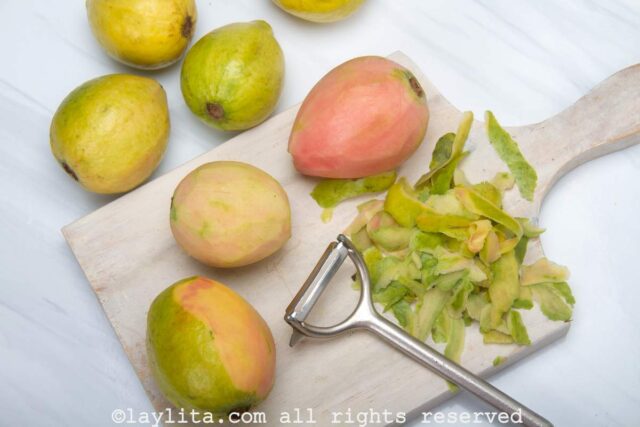
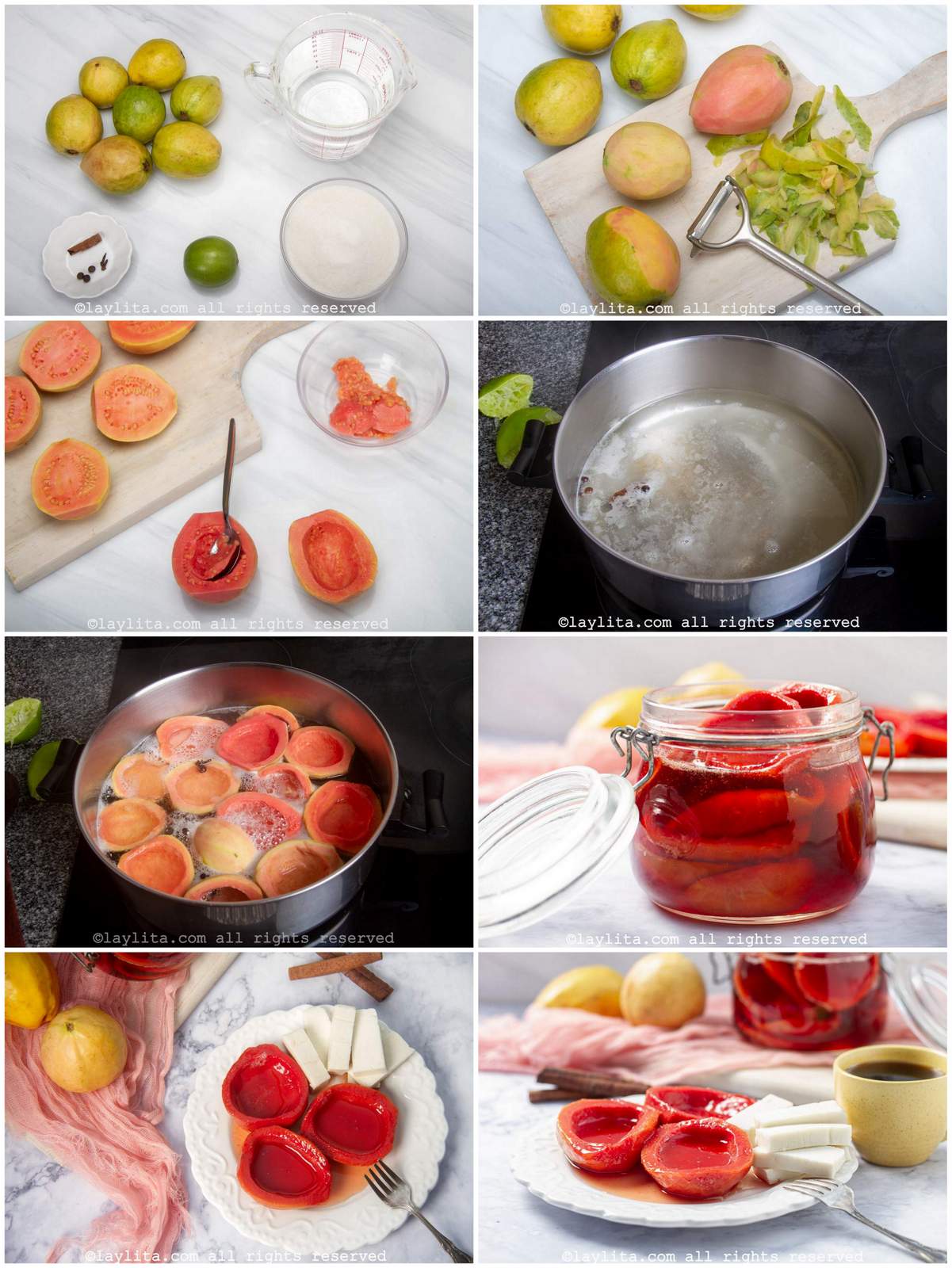
- The most important step in this recipe is preparing the guavas. It’s best to use guavas that are similar in size and shape. Try to avoid fruits that have dents or marks on the peels.
- Wash the guavas and peel them carefully with a potato peeler. Just remove the thinner outer layer of the peel.

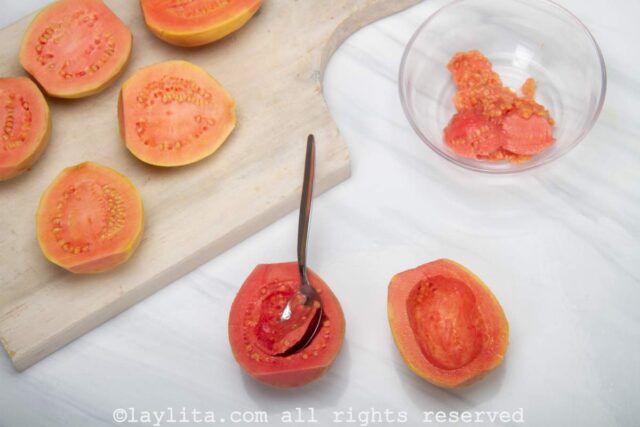
- Cut the peeled guavas in half lengthwise.
- Use a small spoon or teaspoon to scoop out all the guava seeds from each shell. Be very careful not to pierce the skin, and at the same time, ensure that all the skins are the same thickness. Don’t discard the guava seed pulp; you can save it to make juice or jam.
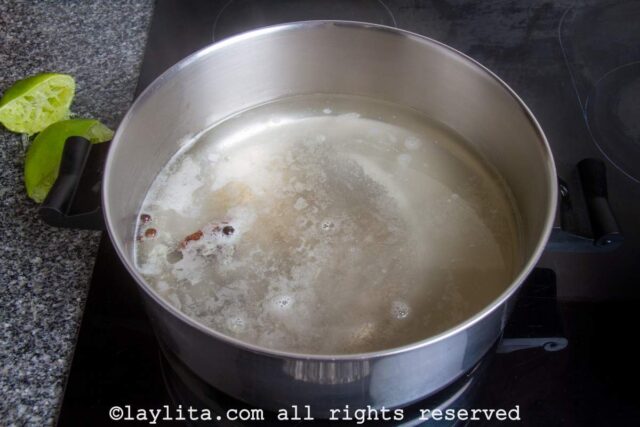
- Put the water, the sugar, lime juice, cinnamon stick, cloves, and allspice peppers in a large pot. Bring it to a simmer over low heat and let the sugar dissolve.
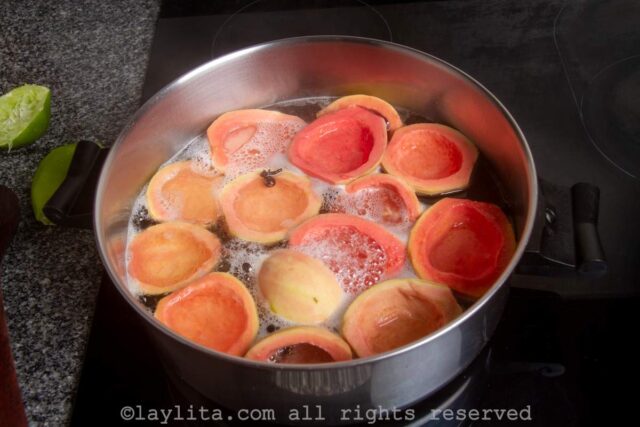
- Arrange all the guava shells neatly inside the large pot.
- Turn the stove to medium-low heat. Cook partially covered for approximately 45 minutes. Then, uncover and continue cooking for another 60 minutes, over low heat, until the syrup thickens and the guava shells turn bright pink/pale red.
- Turn off the stove and let them rest. Remove the spices (cinnamon, cloves, and guava pepper) and discard them. Store the cooled down guava shells and syrup in a jar.
- Serve this guava dessert with a slice of cheese or with cream cheese.
Notes
- To keep the guava shells from breaking apart during the cooking process it is very important to avoid stirring the pot. The shells are very fragile and will break if stirred.
- We used guavas that have pink flesh, if you can only find guavas with a white/yellow flesh they will also work fine but will not have that bright pink color.
Step by step preparation for Casquitos de Guayaba or candied guava shells in syrup:
Additional Recipes to Try

Discover more from Laylita's Recipes
Subscribe to get the latest posts sent to your email.