How to Cook Yuca or Cassava

If you’ve ever seen yuca or cassava at the store and wondered how to cook it, you’re not alone. This starchy root is a staple across Latin America and beyond, and once you know how to prepare it, you’ll realize just how versatile it can be, from simple boiled yuca to crispy fries or hearty soups! Let’s learn how to cook yuca!

What is yuca or cassava?
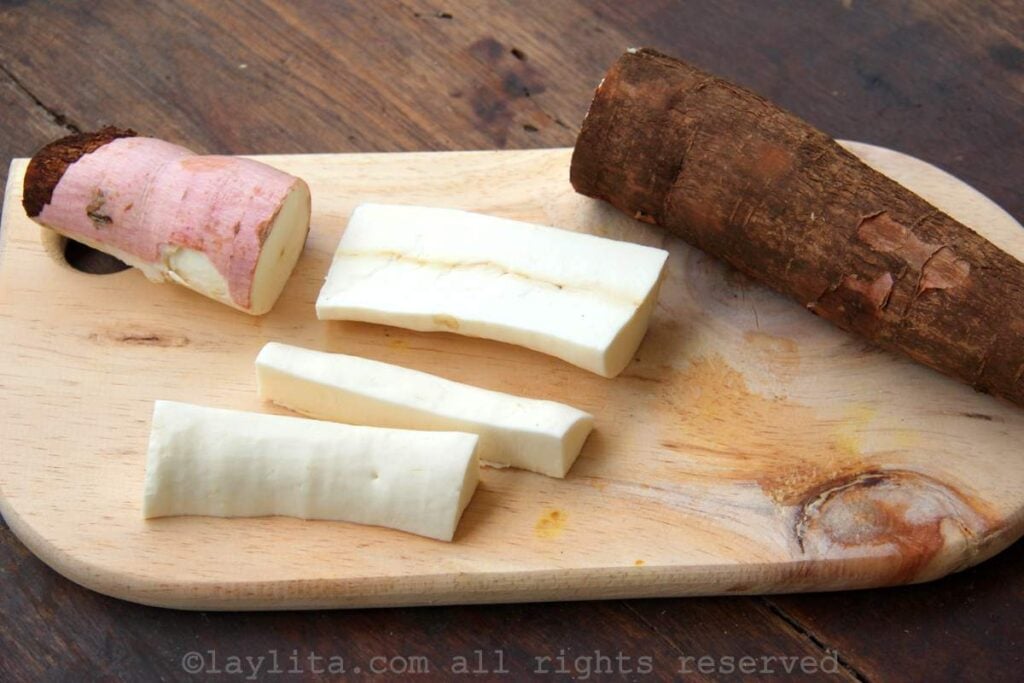
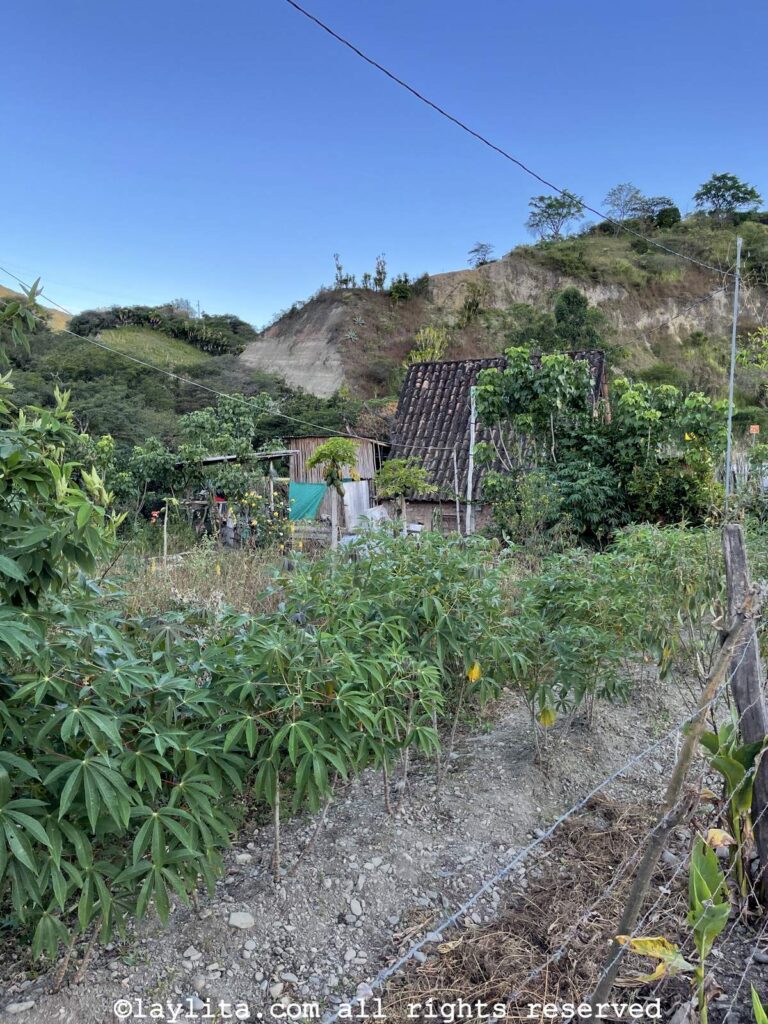
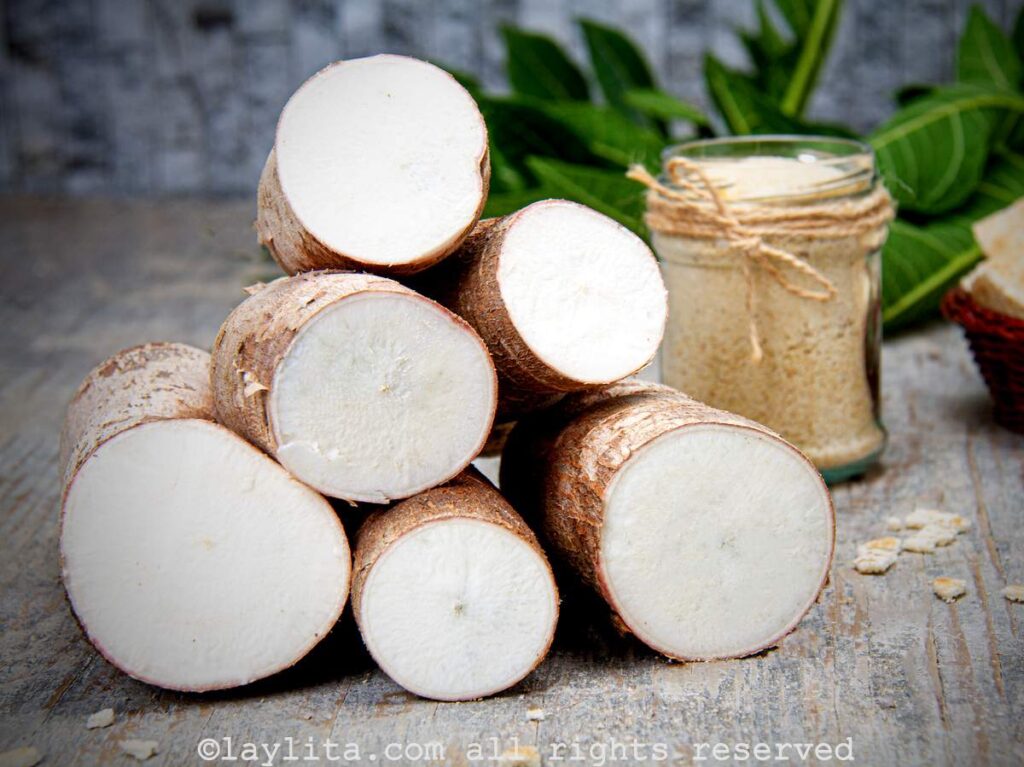
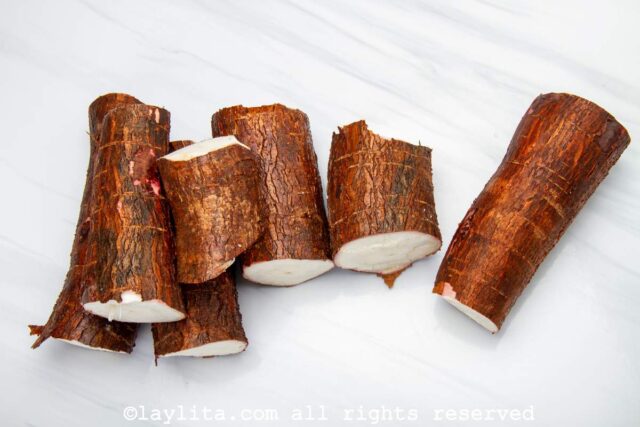
Yuca, also known as cassava, is a starchy root vegetable grown widely in tropical regions. It has a tough brown skin and a white, firm flesh inside. When cooked, yuca becomes tender, mild, and slightly sweet, similar to potatoes but denser and starchier.

In Ecuador and much of Latin America, yuca is used in soups, fried snacks, and side dishes. It’s also naturally gluten-free, making it a great option for anyone looking for alternatives to wheat-based starches!

Ingredient Notes
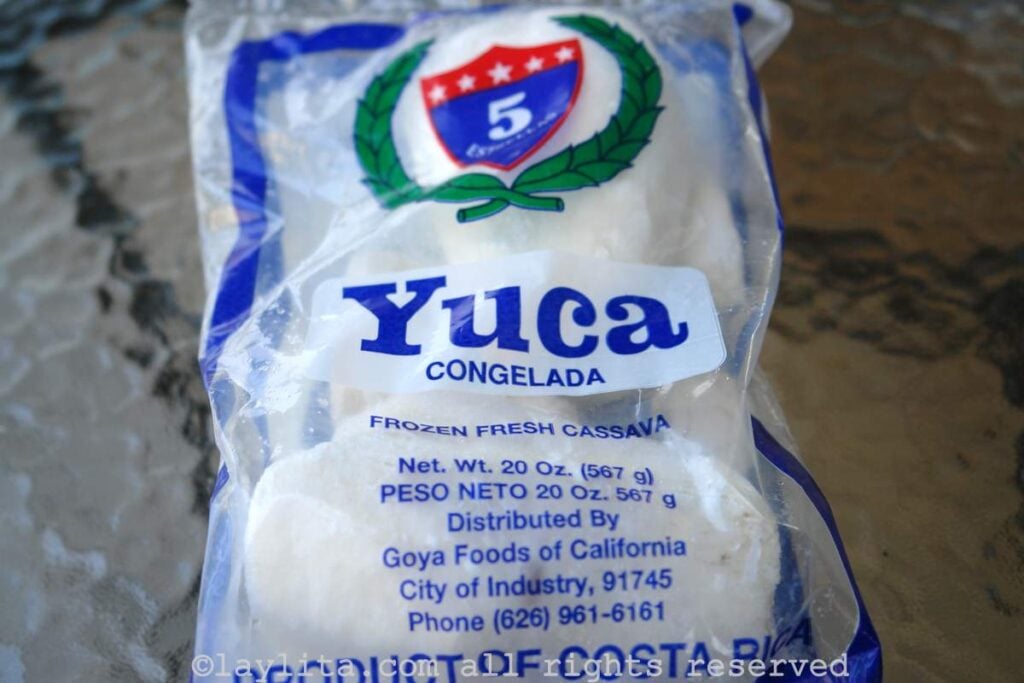
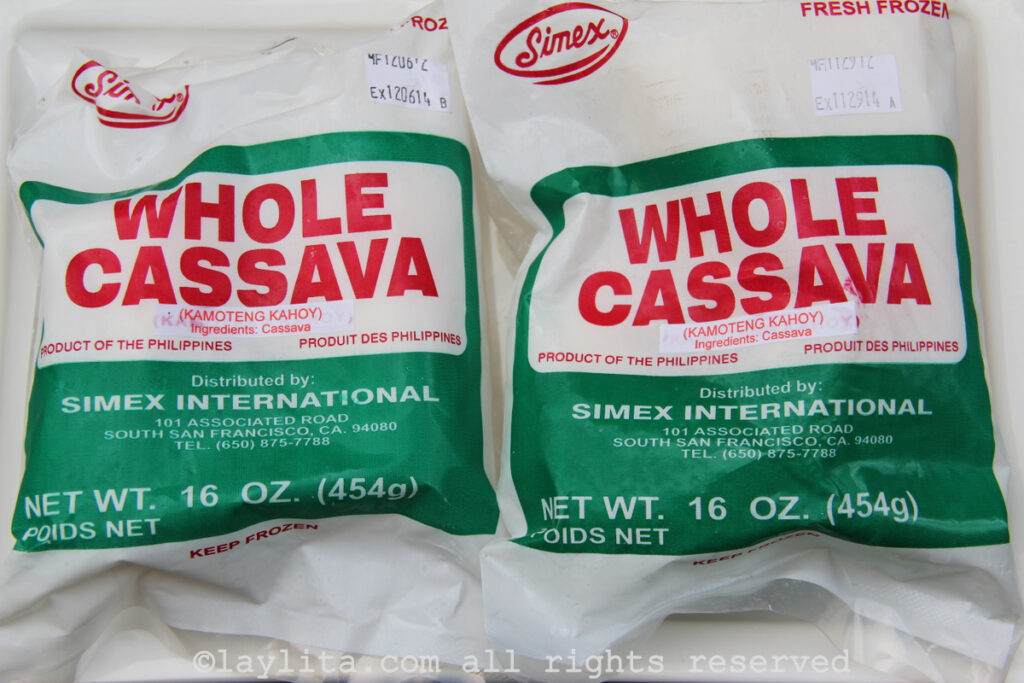
- Fresh whole yuca or frozen yuca: Look for roots that are firm with no soft spots, cracks, or black streaks inside. The fresher the yuca, the easier it will peel and cook. Frozen yuca is a convenient shortcut if you don’t want to deal with peeling. Frozen yuca usually comes already cut and cleaned, though it takes longer to cook.
- Water: You’ll need plenty to fully submerge the yuca pieces while boiling.
- Salt: Adds flavor as the yuca cooks and keeps the final dish from tasting flat.
Ways to Use Yuca
This boiled yuca recipe is super versatile, and can be used in many ways!
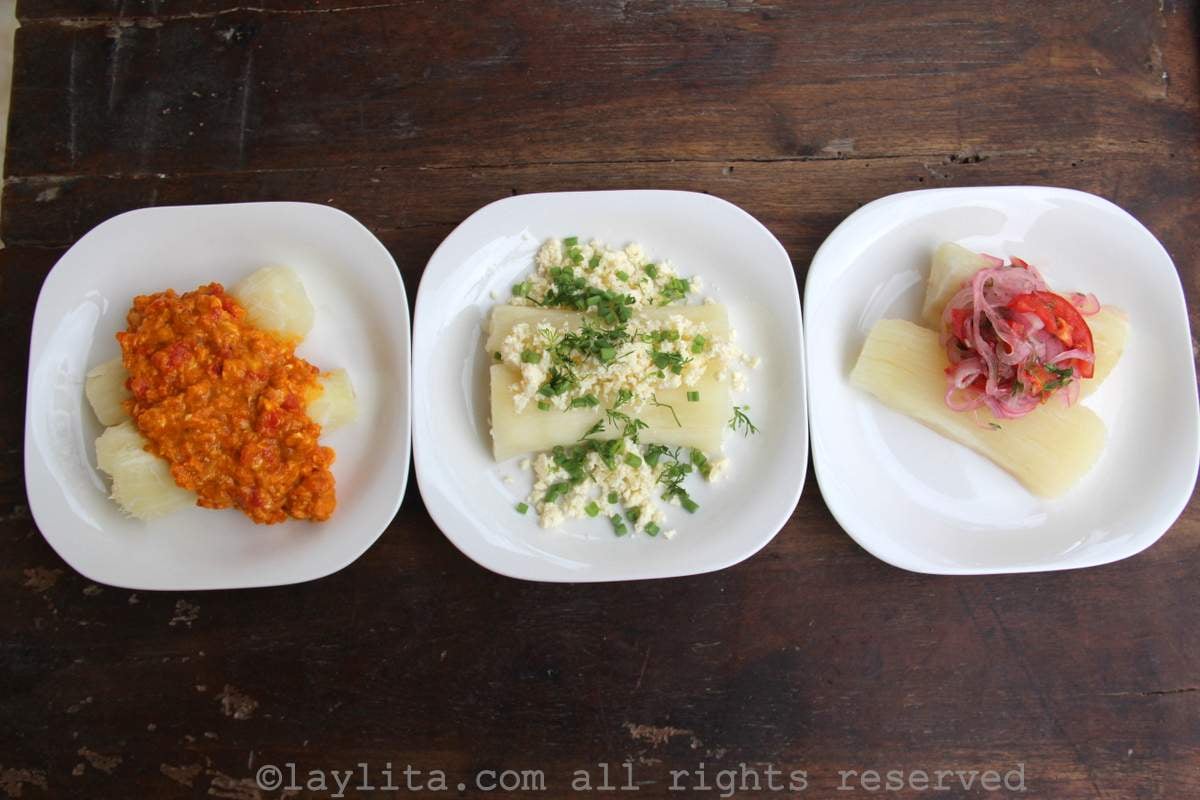
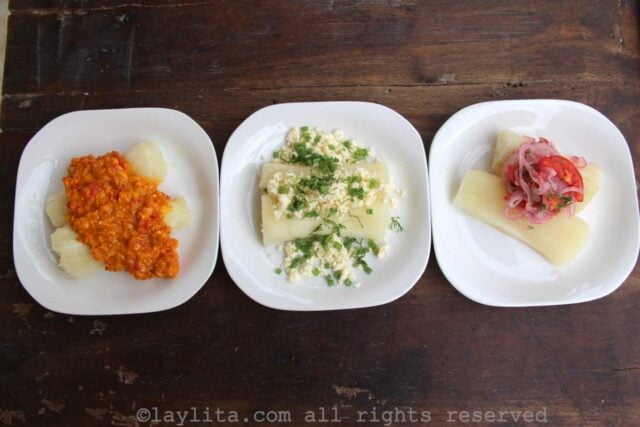
- Boiled with a sauce: A simple side dish, serve warm yuca with garlic mojo sauce, cheese sauce, or just a drizzle of olive oil. Boiled yuca is also delicious topped with tomato and onion curtido salsa.
- Stuffed yuca balls: Mashed yuca formed around a savory filling, then fried until golden.
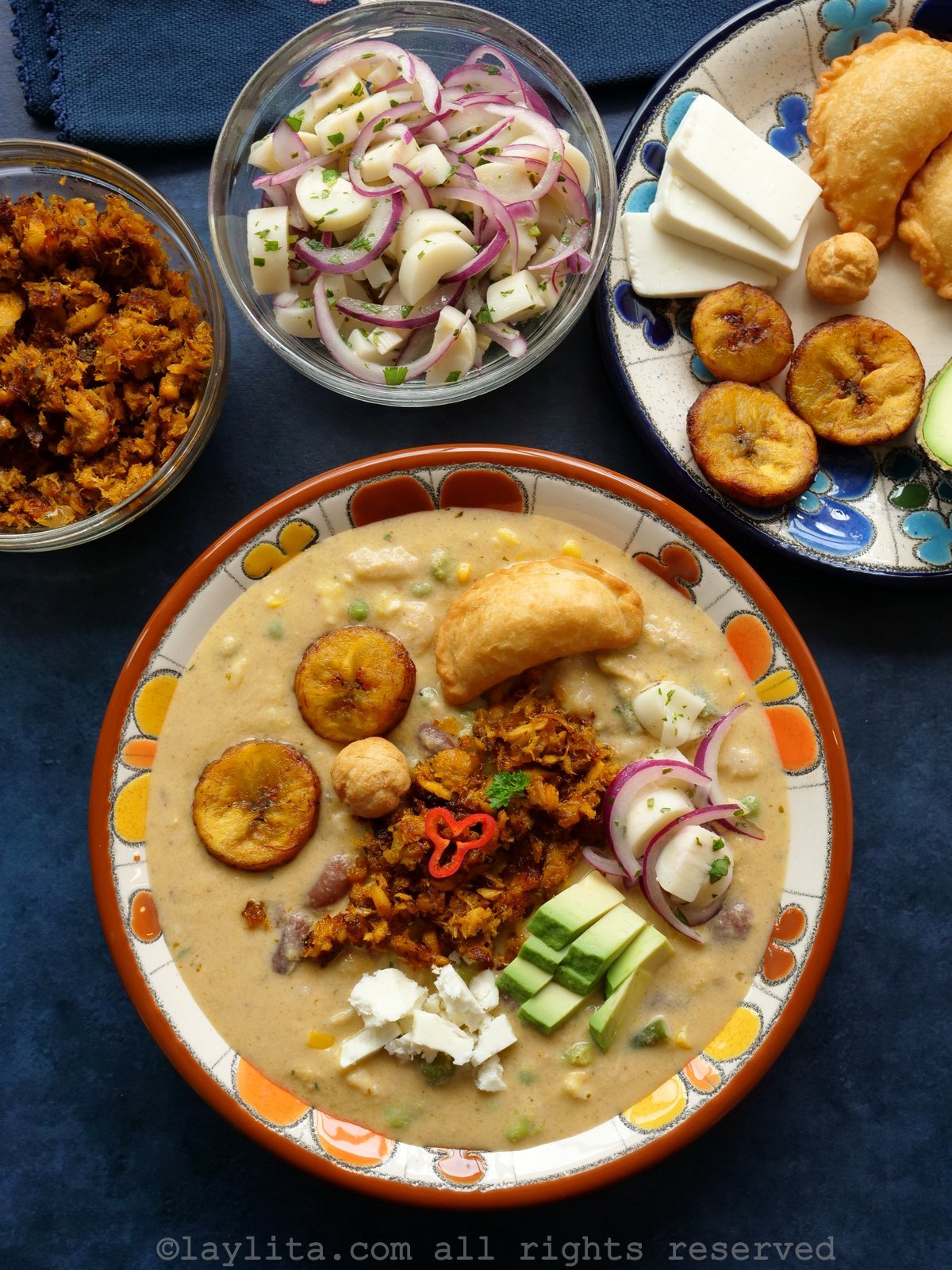
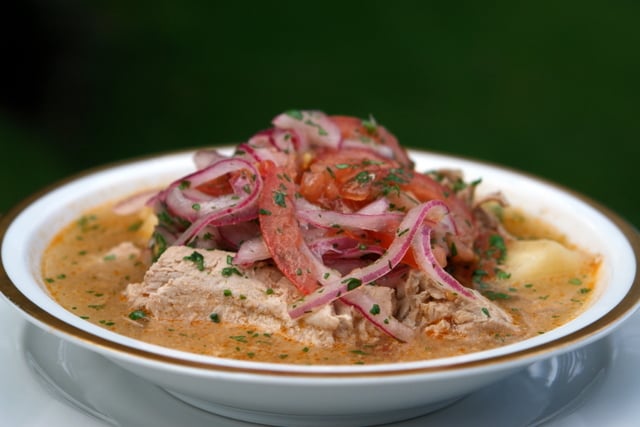
- Encebollado de pescado: Ecuador’s famous fish soup, often served with boiled yuca.
- Caldo de pata or any variation of a Sancocho style soup: Traditional Ecuadorian soups where chunks of yuca add body and starch.
- Yuca fries: Slice cooked yuca into wedges and fry or bake until crispy. They’re thicker and heartier than potato fries, perfect for dipping into my avocado cilantro mayo!
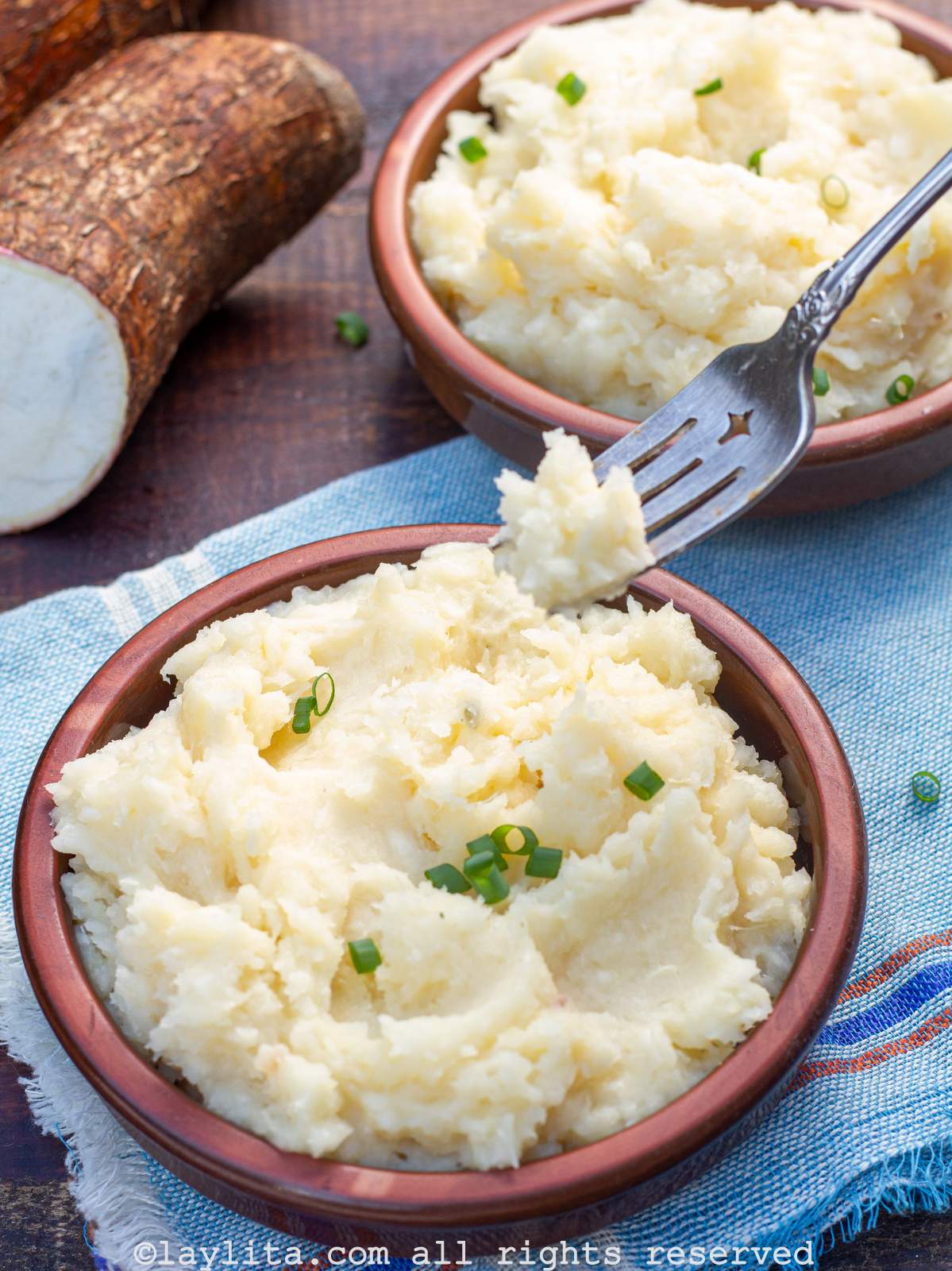
- Mashed yuca or cassava purée: A delicious, rustic alternative to mashed potatoes!
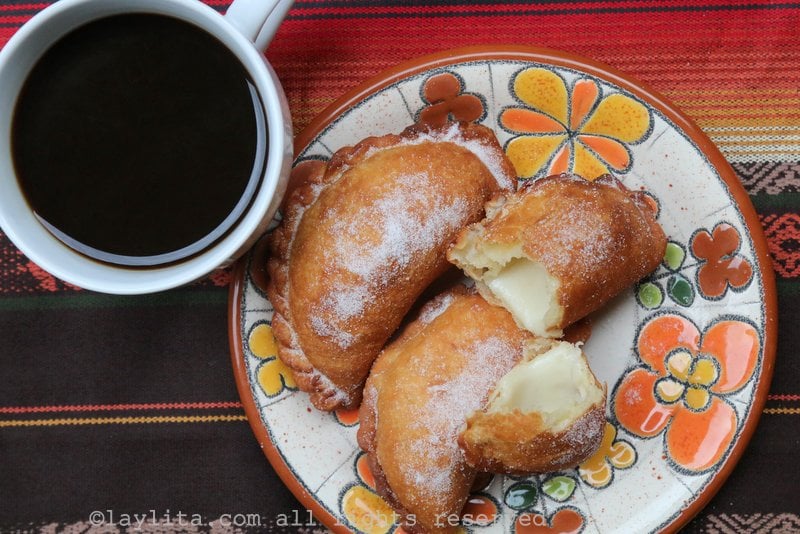
- Yuca empanadas:
Additional Yuca or Cassava uses
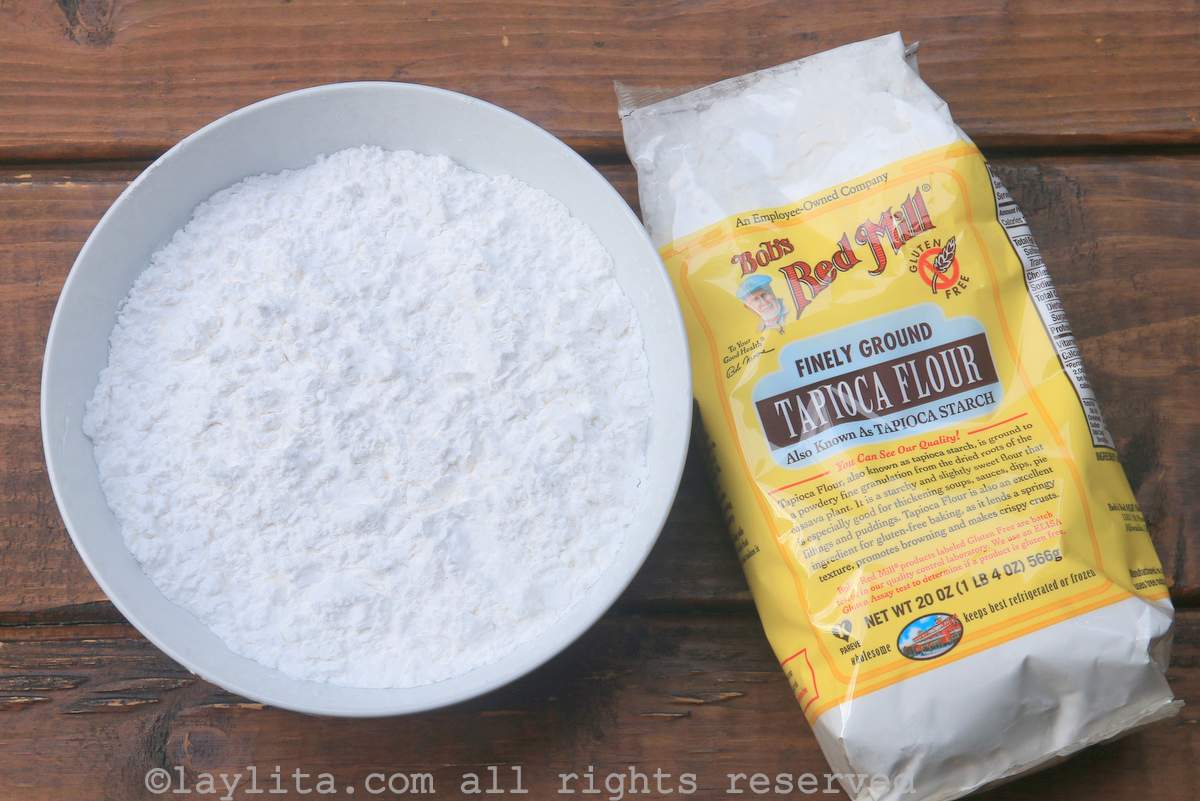
One of the most popular products made from yuca is tapioca starch, sometimes also called tapioca flour or yuca flour (even though the yuca flour is actually different than the starch). This starch is a key ingredient for pan de yuca or cassava cheese bread. The starch can also be used to make cookies and other baked treats.
Another way to use fresh yuca is to grate finally it while raw and use the raw pulp to make a batter for another traditional Ecuadorian dish called muchines de yuca.
In Brazil, they also make a sweet cake using yuca and coconut called bolo de macaxeira. In Venezuela, they make yuca buñuelos or fritters with a mix of yuca and cheese, it is served with spiced brown sugar syrup called almíbar de papelón.
Fresh Yuca vs Frozen Yuca
Both fresh and frozen yuca work well, but there are some differences worth knowing:
- Fresh yuca: Best flavor and texture when it’s really fresh. Look for roots that are heavy, firm, and free of cracks or discoloration. The downside is peeling, since it can be tricky until you get the hang of it.
- Frozen yuca: Already peeled and cut, making it super convenient. It usually takes longer to cook (40–50 minutes vs. 20–30 for fresh). The flavor is very similar, though slightly less bright than fresh.
If you’re new to cooking yuca, starting with frozen can make things easier. Once you’re comfortable, buying fresh gives you more flexibility and can be more affordable.
Tips for the Best Yuca
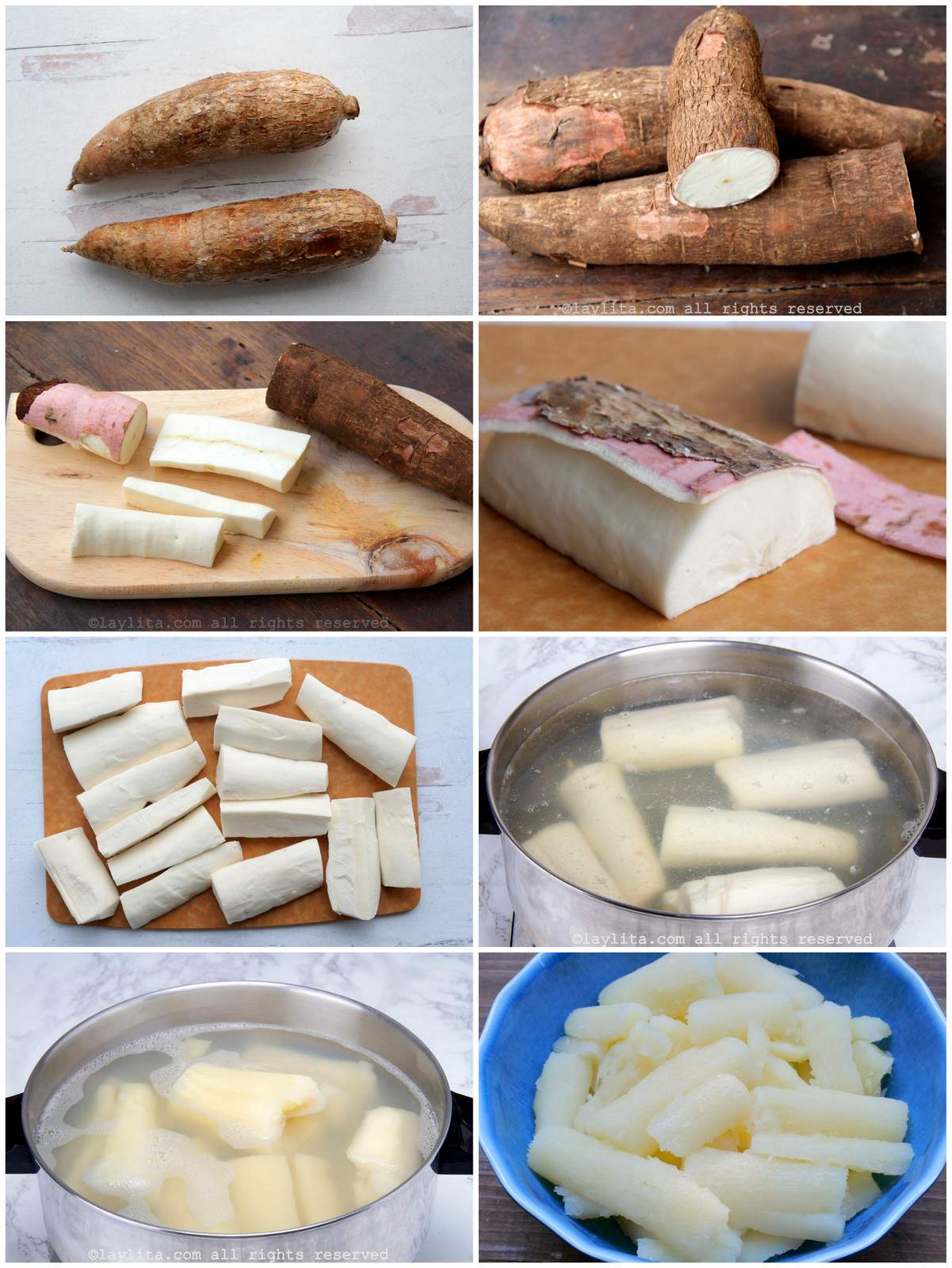
- Peel it completely: Yuca skin has two layers, a rough outer brown peel and a waxy white or pink inner peel. Both need to be removed before cooking.
- Remove the core: Yuca has a fibrous string-like core that doesn’t soften when boiled. It’s easiest to pull it out after cooking, so look out for it once the yuca is boiled.
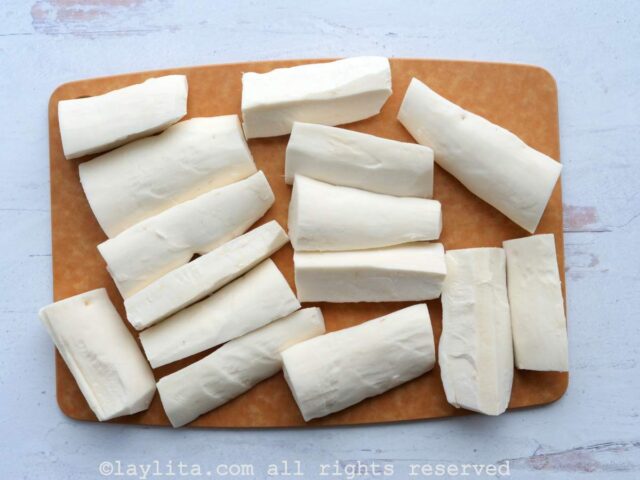
- Cut into even pieces: Smaller pieces cook faster and more evenly.
- Don’t overcook (unless mashing): For boiled yuca as a side dish, cook until tender but not mushy. For purées, keep boiling until very soft.
- Save the cooking water: Yuca cooking water becomes starchy and makes a great base for soups.
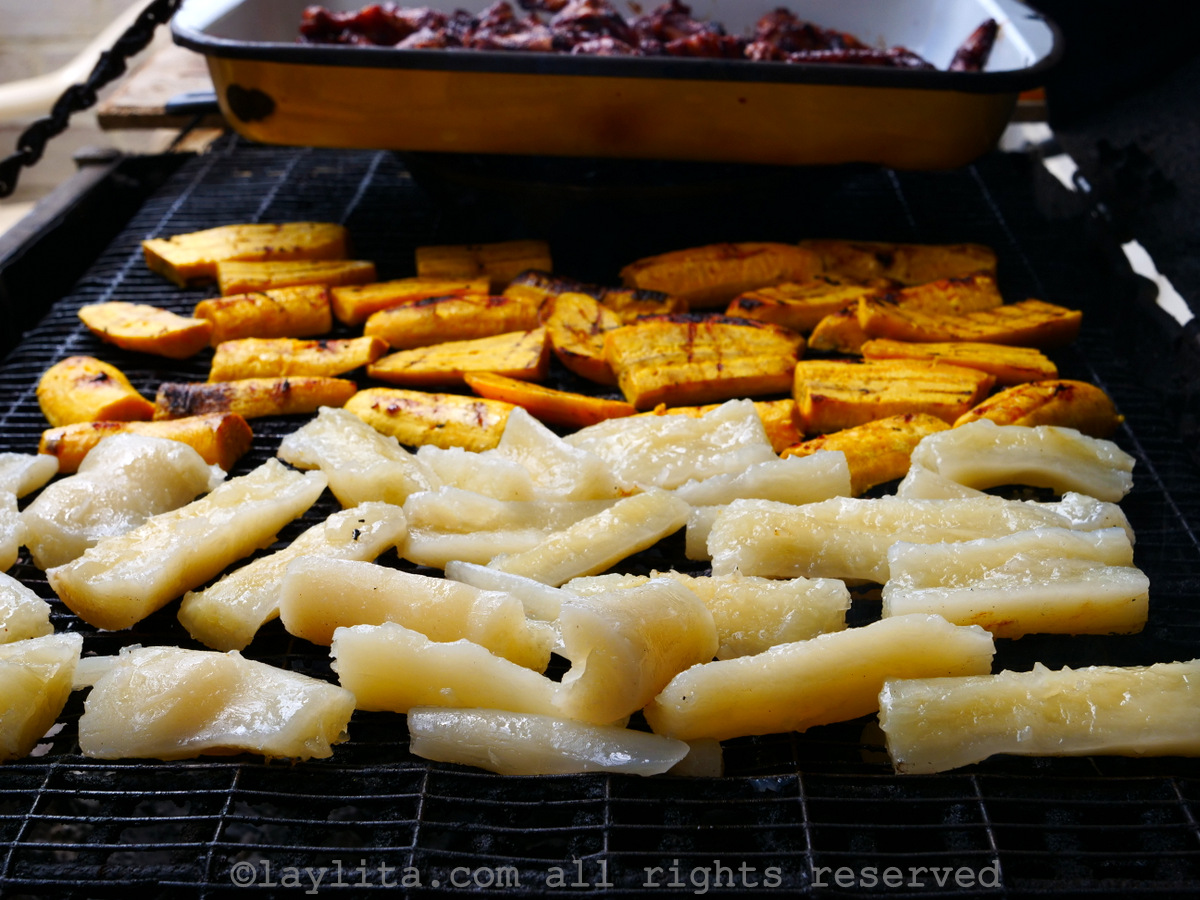
- Try parboiling: If you’re making fries or grilling yuca, boil it just until it starts to soften, then finish cooking in the fryer, oven, or grill for the best texture.
Frequently Asked Questions
How do I know if fresh yuca is good to use?
Good yuca should be firm, with no soft spots, mold, or cracks in the skin. When cut, the inside flesh should be white with no dark streaks, black spots, or discoloration, those are signs it’s old or spoiled. If you open it up and do see dark streaks, unfortunately you shouldn’t use it. This is part of the reason why sometimes I opt for frozen yuca!
How do I store cooked yuca?
Keep cooked yuca in an airtight container in the fridge for up to 3 days. Reheat by steaming or lightly pan-frying. You can also freeze cooked yuca for up to 2 months.
Is yuca healthy?
Yes! Yuca is naturally gluten-free and a good source of carbohydrates, fiber, and vitamin C. Just keep in mind that it’s calorie-dense, so it’s best enjoyed as part of a balanced meal.

How to Cook Yuca or Cassava
Ingredients
- 1.5 lbs fresh whole yuca with skin/peel on or 1 lb yuca (fresh or frozen) already peeled
- Plenty of water
- Salt
Suggested toppings for boiled yuca:
- Tomato onion curtido salsa
- Grated or crumbled cheese
- Scrambled eggs with tomato
Instructions
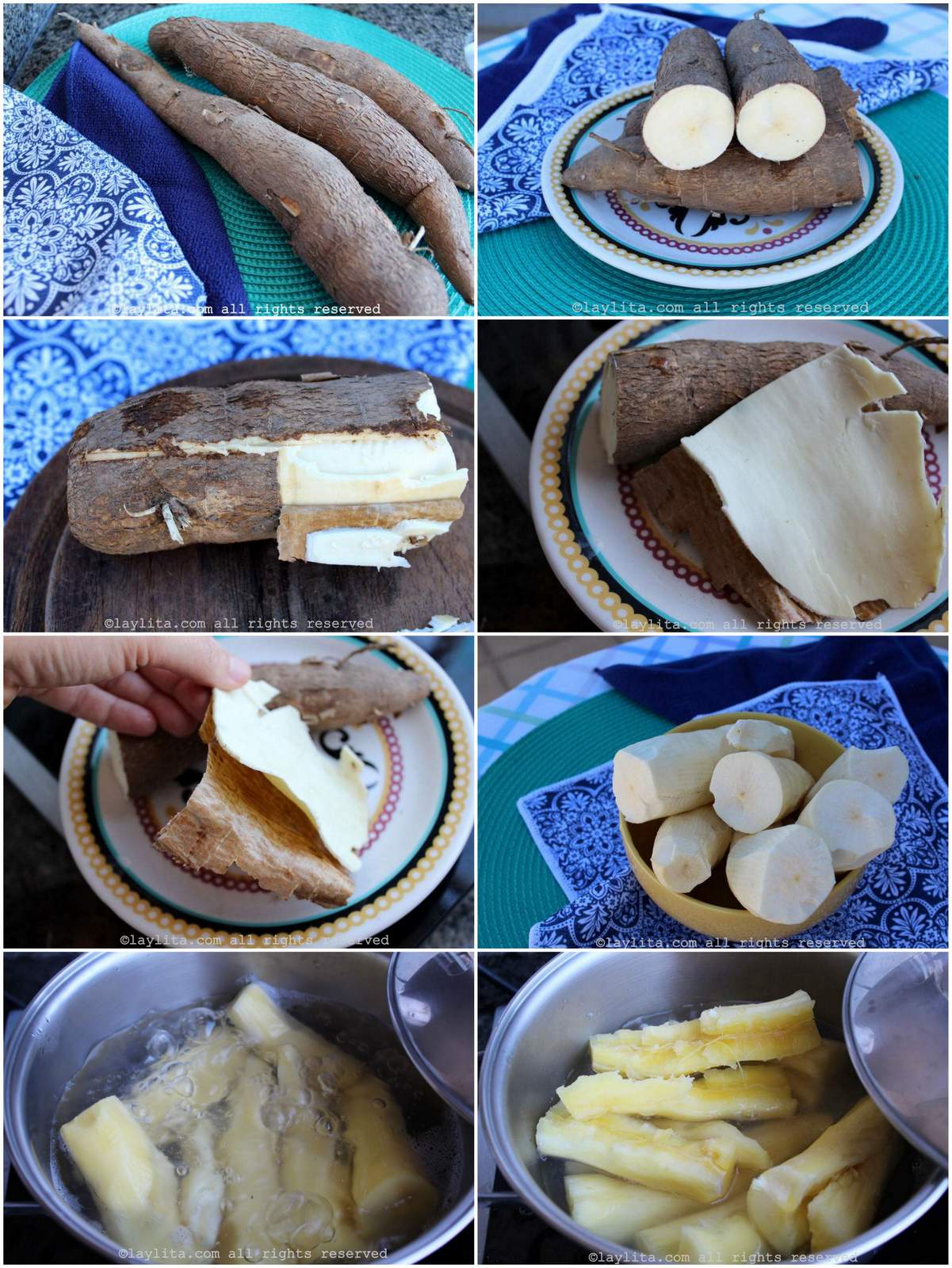
- If using fresh whole cassava or yuca root, rinse them under clean water to remove any dirt.
- Trim the edges. If you have very large roots, cut them into 2-3 pieces.

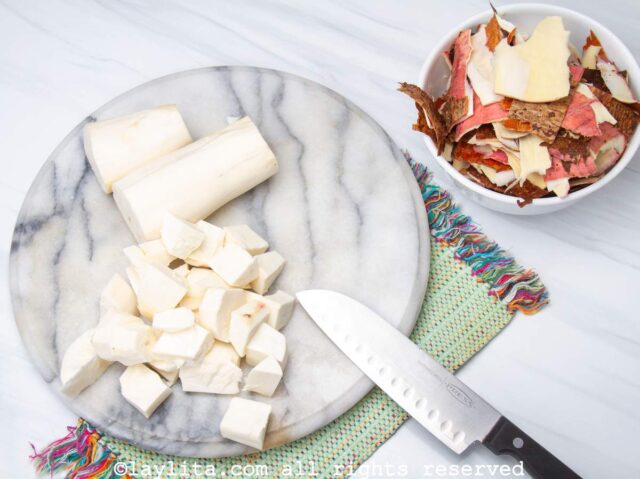
- To peel the yuca, make a longitudinal shallow cut, just deep enough to pierce the skin layer, then gently use the knife to lift and remove the peel. The peel will have 2 layers, the thin born outer layer and a white or pink inner layer. Remove both. The fresher the yuca, the easier it will be to peel.

- Remove any bits that have black dots on them, this means that the yuca no longer fresh and these sections will not cook properly.
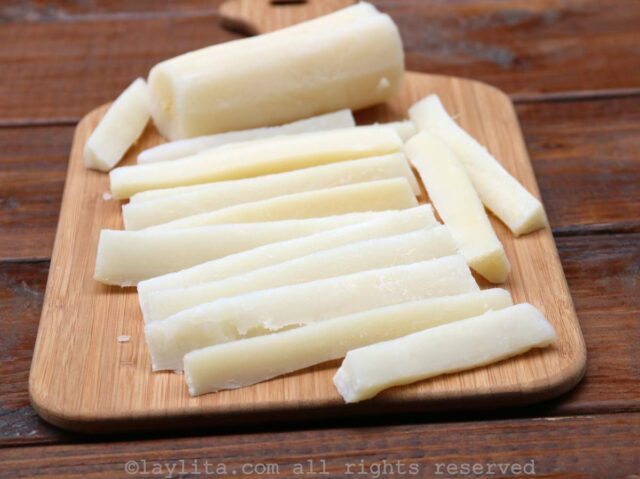
- You can keep the yuca in rounds or slice them lengthwise into halves or into quarters. Cutting the root into smaller and more narrow pieces will help it cook faster.

- You can remove the inner core strings of the yuca while they are raw, however it is much easier to pull them out and remove them once the yuca is cooked.
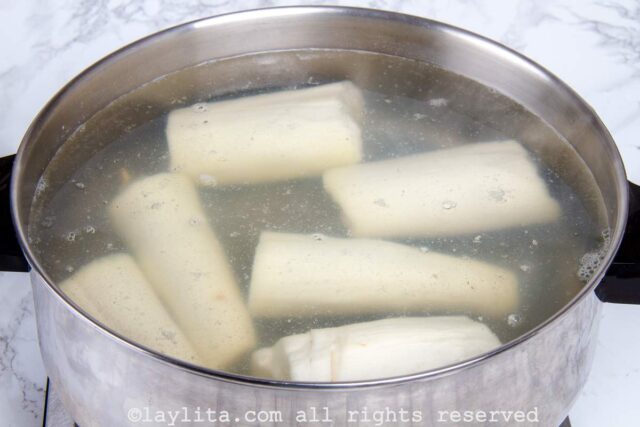
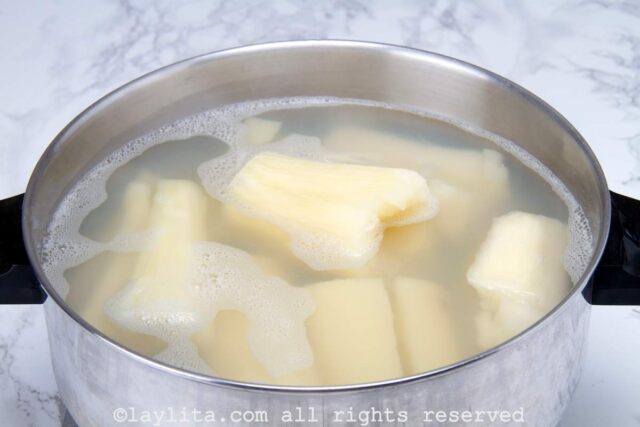
- To boil the yuca, add a good amount of water to a large pot and bring it to a boil. Add the peeled yuca pieces and salt. Boil the yuca for 20-30 minutes, younger yuca will be more tender and will cook faster, while older yuca will take longer.
- If using frozen yuca, it will take 40-50 minutes for the yuca to fully cook.
- The cooking time will also vary depending on how you are going to use the yuca. If you are serving it boiled as a side dish (with a sauce on top for example), then it should be tender, but not overly mushy.
- If you want to use it to make dishes like mashed yuca pure, buñuelos or yuca llapingacho patties, then you can cook it until it is very soft.
- If you are making yuca fries or grilling it, then you can parboil it until it just starts to soften, as you will finish cooking the fries in a pan or on the grill.
- Once the yuca is done cooking, drain the water and use it as desired. For some dishes, you might use a bit of the water, so save it if needed. The water can also be used as a veggie broth base (it will have starch in it so it is perfect for soups).
- You can serve it with your favorite toppings or as side dish.


Additional photos showing how to peel and cook yuca or cassava:
More Recipes to Try




Discover more from Laylita's Recipes
Subscribe to get the latest posts sent to your email.