
How to Make Arepas

Learn how to make homemade arepas with this easy and simple recipe! Arepas are traditionally from Venezuela and Colombia. They are made with precooked corn flour, water, salt, and a little bit of oil. This recipe is by Jani Díaz, our contributor in Venezuela!

What is an arepa?
Arepas are essentially corn patties or thick corn tortillas that can be sliced in half and filled. They can be made in many different ways, but are generally made with some kind of corn flour, water, salt, and oil. The preparation of arepas dates back to pre-Columbian times before the arrival of colonialism in Latin America. They are most common in Colombia and Venezuela. Colombian arepas and Venezuelan arepas have slight differences, mainly with the way they are filled, but they are very similar. These corn patties are consumed all throughout Latin America with different names.
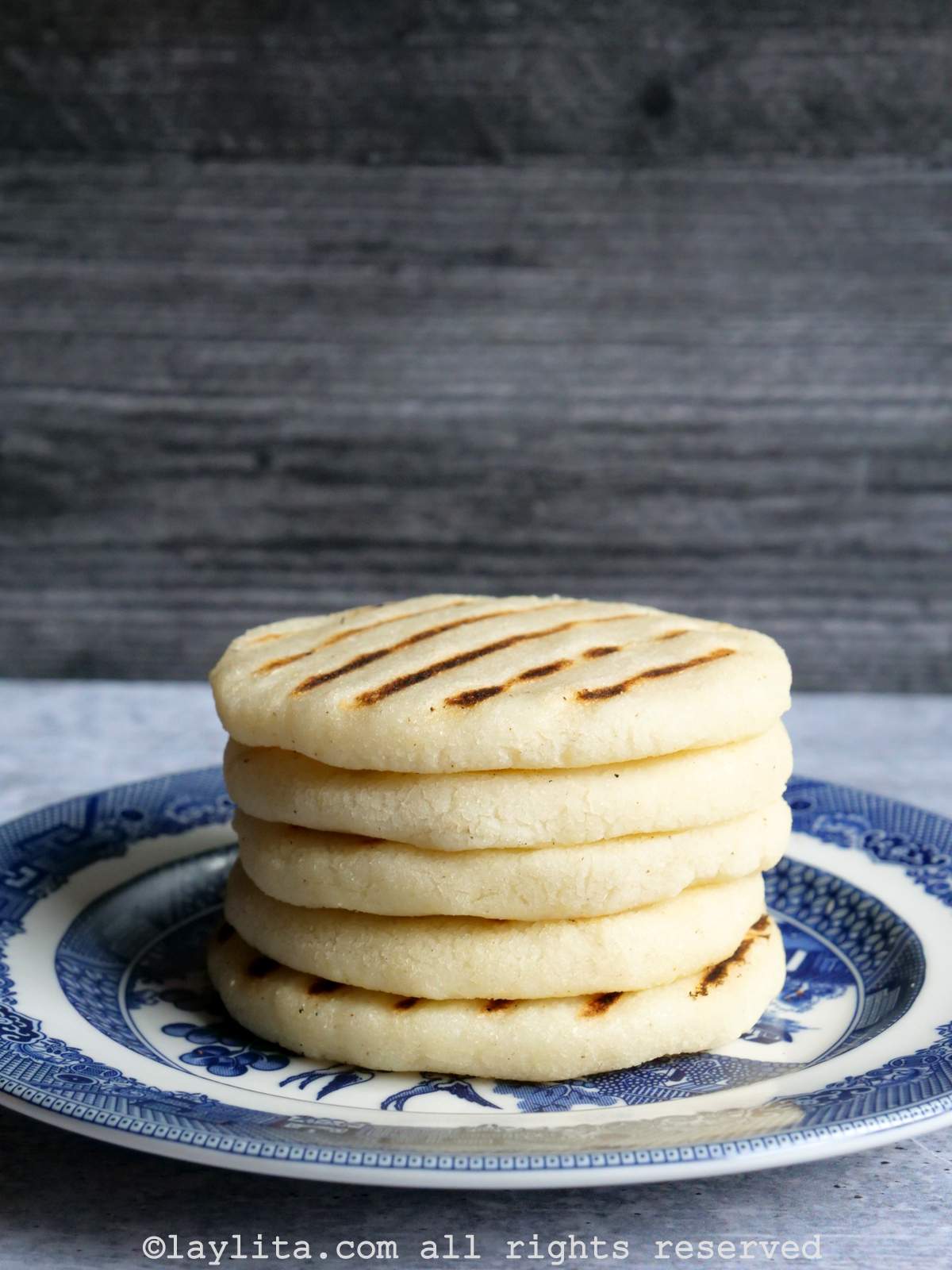
There are many variations of these thick corn patties in Latin America. For example, in Mexico, they are called “gorditas”. In El Salvador and Honduras, they are called “pupusas”. In Ecuador, Bolivia, and Panama, they are referred to as “tortillas de maíz”.
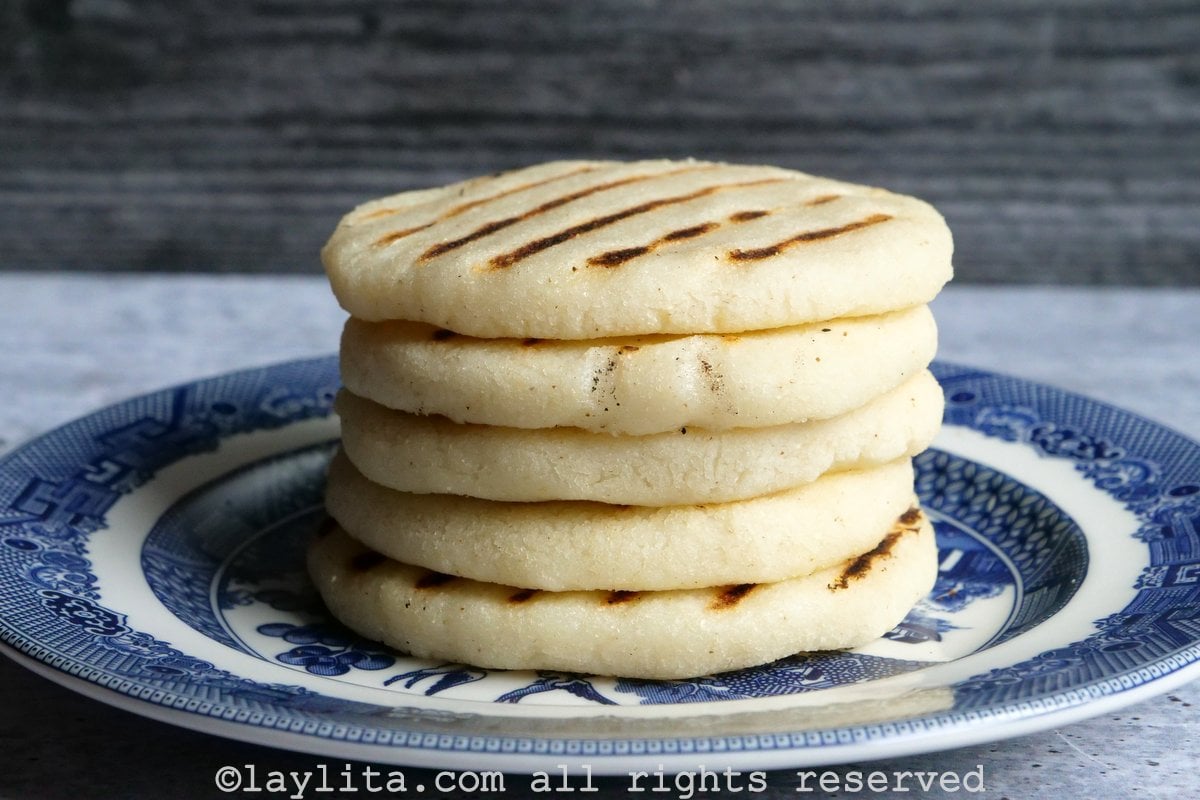
The way to prepare each of these variations is slightly different, but they are all based on the same concept: a corn patty. The corn flour varies from masarepa, pre-cooked corn flour, masa gallina, or sometimes roasted corn flour. Depending on the country or region, different ingredients are also added to the dough.
Type of Arepas
The original arepas, before the invention of pre-cooked corn flour, were called arepas de maiz pilado. It involved boiling dry corn with ashes or lime, then washing and peeling the corn kernels to tenderize them. Finally, these corn kernels were ground using a manual hand grinder, and the thick corn meal was mixed with water to form the arepas and cook them on the grill. This was a very laborious process and housewives to get up very early every day to prepare them for breakfast.
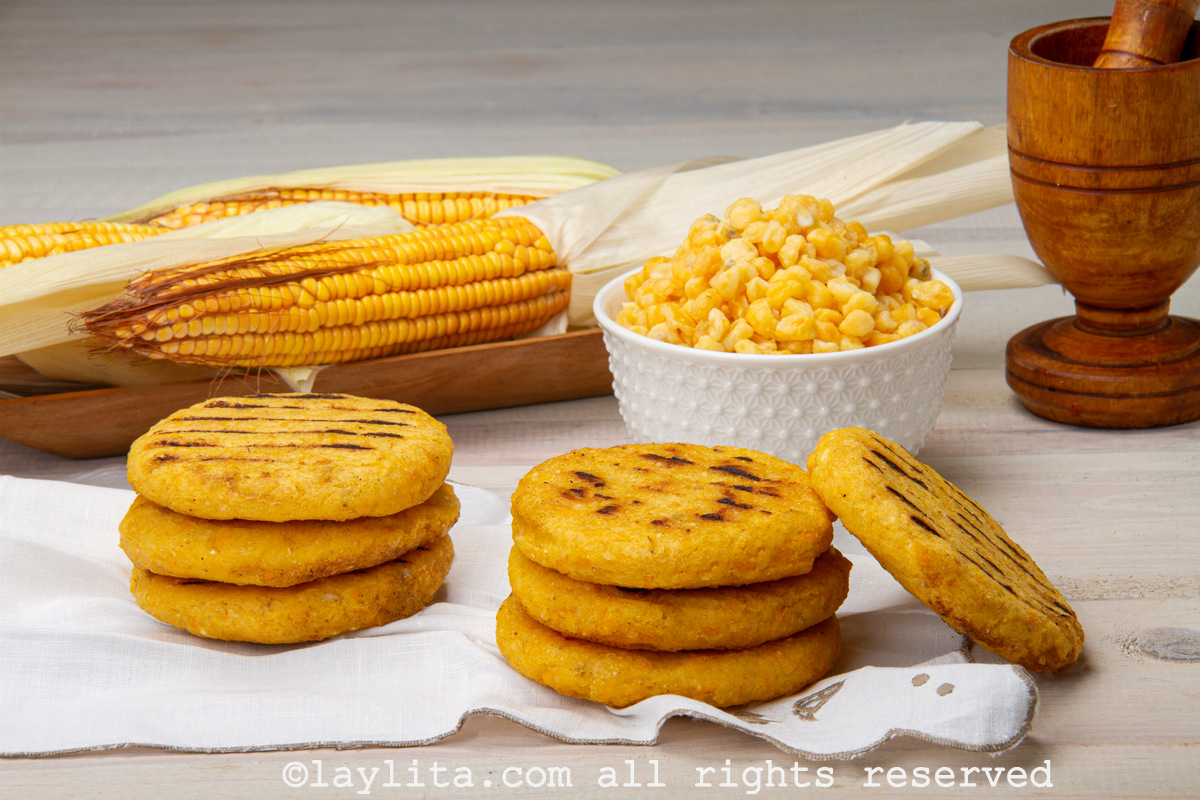
In addition to the modern savory pre-cooked corn flour arepa, there are also several other types of arepas. For example, you can make arepas with plantains, with yuca or cassava, there are sweet anise seed arepas, fried arepas, Andean arepas made with wheat flour instead of corn flour, chicharron or crispy pork belly arepas. Recently there’s also a trend for fit arepas, made with healthy ingredients like wheat bran,carrots, beets, among others.
Ingredients You Need
Making arepas is super simple! Here’s what you’ll need:
For the Arepas:
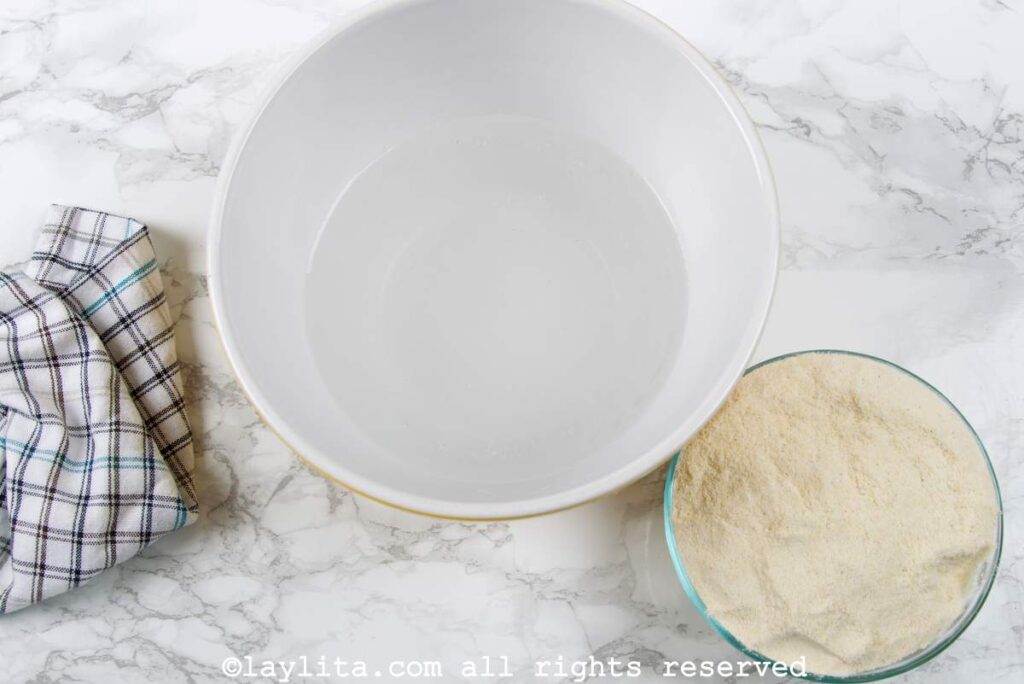
- Pre-cooked Corn Flour: You can use pre-cooked white or yellow corn flour, also called pre-cooked corn meal. The most common brand is called “P.A.N.”. You can usually find this at your local grocery store in the International aisle. This is not the same as normal corn flour or masa harina. Make sure to get a pre-cooked version!
- Warm Water: Warm water is best to create a cohesive mixture.
- Salt: Salt is needed to add flavor to the arepas!
- Oil: Add a little bit of oil for moisture and also to coat the cooking pan. It can be any cooking oil like sunflower, vegetable, or olive oil.
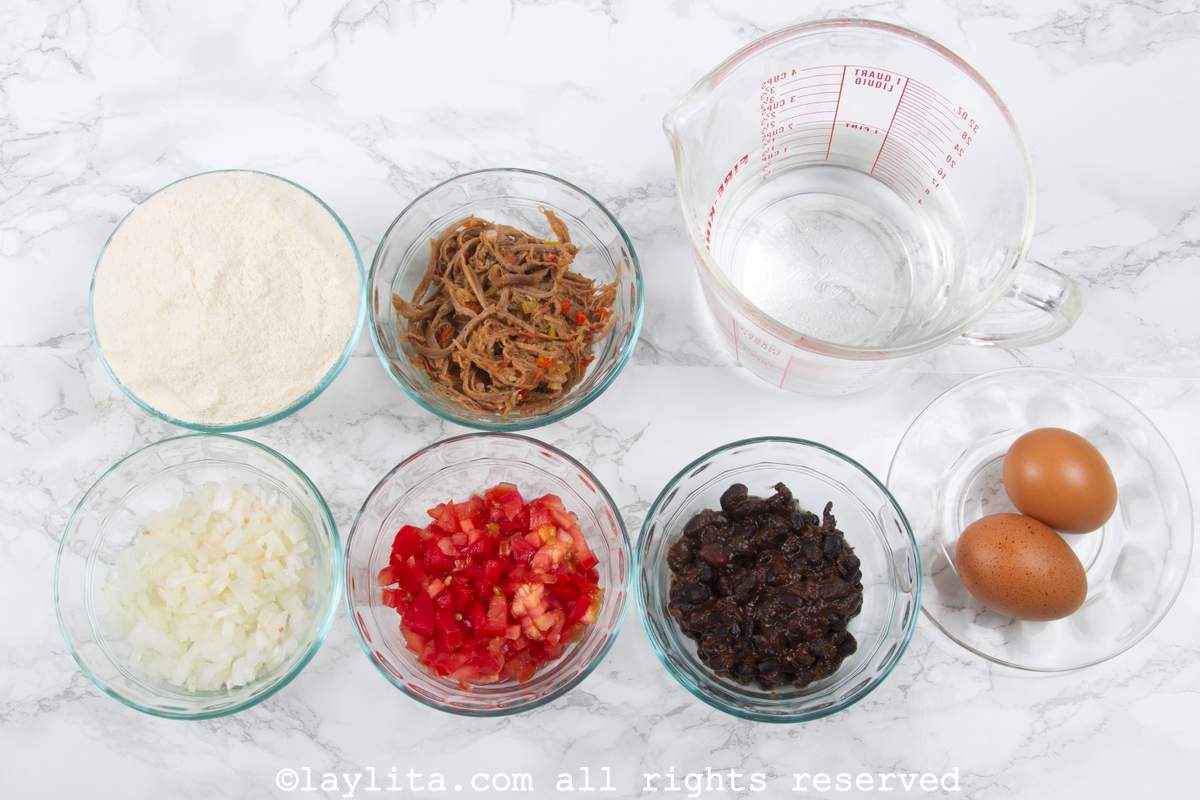
For the Huevos Pericos or Scrambled Egg Filling:
- Oil: Use your favorite cooking oil to scramble the eggs!
- Onion: Dice up the pieces into small cubes.
- Tomatoes: Dice them into small cubes as well.
- Eggs: Depending on the amount of people you are feeding, you can add more or fewer eggs.
- Salt: For flavor!
How to Make Arepas
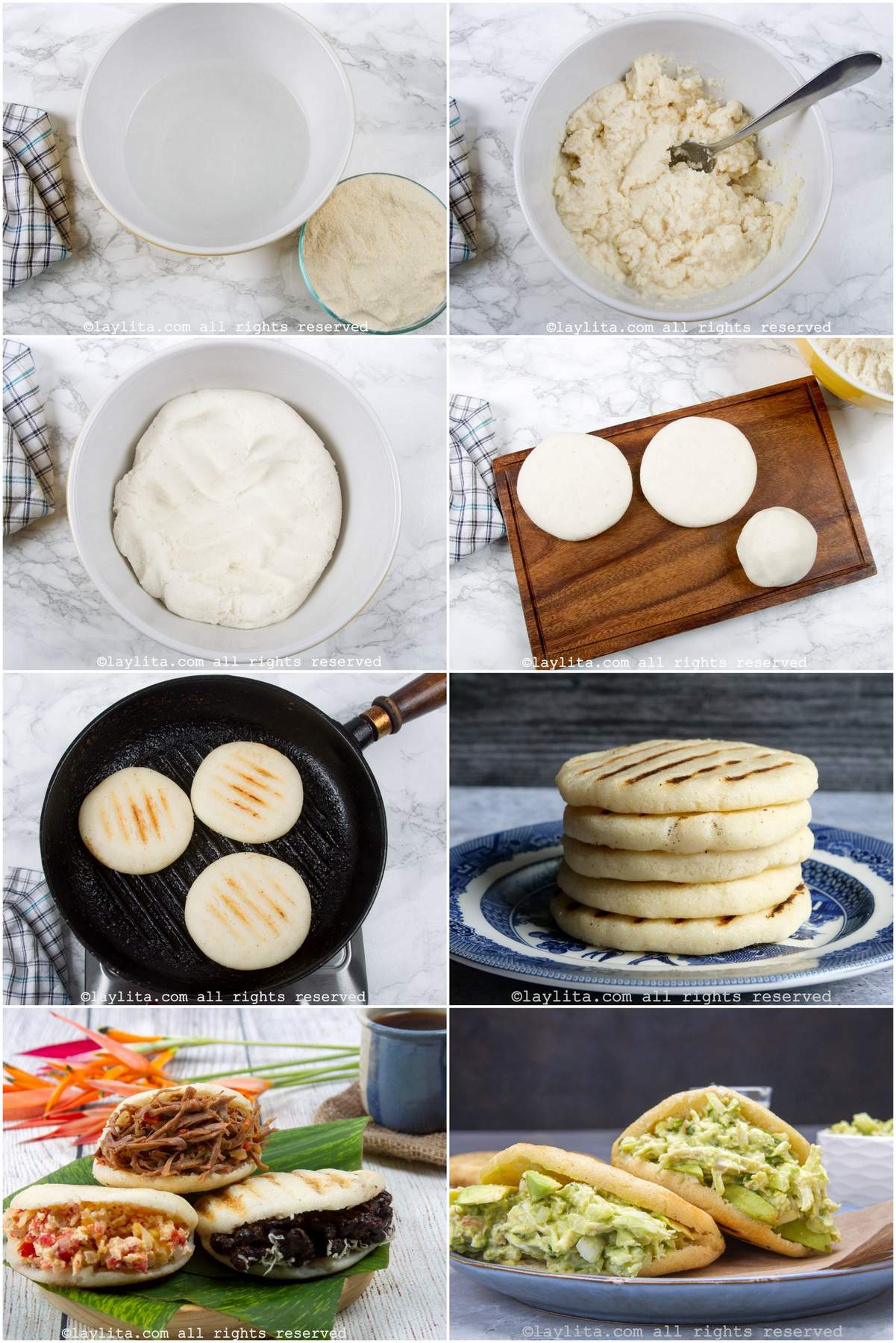
- Start the Dough: In a medium-sized mixing bowl, add 2 ½ cups of warm water and the salt. Use a spoon to slowly mix in the corn flour, adding it little by little and stirring well. Let the mix rest for about three minutes to allow it to take on some consistency.
- Knead Thoroughly: Knead the arepa dough vigorously until it no longer sticks to the edges of the container. There should be no lumps left and it should have a smooth consistency.
- Preheat Pan: Use a brush to lightly oil a large skillet or griddle pan and heat the pan over medium-high heat.
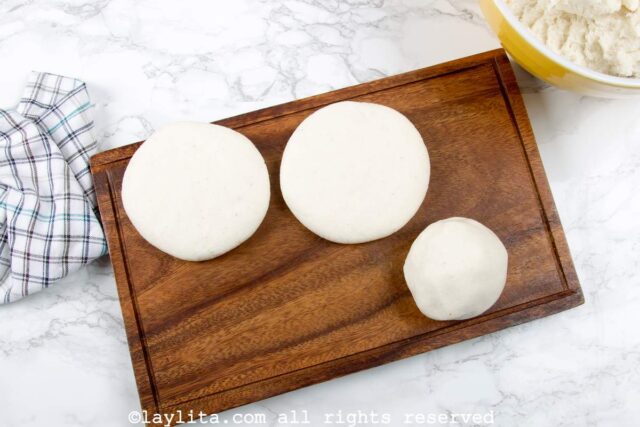
- Form Corn Patties: Use your hands to form the dough into balls the size of a small orange. Then, flatten them with the palms of your hands until you obtain round, thick patties about 4 inches or 10 cm in diameter. You can also make smaller-sized arepas to serve as appetizers.
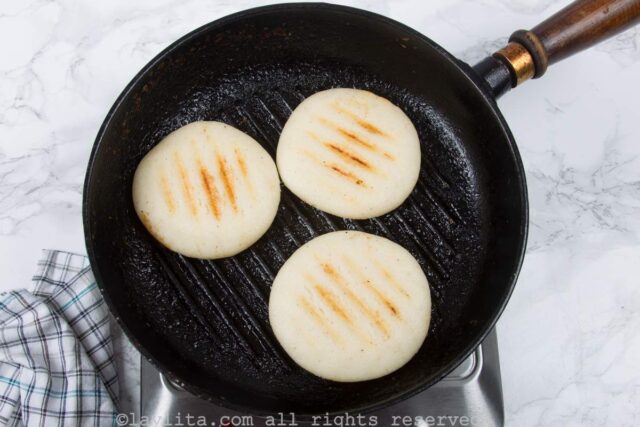
- Cook: Place the arepas in the hot pan without overcrowding and cook for about 5 minutes, use a spatula to flip each arepa and cook for another 5 minutes.
- Bake: If you want the arepas extra crispy, you can put them in a pre-heated oven for another 5 minutes at 180 C or 350 F. They will puff up slightly and, if tapped gently, produce a hollow sound.
- Slice them open and fill them with your choice of filling.
How to Serve Arepas
Arepas are very versatile and can be served at breakfast, lunch or dinner!
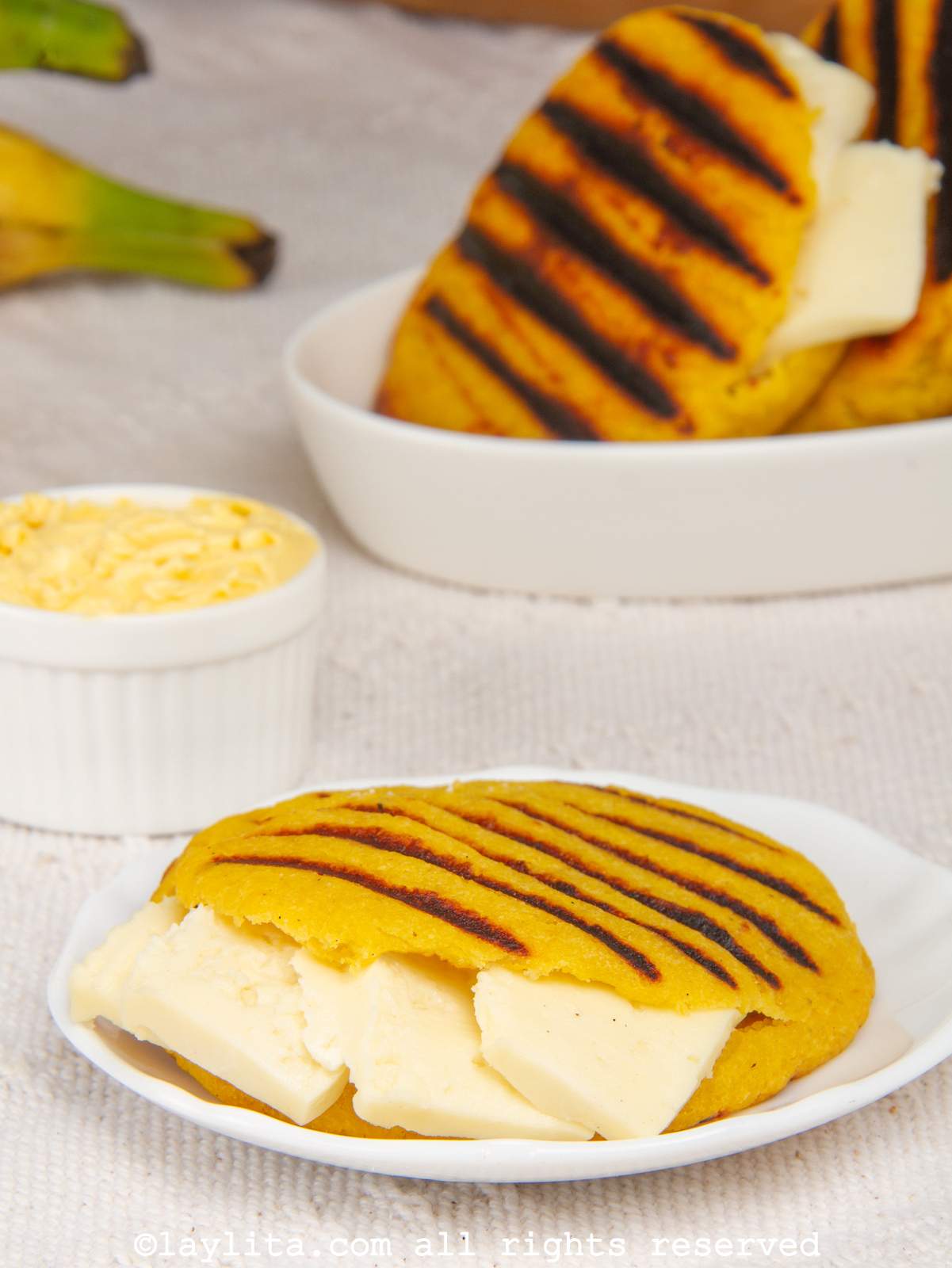
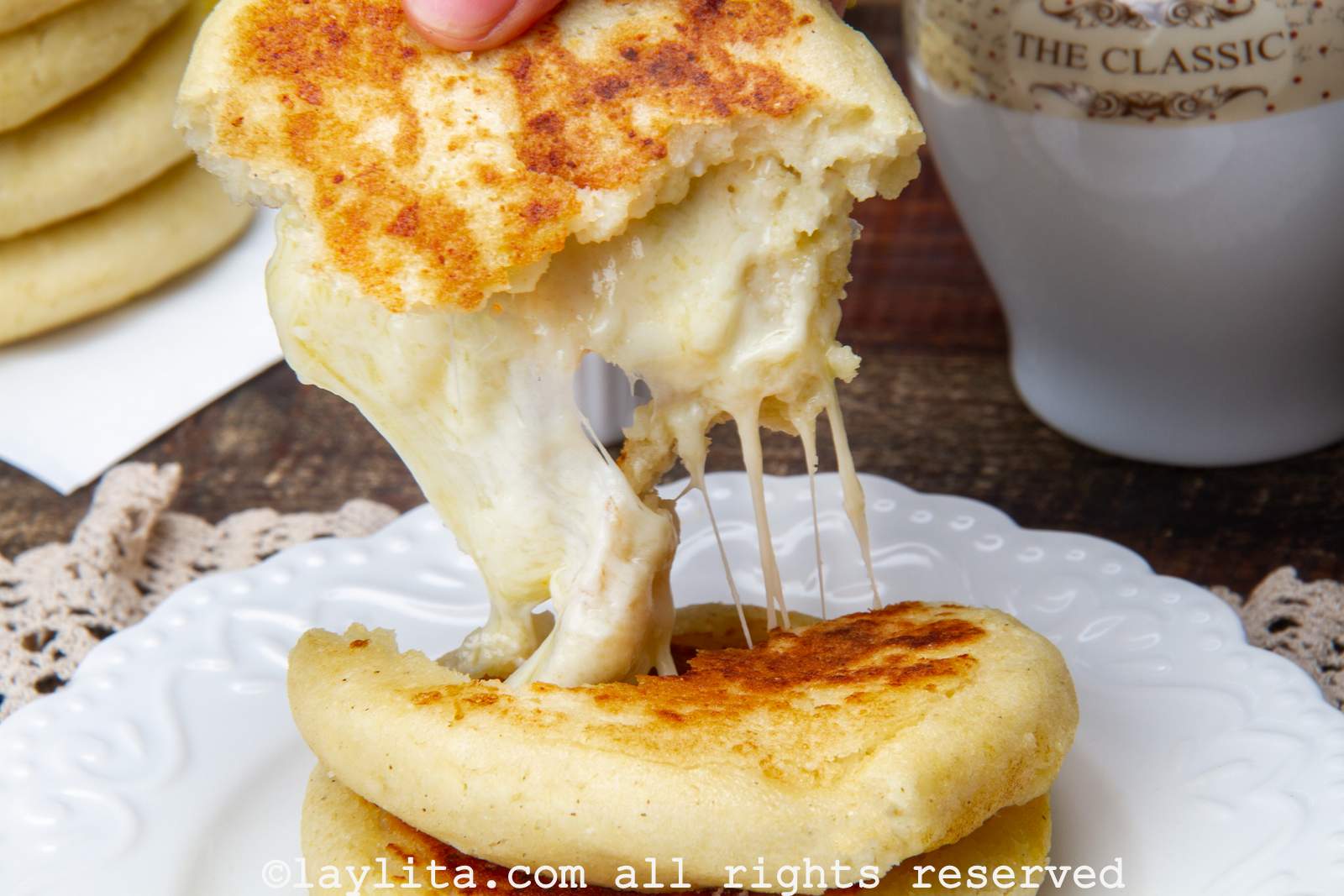
They can be eaten plain or with just a bit of butter, but are even better when served with fillings or side dishes! Definitely serve your arepas with at least your favorite cheese on the side or stuffed inside. It is common to serve it with a light, refreshing cheese like queso fresco!
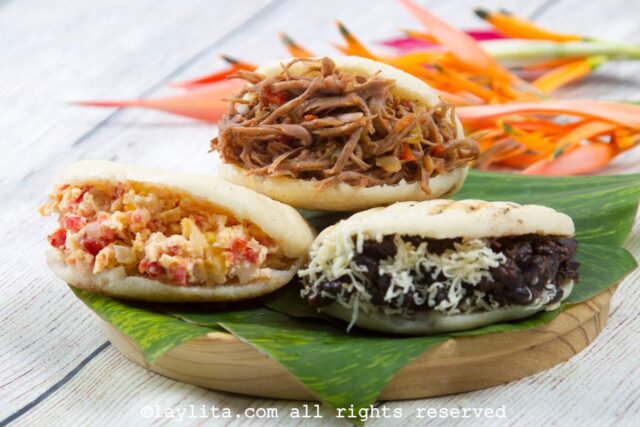
For breakfast, try serving your arepas filled with this Colombian/Venezuelan Huevos Pericos or scrambled eggs mixed with tomatoes and onions (see recipe below).

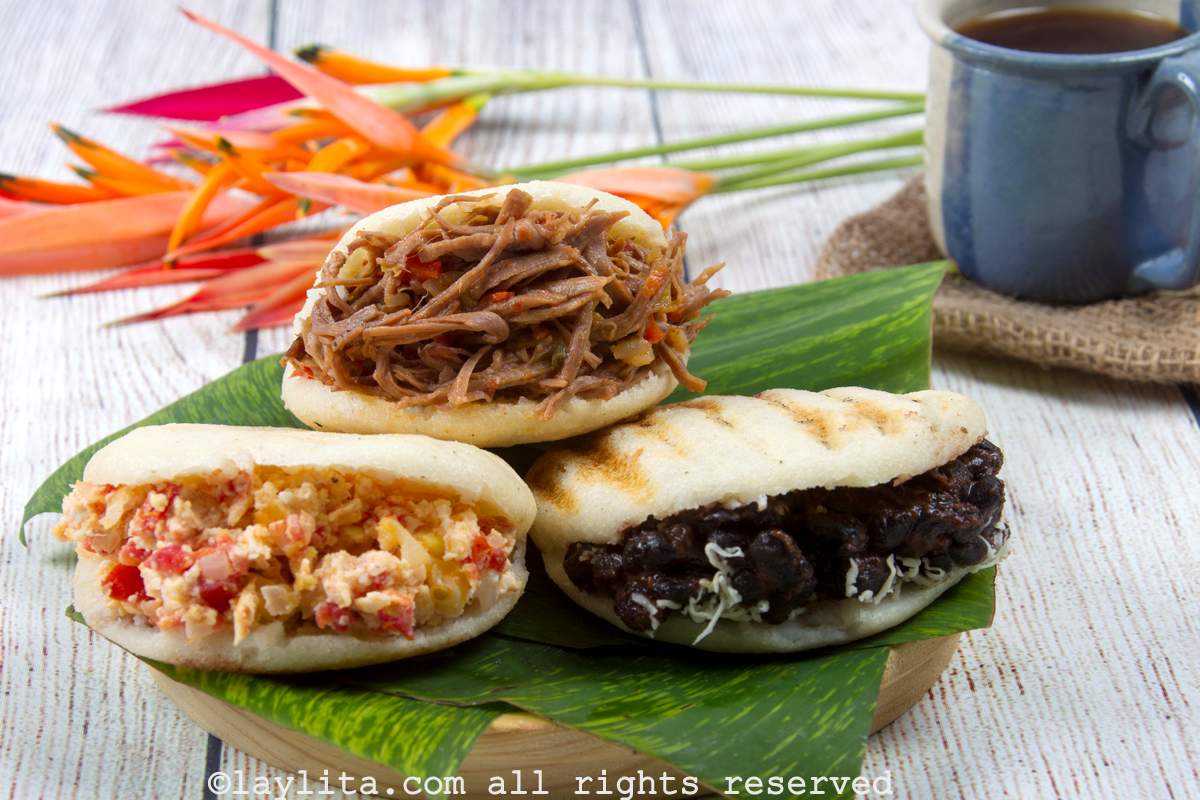
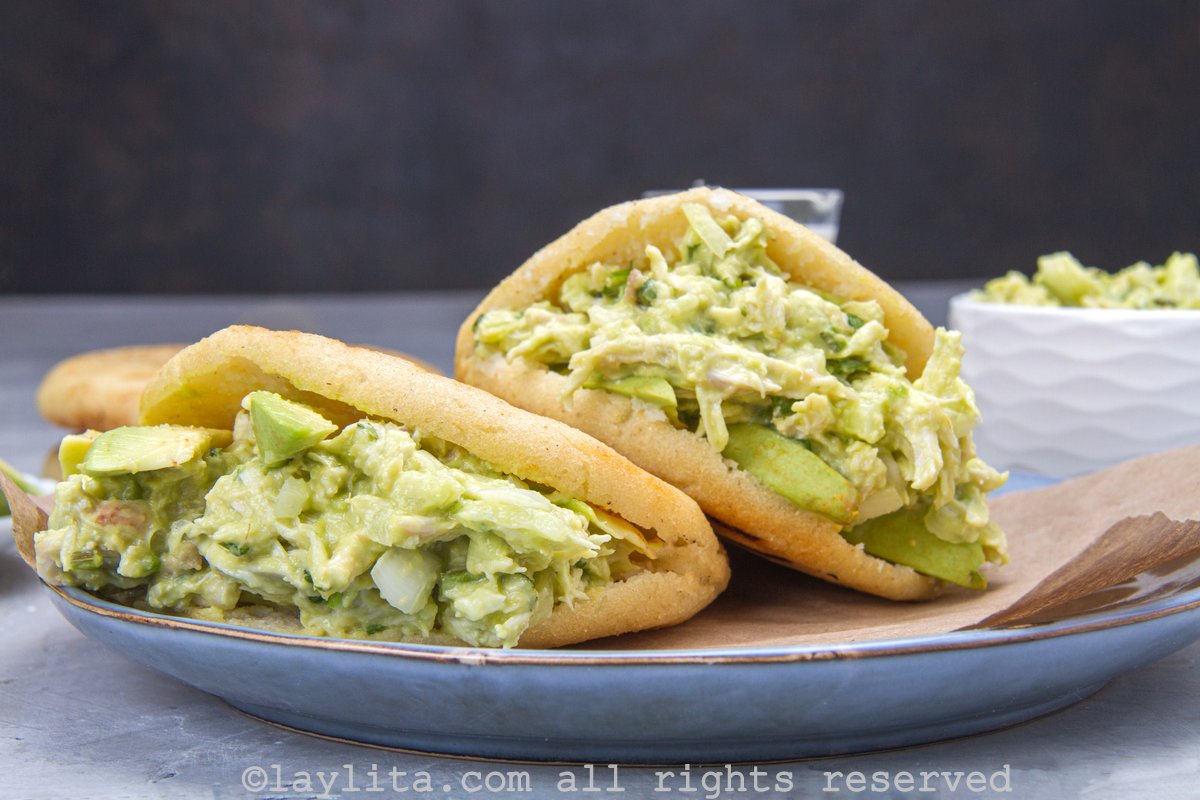
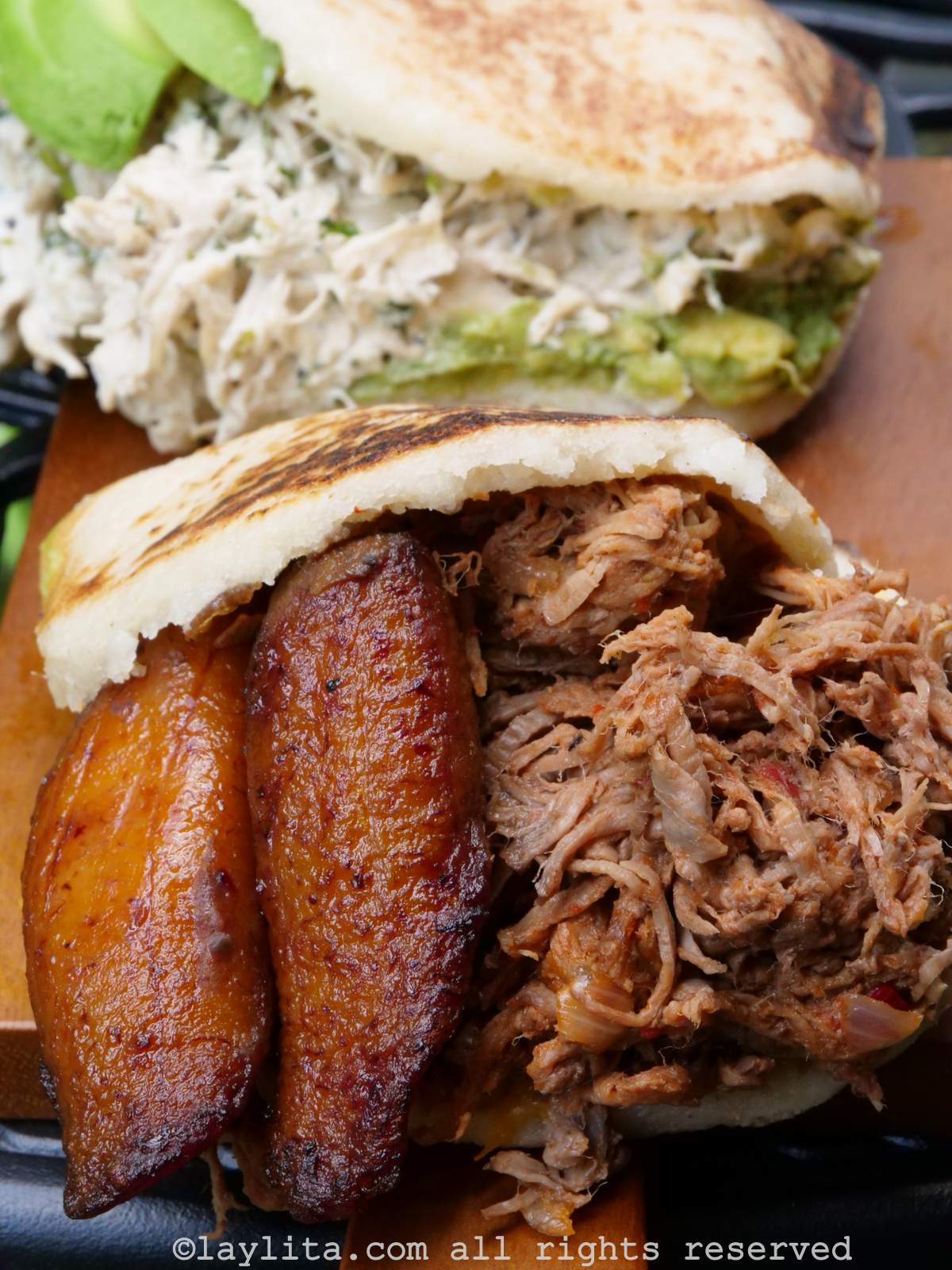
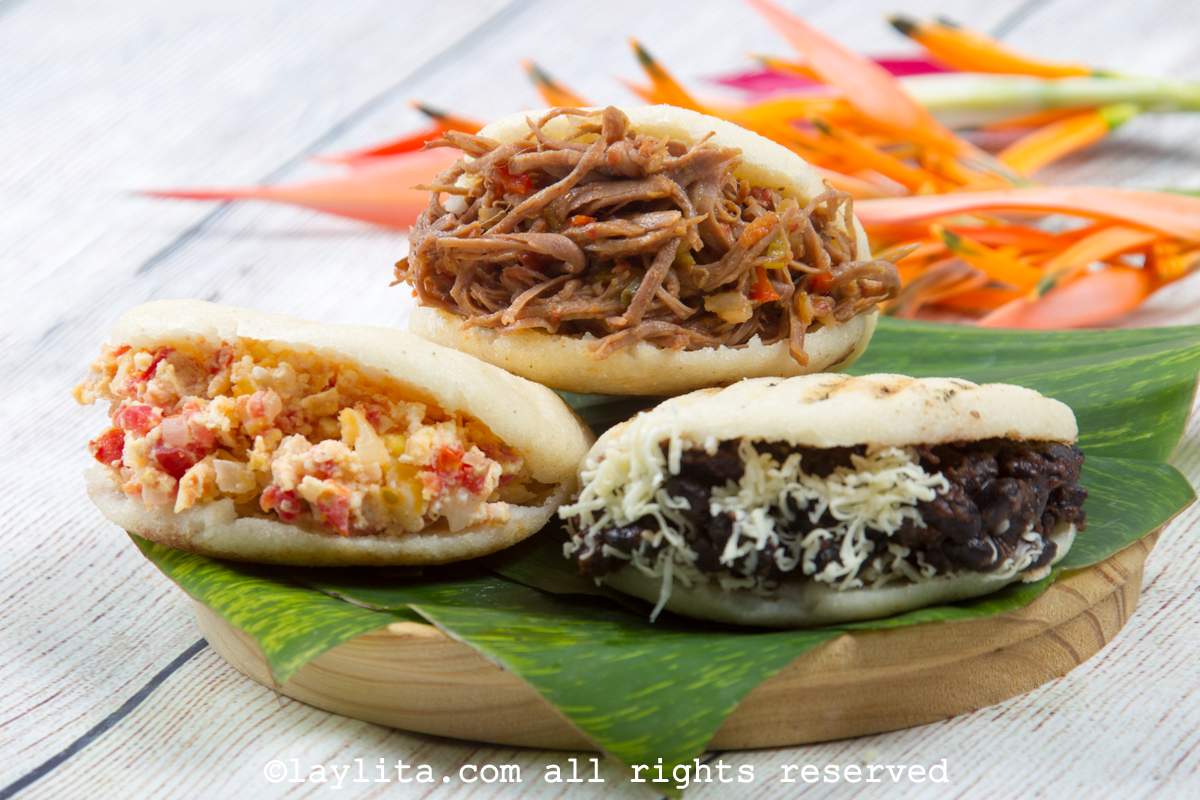
Or, you can cut open your arepas to serve them traditional Venezuelan-style with a filling of black beans, Venezuelan-style shredded beef (carne mechada), fresh avocado and/or fried ripe plantains!

How to Make Arepas
Ingredients
For the arepas:
- 2 cups of pre-cooked corn flour white or yellow, PAN brand or other
- 2 ½ cups of warm water
- 1 teaspoon of salt
- Oil for cooking 1-2 tsp
Easy scrambled eggs with tomato and onions (Huevos Pericos):
- 1 tablespoon of oil
- ¼ cup finely chopped onion
- ¼ cup diced tomato
- 2 large eggs whisked
- Salt to taste
Additional arepa filling ideas:
- Venezuelan- style black beans or caraotas negras preparadas
- Venezuelan-style shredded beef or carne mechada
- Cheese
- Avocado
- Fried ripe plantains
Instructions
To make the arepas:
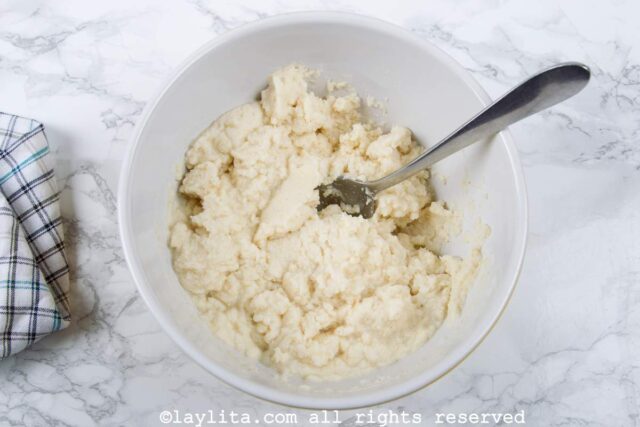
- In a medium-sized mixing bowl, add 2 ½ cups of warm water and the salt. Use a spoon to slowly mix in the corn flour, adding it little by little and stirring well. Let the mix rest for about three minutes to allow it to take on some consistency.

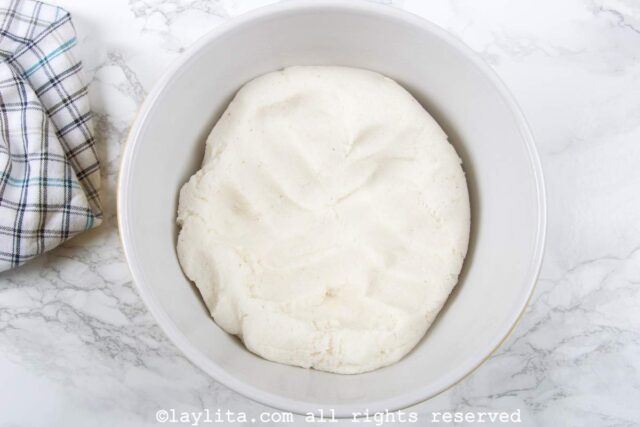
- Knead the corn dough vigorously until it no longer sticks to the edges of the container. There should be no lumps left and it should have a smooth consistency.
- Use a brush to lightly oil a large skillet or griddle pan and heat the pan over medium-high heat.
- Use your hands to form the dough into balls the size of a small orange. Then, flatten them with the palms of your hands until you obtain round, thick patties about 4 inches or 10 cm in diameter. You can also make smaller-sized arepas to serve as appetizers.
- Place the arepas in the hot pan without overcrowding and cook for about 5 minutes, use a spatula to flip each arepa and cook for another 5 minutes.
- If you want the arepas extra crispy, you can put them in a pre-heated oven for another 5 minutes at 180 C or 350 F. They will puff up slightly and, if tapped gently, produce a hollow sound.
For the filling of scrambled eggs with tomato (Huevos Pericos):
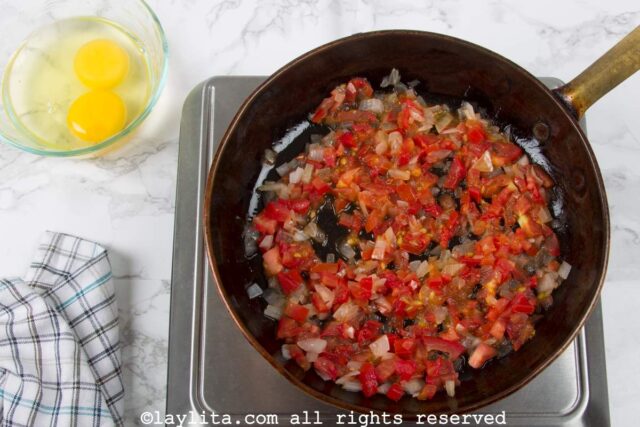
- Add the oil to a frying pan over medium-high heat, sauté the diced onion, then add the tomato and continue cooking for another five minutes.
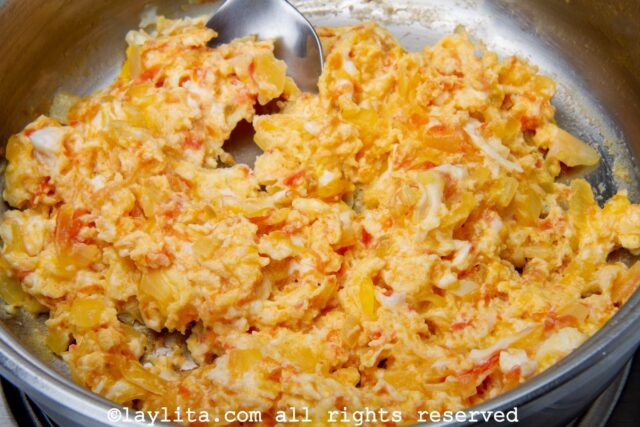
- Add the whisked eggs and a pinch of salt.
- Cook and stir for about three minutes, remove from the heat.
- Slice and open the arepas using a sharp knife. Fill them with scrambled eggs and your choice of other fillings. Serve immediately.
More Recipes to Try:
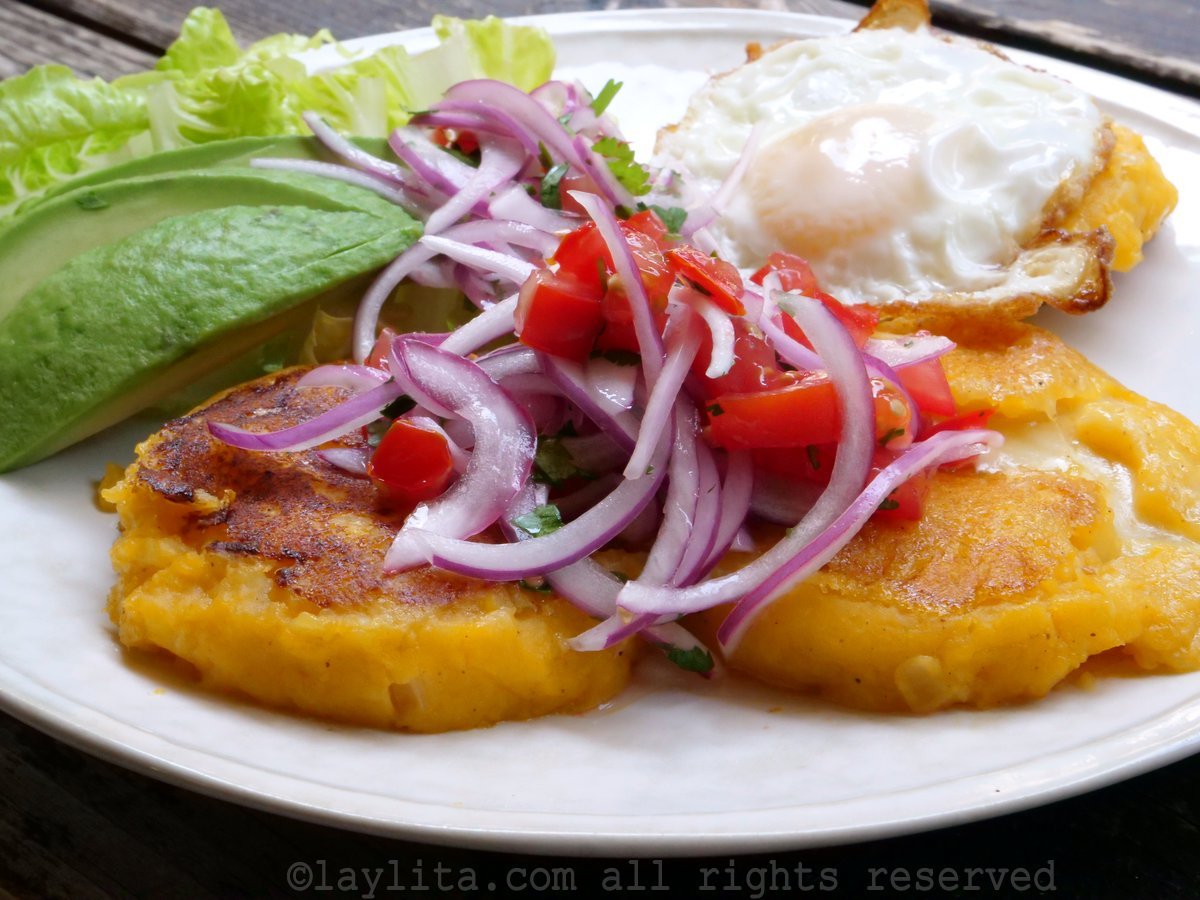
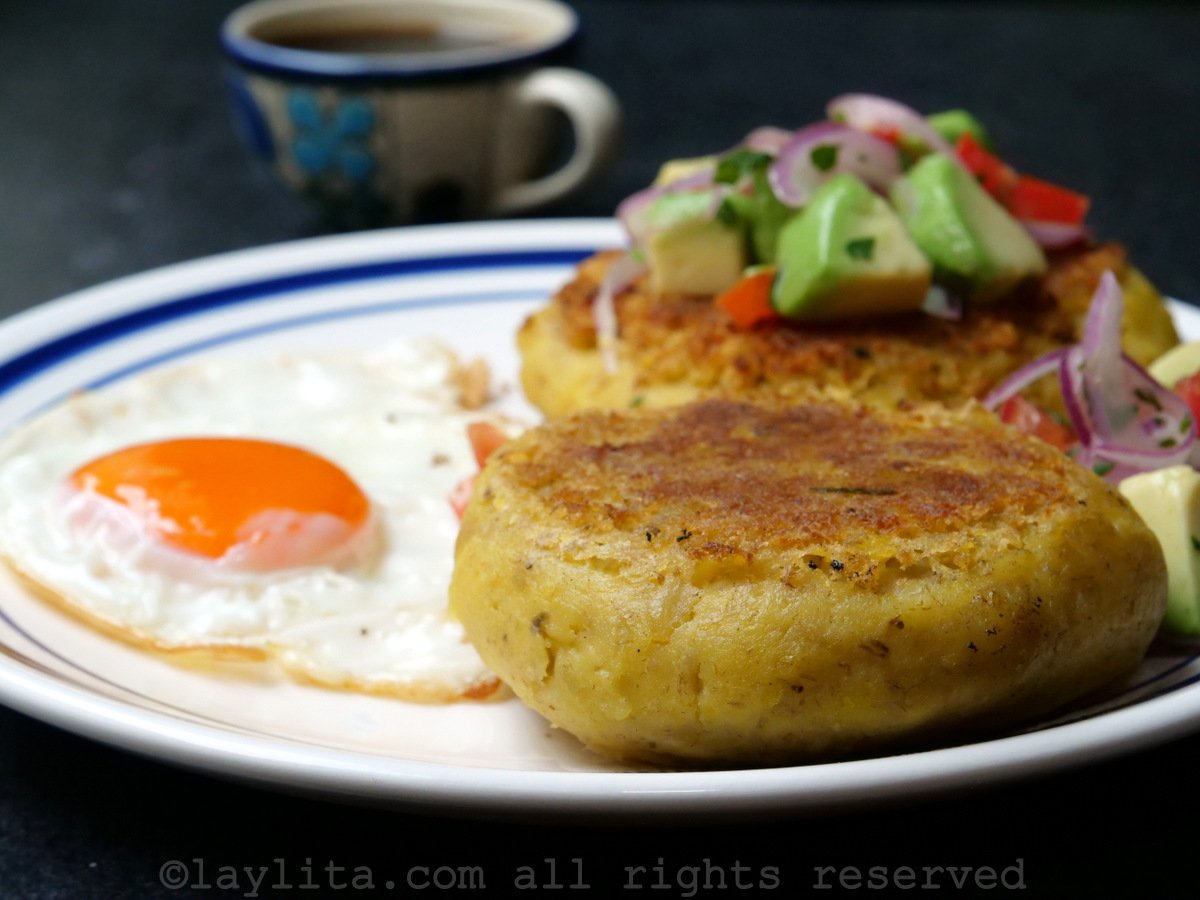

Discover more from Laylita's Recipes
Subscribe to get the latest posts sent to your email.

Hola Leylita,
Yo he comido arepas hechas con queso en la masa (eso me dijeron cuando pregunté) y sin relleno. Esa fue mi introdución a las arepas y verdaderamente me gustaron mucho. ¿Ha comido arepas hechas así? Para hacerlas, ¿ simplemente se mixta queso rallado en la masa ? ¿Cuál queso recomendaría?
Gracias.
Como nativa de Venezuela te felicito por tu receta y los rellenos para la arepa que incluiste en ella. Estas recetas nos representan en un 100% a los Venezolanos por lo que te doy las gracias por agregarla a tus recetas. Lyliam