Hallacas (Venezuelan Tamales)

Venezuelan Hallacas, aka Venezuelan-style tamales, are a beloved holiday dish, deeply rooted in tradition and family gatherings. This savory treat, wrapped in banana leaves, is often prepared in large quantities, making it a communal activity that brings people together. This recipe is by Jani Díaz, our partner in Venezuela!
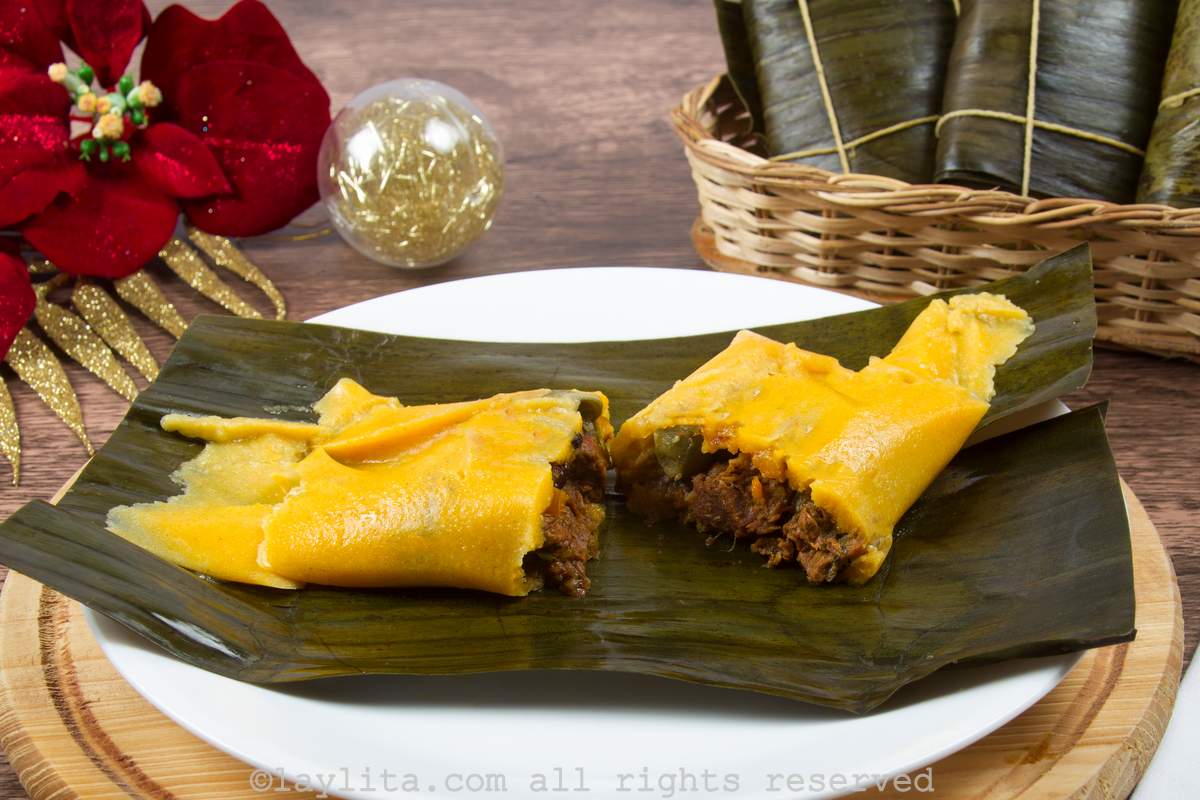
What are hallacas?
The hallaca is a traditional Venezuelan dish that is mainly consumed during Christmas. Its origin dates back to the Spanish colonial era in Venezuela. Many historians agree that it was a creative effort by Black and Indigenous slaves to incorporate better-quality foods into their meals. Some say that the slaves would steal food from their masters’ kitchens and hide it inside corn dough (which they were allowed to eat), resulting in the creation of the hallaca.
Others say that hallacas were made by preparing a stew with the leftovers from the colonists’ meals and placing it inside a corn dough. This was then cooked inside banana leaves, creating a complete meal for the slaves. While no one doubts the humble origins of the hallaca, it truly is a delicacy with an exotic combination of flavors.
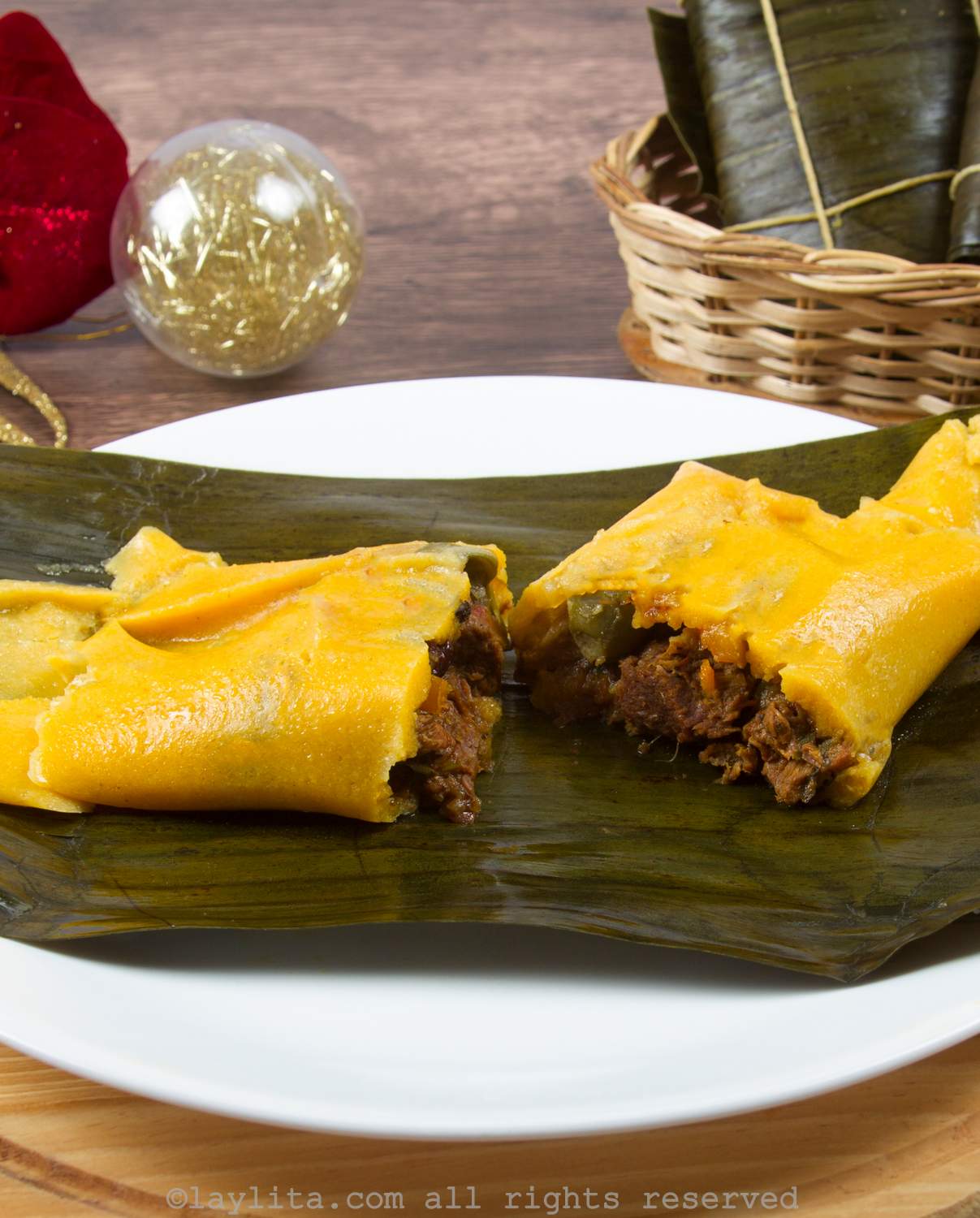
The preparation of hallacas is labor-intensive and usually done in two stages: first, making the stew, and then assembling the hallacas. In Venezuela, it’s a tradition to prepare hallacas during a family gathering, usually just a few days before Christmas. Since the process takes some time, it’s ideal to prepare the stew a day in advance and then assemble the hallacas the following day.
Ingredients Needed
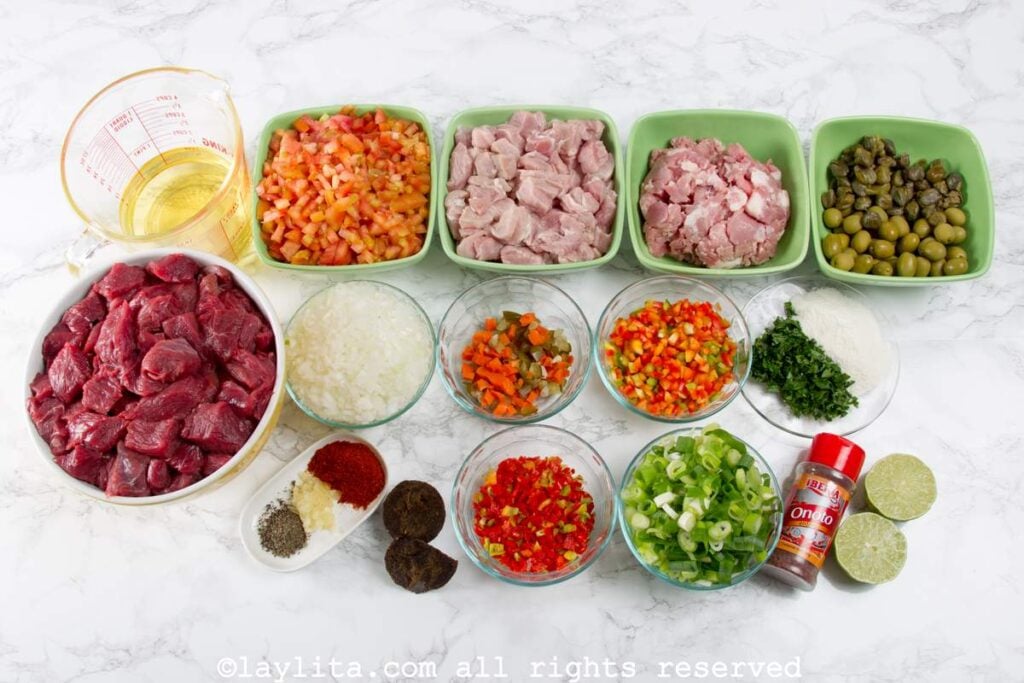
Among additional ingredients, these are the main components that you need to make hallacas:

- Achiote/Annatto Oil: This vibrant red oil gives the hallacas their distinctive color and flavor. It’s made by infusing oil with annatto seeds and garlic. The oil is used in various stages of the preparation, from the dough to the meat filling.
- Meat Filling: A combination of beef, pork, and pork ribs forms the heart of the hallacas. The meat is slow-cooked with onions, garlic, tomatoes, and various spices, resulting in a rich, flavorful stew. The addition of capers, olives, and pickles adds a tangy contrast to the savory meat.
- Masa/Dough: Made from pre-cooked yellow corn flour (such as P.A.N.), this dough is enriched with achiote oil and chicken broth, giving it a beautiful color and smooth texture.
- Banana Leaves: The banana leaves are essential for wrapping the hallacas, giving them a unique flavor during the cooking process. They need to be washed, dried, and cut into different sizes for assembly.
How to Make this Recipe for Hallacas
To Prepare the Achiote or Annatto Oil
- Prep the Oil: Lightly crush the garlic and place in a small pot with the oil and annatto seeds. Bring to a low simmer for a few minutes. Remove from heat and let cool.
- Strain: When it reaches room temperature, strain and discard the seeds. You will use this achiote oil several times throughout the process of preparing the hallacas.

To Prepare the Meat Filling
- Prep the Meats: Wash the beef very well and remove any excess skin or pieces of fat. Dry with paper towels and set aside. Wash the pork and rub it with lime juice; let it rest with the lime juice for about ten minutes and rinse again.
- Sauté the Aromatics: Place the annatto oil in a large pot, and then add the onion, scallions, and garlic; sauté for a few minutes, and add the sweet pepper and paprika. With the help of a large spoon, remove the seasonings from the pot and raise the temperature to high.

- Sear the Pork: In the same pot, place the pork and sear it over high heat. Remove it and set aside along with the seasonings. Repeat this procedure for the beef and ribs.

- Add Seasonings: Return the seasonings and all the meats to the pot and add the rest of the ingredients: the tomato, papelon or brown sugar, olives, paprika, corn flour, beef broth, and wine. Using a spoon, preferably a wooden one, mix all the ingredients. Cook over low heat for approximately 90 minutes.
- Add Capers, Parsley & Pickles: Finally, add the capers, parsley, and pickles; mix well and continue cooking over low heat until most of the sauce has thickened.
- Rest: When the meat stew is ready, let it rest for about two hours before using it. Then carefully remove the bones from the pork ribs, and the meat filling is ready. Note that the stew does not contain salt; in most cases, the salt from the olives and capers is enough. However, when it is ready, taste it and adjust the salt if needed.
To Prepare the Hallaca Masa or Dough
- Mix the Corn Meal & Chicken Broth: In a very large container or bowl, add 10 cups of chicken broth, and slowly incorporate the precooked corn flour; if possible, do this with the help of another person, which will allow you to knead with both hands.
- Add Achiote Oil: Add the annatto oil and continue kneading until you obtain a homogeneous consistency. If necessary, add the remaining two cups of broth little by little.
- Knead & Portion into Balls: Transfer the dough to a flat surface and continue kneading. If the mixture is still sticky, sprinkle it with corn flour until it no longer sticks to the surface. When the dough has a nice smooth consistency, form twenty balls of similar size and keep them covered on a plate until you assemble the hallacas.
To Prepare the Garnishes or Decorations for the Hallacas
- Prep Onions & Sweet Peppers: Peel the onions and cut them into thin round slices. Remove the veins and seeds from the red bell peppers. Cut them into thin round slices.
- Shred Chicken: Shred the chicken breast into large pieces, about twenty pieces or one per hallaca.
- Prep Canned Ingredients: Drain the capers, the green olives and the pickles.
- Set Aside: Save these garnishes to decorate the hallacas.
Instructions for Assembling and Wrapping the Hallacas
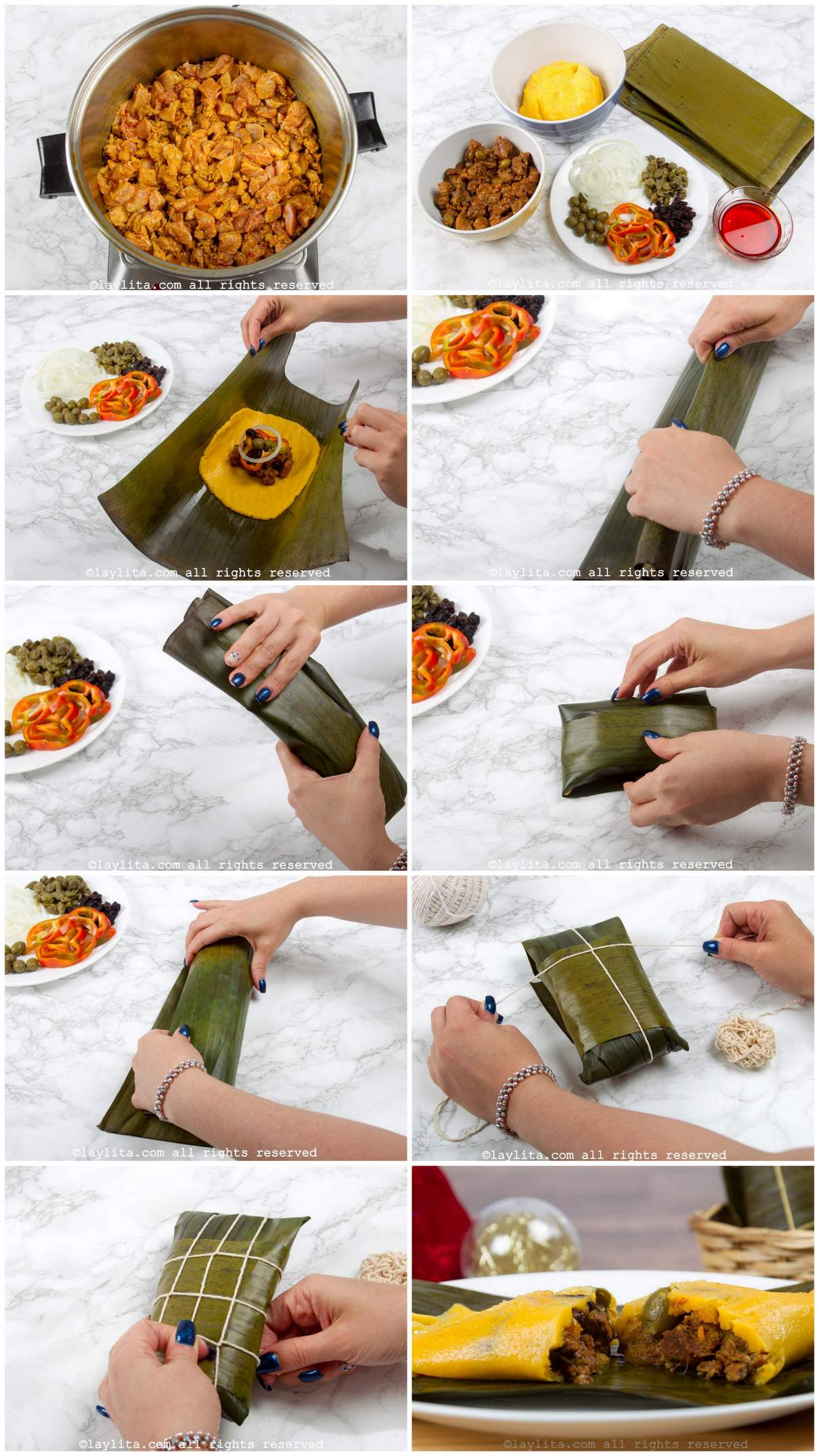
- Prep Leaves: Wash the banana leaves under the running water and dry them with a clean kitchen towel. You must separate the leaves into three parts according to their size. The largest will be used as the base for the hallaca dough and filling. The medium leaves will serve as a cover or lining, and the smallest will be used as a belt/girdle to help close the hallacas. When the leaves are separated and ready, place them on your assembly area, along with the rest of the ingredients. You should have the banana leaves, the meat stew or filling, the garnishes, the masa or dough balls, and the annato oil.
- Press Dough into Leaf: To assemble each hallaca, starting by taking a large banana leaf, rub some of the annatto oil on the leaf (with your fingers or a brush), then place a dough ball in the center and gently flatten it with your fingers, spreading it until you have a round patty of about 3mm thickness.
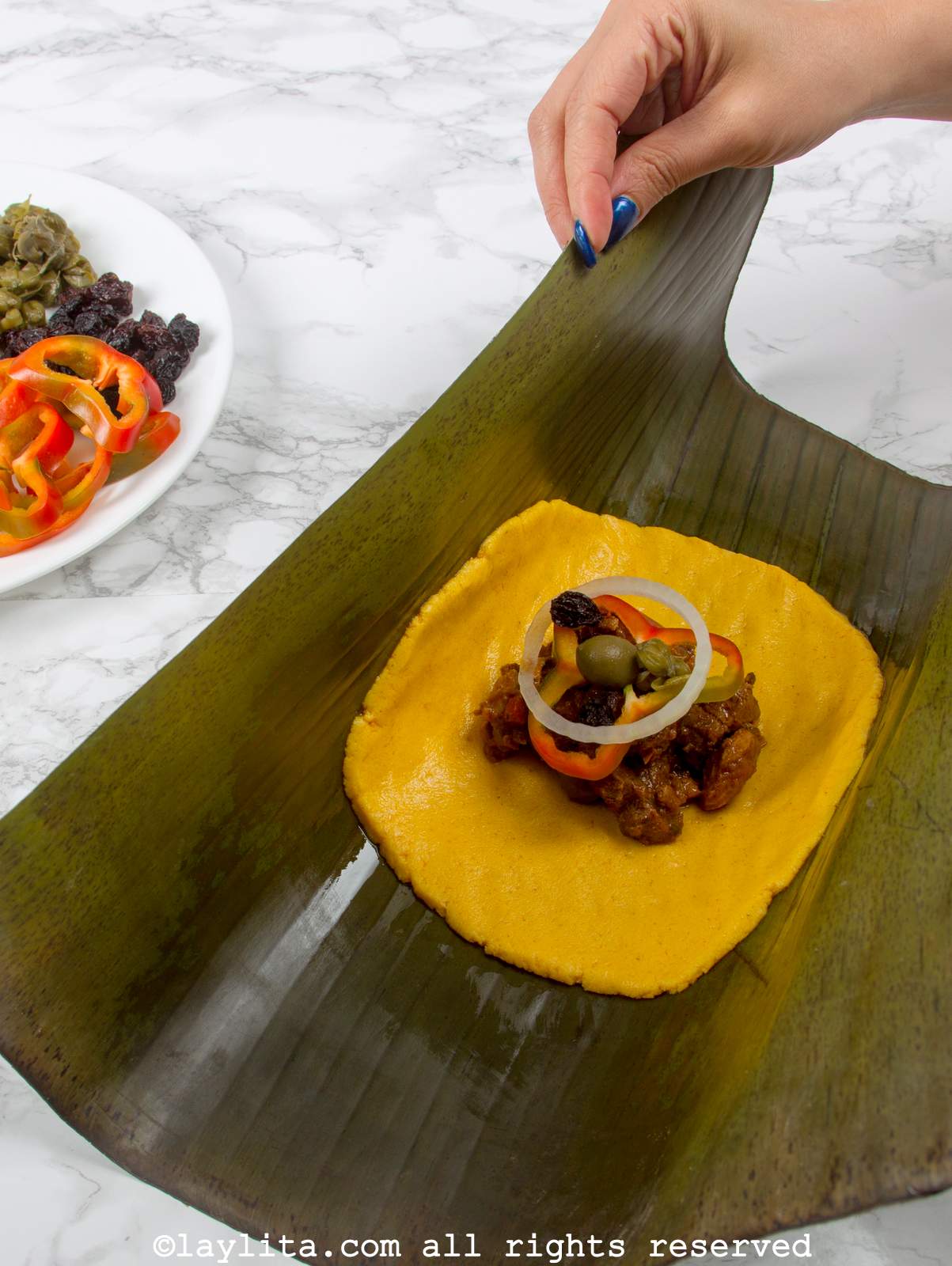
- Top with Meat and Toppings: Next, in the center of the flattened dough patty, put three large tablespoons of the meat filling. Then on top of the meat filling, add onion rings, a red bell pepper slices, two capers, an olive, two raisins, and a piece of shredded chicken.

- Roll: Lift the two ends of the banana leaf, one with each hand and gently join them together. Make sure to do this in a way that keeps the filling/garnishes in the center, and roll it up carefully until it is nice and tight.
- Fold: Fold the edges of the rolled large banana leaf with the hallaca preparation in the center. Then use one of the medium banana leaves as a cover that goes over the folded edges.


- Tie with Small Leaves and Twine: Next use the smallest/thinnest pieces of the banana leaves to wrap around the hallacas. Use kitchen twine to wrap around and hold everything in place. It is recommended to wrap the wine around three times in both directions.


- Boil: Fill a large pot with water, the water should be at the halfway mark, add some salt and bring the water to a boil over medium heat. When the water is boiling, carefully add the hallacas and cover the pan with a tight lid. Cook with the hallacas with the lid on for 45 minutes.
- Remove & Cool: When the hallacas are fully cooked, remove them gently with a slotted spoon and cool them down on a baking rack (to allow any liquid to drain).
- Store: The hallacas can be kept refrigerated for up to one week. You can also freeze them if you want to keep them longer.

Tips & Tricks
- Preparation Time: Venezuelan tamales are labor-intensive, so it’s best to spread the preparation over a couple of days. You can make the meat filling and achiote oil ahead of time, allowing the flavors to develop.
- Kneading the Dough: To achieve a smooth, pliable dough, ensure you knead it thoroughly. Adding the chicken broth slowly helps you control the dough’s consistency, and using annatto oil ensures it doesn’t stick to your hands or the surface.
- Wrapping the Hallacas: Be patient and gentle when wrapping the hallacas in banana leaves. The tighter the wrap, the better the hallacas will hold together during cooking.
- Cooking Time: Boiling the hallacas for 45 minutes ensures they are fully cooked and the flavors meld together beautifully. If freezing, reheat by boiling them again for about 20-30 minutes.

Frequently Asked Questions
What should I serve with Venezuelan tamales?
Hallacas are typically served during Christmas and New Year celebrations, accompanied by traditional Venezuelan sides such as ensalada de gallina (chicken salad) and pan de jamón (ham bread). They pair wonderfully with a glass of ponche crema or a light, fruity wine.
Can I make hallacas without banana leaves?
While banana leaves are traditional and give hallacas their unique flavor, you can substitute them with parchment paper if necessary. However, the flavor profile will be different.
How long can I store hallacas?
Hallacas can be stored in the refrigerator for up to one week. If you want to keep them longer, they can be frozen for up to three months. To reheat, boil them again until fully heated through.
Can I add or substitute ingredients in the filling?
Yes, hallacas are highly customizable. You can add ingredients like chicken, turkey, or even fish to the filling. Some families also include almonds, raisins, or prunes for a touch of sweetness.
Why is my dough too sticky?
If your dough is too sticky, it may need more kneading or additional corn flour. Knead it on a flat surface, adding flour gradually until it reaches a smooth, non-sticky consistency.
Can I use a different type of oil for the achiote oil?
Yes, you can use any neutral oil, such as vegetable oil or canola oil, for the achiote oil. The key is to infuse it properly with annatto seeds and garlic to achieve the desired flavor and color.

Hallacas (Venezuelan Tamales)
Ingredients
For the achiote and annatto oil:
- 2 cups of oil
- ¼ cup of achiote or annatto seeds
- 10 garlic cloves peels on
For the meat filling:
- 1 kg of beef chopped into cubes
- ½ kg of pork cut into cubes, it can be pork shoulder/leg or loin
- ½ kg of pork ribs cut into chunks
- 1 lime
- ¼ cup of the annatto oil from above
- 1 ½ cups of white onion finely chopped
- 1 cup of sliced scallions
- 10 crushed garlic cloves
- 1 cup of diced tomatoes not too ripe
- ½ cup of sweet bell pepper finely chopped
- ¼ cup of drained capers
- ¼ cup of green olives
- ½ cup of chopped pickles
- 3 tablespoons of grated brown sugar papelon, panela, piloncillo
- ½ cup chopped parsley
- 1 tablespoon paprika
- 2 tablespoons corn flour
- 1 cup beef broth
- 1 cup sweet wine optional
For the hallaca masa or dough:
- 1 ½ kg precooked yellow corn flour can use P.A.N brand or another similar brand
- 1 cup annatto oil from above
- 12 cups warm chicken broth
For the decoration of the hallacas:
- 2 red bell peppers
- 2 white onions
- ½ cup capers 2 per hallaca
- 1 cup olives 1 per hallaca
- ¾ cups seedless raisins 3 per hallaca
- ¼ cup drained pickles optional
- 2 cooked chicken breasts optional
To assemble and wrap the hallacas:
- 4 kilos of banana leaves
- 1 roll of kitchen twine
- ¾ cup annatto oil
- A handful of salt
- Enough water to boil
Instructions
Preparation of the achiote or annatto oil:
- Lightly crush the garlic and place in a small pot with the oil and annatto seeds.
- Bring to a low boil for a few minutes.
- Remove from heat and let cool.

- When it reaches room temperature, strain and discard the seeds.
- You will use this achiote oil several times throughout the process of preparing the hallacas.

To prepare the meat filling:
- Wash the beef very well and remove any excess skin or pieces of fat. Dry with paper towels and set aside. Wash the pork and rub it with lime juice; let it rest with the lime juice for about ten minutes and rinse again.
- Place the annatto oil in a large pot, and then add the onion, scallions, and garlic; sauté for a few minutes, and add the sweet pepper and paprika. With the help of a large spoon, remove the seasonings from the pot and raise the temperature to high.

- In the same pot, place the pork and seal it over high heat. Remove it and set aside along with the seasonings. Repeat this procedure for the beef and ribs.
- Return the seasonings and all the meats to the pot and add the rest of the ingredients: the tomato, papelon or brown sugar, olives, paprika, corn flour, beef broth, and wine. Using a spoon, preferably a wooden one, mix all the ingredients. Cook over low heat for approximately 90 minutes.
- Finally, add the capers, parsley, and pickles; mix well and continue cooking over low heat until most of the sauce has thickened.
- When the meat stew is ready, let it rest for about two hours before using it. Then carefully remove the bones from the pork ribs, and the meat filling is ready.
- Note that the stew does not contain salt; in most cases, the salt from the olives and capers is enough. However, when it is ready, taste it and adjust the salt if needed.


To prepare the hallaca masa or dough:
- In a very large container or bowl, add 10 cups of chicken broth, and slowly incorporate the precooked corn flour; if possible, do this with the help of another person, which will allow you to knead with both hands.
- Add the annatto oil and continue kneading until you obtain a homogeneous consistency. If necessary, add the remaining two cups of broth little by little.
- Transfer the dough to a flat surface and continue kneading. If the mixture is still sticky, sprinkle with corn flour until it no longer sticks to the surface.
- When the dough has a nice smooth consistency, form twenty balls of similar size and keep them covered on a plate until you assemble the hallacas.
To prepare the garnishes or decorations for the hallacas:
- Peel the onions and cut them into thin round slices.
- Remove the veins and seeds from the red bell peppers. Cut them into thin round slices.
- Shred the chicken breast into large pieces, about twenty pieces or one per hallaca.
- Drain the capers, the olives and the pickles.
- Save these garnishes to decorate the hallacas.
Instructions for assembling, wrapping and cooking the hallacas:
- Wash the banana leaves under the running water and dry them with a clean kitchen towel. You must separate the leaves into three parts according to their size. The largest will be used as the base for the hallaca dough and filling. The medium leaves will serve as a cover or lining, and the smallest will be used as belt/girdle to help close the hallacas. When the leaves are separated and ready place them on your assembly area, along with the rest of the ingredients.
- You should have the banana leaves, the meat stew or filling, the garnishes, the masa or dough, and the annato oil.
- To assemble each hallaca, starting by taking a large banana leaf, rub some of the annatto oil on the leave (with your fingers or a brush), then place a dough ball in the center and gently flatten it with your fingers, spreading it until you have a round patty of about 3mm thickness.
- Next, in the center of the flattened dough patty, put three large tablespoons of the meat filling. Then on top of the meat filling, add an onion slice, a red bell pepper slices, two capers, an olive, two raisins, and a piece of shredded chicken.
- Lift the two ends of the banana leaf, one with each hand and gently join them together. Make sure to do this in a way that keeps the filling/garnishes are in the center, and roll it up carefully until it is nice and tight.
- Fold the edges of the rolled large banana leaf with the hallaca preparation in the center. Then use one of the medium banana leaves as a cover that goes over the folded edges.
- Next use the smallest/thinnest pieces of thebanana leaves to wrap around the hallacas.
- Use kitchen twine to wrap around andhold everything in place. It is recommended to wrap the wine around three timesin both directions.
- Fill a large pot with water, the water should be at the halfway mark, add some salt and bring the water to a boil. When the water is boiling, carefully add the hallacas and cover the pan with a tight lid. Cook with the hallacas with the lid on for 45 minutes.
- When the hallacas are fully cooked, remove them gently with a slotted spoon and them them cool down on a baking rack (to allow any liquid to drain).
- The hallacas can be kept refrigerated for up to one week. You can also freeze them if you want to keep them longer.


Step by step preparation photos for Hallacas or Venezuelan Tamales:
More Recipes to Try




Discover more from Laylita's Recipes
Subscribe to get the latest posts sent to your email.